China able to keep yuan stable with fluctuations within a reasonable range despite dollar’s uncertainty: central bank
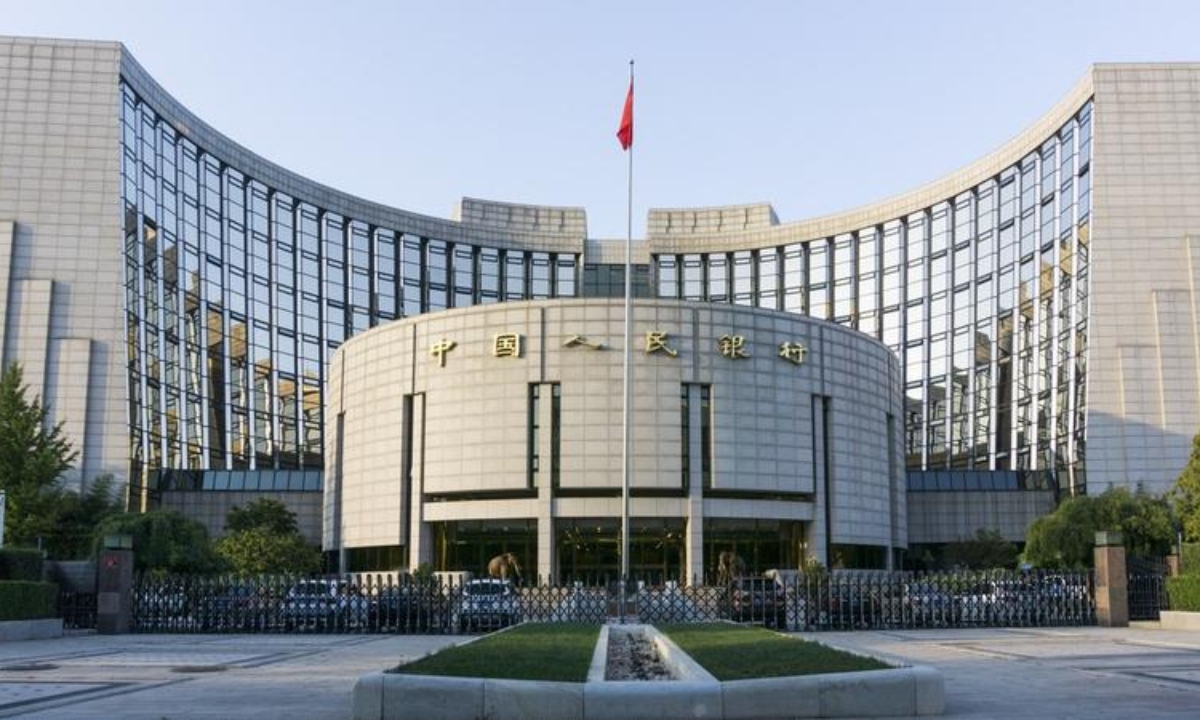
The headquarters of the People's Bank of China in Beijing Photo: IC
The yuan has "solid foundations" to remain basically stable with fluctuations within a reasonable range, even as the outlook for the US dollar stays clouded, said Zou Lan, a deputy governor of the People's Bank of China, on Monday.
Zou made the remarks at a State Council press briefing on the first-half monetary and credit conditions, in response to a question about the yuan's current exchange rate.
The yuan has appreciated steadily against the US dollar. Zou noted that market participants are paying close attention to the Federal Reserve's policy path: US growth has slowed, but inflation remains above the Fed's target, and tariffs add fresh uncertainty to the outlook for American prices, factors that could delay rate cuts. Increased fluctuations in the US dollar and US Treasury yields have had a certain spillover effect on the global financial market.
However, China's financial markets have shown strong resilience and orderly conditions, Zou said, adding that after some volatility in early April, the yuan quickly stabilized.
Thanks to the consensus reached during the China-US economic and trade talks in Geneva in May, the yuan has traded in a two-way range, with its exchange rate stabilizing below 7.2 against the US dollar.
"Multiple factors — growth, monetary policy, financial markets, geopolitics and risk events — affect exchange rates," Zou said, in response to query whether the central bank would step in to curb further appreciation. Zou reiterated that China does not seek to gain international competitive advantages through currency devaluation.
We will let the market play the decisive role, keep the exchange rate flexible, guide expectations and guard against overshooting, to ensure the yuan remains basically stable at an adaptive and equilibrium level, Zou said.
Compared with other major world currencies, the yuan has been stable against the US dollar, thanks to the country's timely and appropriate macroeconomic policies, sound economic growth and long-term development potential, Dong Shaopeng, a senior research fellow at the Chongyang Institute for Financial Studies at Renmin University of China, told the Global Times on Monday.
Although volatile US tariffs continue to cloud the global economic outlook, China's economy is advancing steadily: A package of incremental policies has been rolled out, key indicators are performing well, and the central bank has deployed a range of monetary-policy instruments and exchange-rate expectation-management tools, all of which shore up the yuan, Dong said.
Meanwhile, Zou said China's solid economic fundamentals, narrowing China-US rate differentials, balanced international payments and resilient foreign exchange markets will continue to provide robust support for maintaining basic stability in the yuan's exchange rate.
China's economy opened 2025 on solid footing, with its GDP in the first quarter rising 5.4 percent year-on-year. A meeting of the Political Bureau of the Communist Party China Central Committee held on April 25 made important arrangements for current economic work, reinforcing the country's high-quality growth momentum, Zou said.
Additionally, investors now price in Fed rate cuts beginning in the second half, as most advanced economies pivot to easing. This shift should narrow the monetary-policy gap between Beijing and Washington and compress the China-US yield spread, according to the official.
The balance of payments remains in healthy equilibrium, the official said. "China's financial markets are orderly, opening measures continue and yuan assets retain strong appeal. Cross-border capital moves in both directions without signs of stress," he said.
"Substantial progress has been made in developing the foreign-exchange market," Zou noted, adding that market participants have demonstrated greater maturity and rationality and the market's resilience has been strengthened.
RELATED ARTICLES