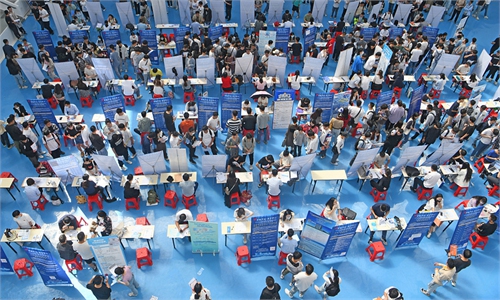
June unemployment rate among 16-24 year-olds in China drops to 14.5%, 12-month low: NBS
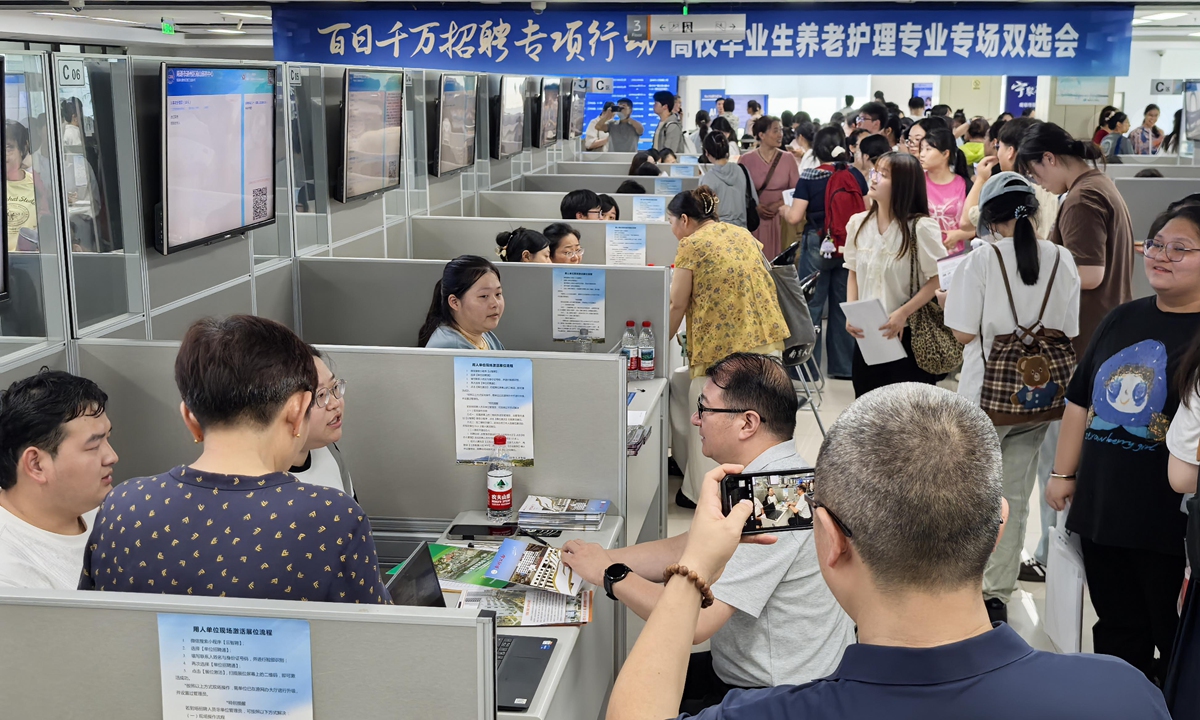
Job seekers attend a comprehensive job fair for university graduates and a special recruitment session for elderly care professionals in Nanjing, East China's Jiangsu Province, on July 5, 2025. Photo: VCG
In June, China's national urban unemployment rate for 16- to 24-year-olds, excluding students, fell to 14.5 percent, which is 12-month low, and also marking the fourth consecutive monthly decline, data released by the National Bureau of Statistics (NBS) showed on Thursday.
The unemployment rate among this segment of youth dropped by 0.4 percentage points in June from May, down from 15.8 percent in April and 16.5 percent in March.
The unemployment rate for 25- to 29-year-olds in all urban districts in the country excluding school students declined for a four straight month, reaching 6.7 percent, down 0.3 percentage point from the previous month.
The unemployment rate among urban workers aged 30 to 59, excluding students, reached 4.0 percent in June, which rose by 0.1 percent, according to the NBS data.
In the first half of the year, the average urban surveyed unemployment rate was 5.2 percent, 0.1 percentage points lower than that in the first quarter. During the second quarter, the rate averaged 5.0 percent—down 0.3 percentage points from the first quarter and unchanged year-on-year. The June rate also stood at 5.0 percent.
"In the second quarter, the economy performed steadily, with rising labor demand across multiple sectors, leading to a significant rise in job demand compared to the first quarter. Boosted by a boom in holiday tourism, employment in service sectors such as transportation, wholesale and retail, and cultural, sports, and entertainment expanded year-on-year, which bolstered stable employment conditions," NBS official Wang Pingping said on Tuesday.
In the second quarter, China's modern services industry and advanced manufacturing sector flourished, with the talent market showing distinct vitality driven by industrial structure upgrades and increasing consumer demand, leading jobs website Zhaopin.com told the Global Times on Thursday.
According to Zhaopin.com, from January-June, talent demand in modern services expanded, with recruitment in pet services growing by 72.2 percent and demand for pet veterinarians surging by nearly 200 percent.
In the second quarter, job openings in the humanoid robot sector surged 398.1 percent year-on-year—far outpacing other industries. This surge reflects how accelerating intelligent transformation is driving explosive demand for talent in research and development, manufacturing, and application roles, making it a major driver of industrial innovation, Zhaopin.com noted.
Additionally, job openings in defense manufacturing rose by 76.7 percent year-on-year during the period, while recruitment demand for smart hardware rose by 50.3 percent. This indicates sustained vitality in fields such as consumer electronics and the Internet of Things, according to Zhaopin.com.
Wang noted that in the coming months, efforts should continue to leverage the macroeconomic policy tools and ramp up employment stabilization efforts to maintain steady job conditions.
China released a notice on further strengthening policy support for stabilizing employment on July 9, outlining a set of measures across seven key areas to stabilize jobs, enterprises, the market and expectations, while promoting high-quality economic development.
Among the measures, the country will expand the scope of special-purpose loans designed to stabilize and boost employment, while improving the accessibility of those loans, according to the document.
The notice highlighted the importance of skills training to improve employability, with a focus on ramping up support for key groups. It calls for targeted vocational training across diverse fields, including home services and childcare, emerging technologies, and intelligent manufacturing.
China has set a target of maintaining the surveyed urban unemployment rate at around 5.5 percent in 2025, while aiming to create over 12 million new urban jobs this year, according to the Xinhua News Agency.
Global Times
RELATED ARTICLES