Hong Kong a launchpad for mainland innovation, global expansion: InvestHK official
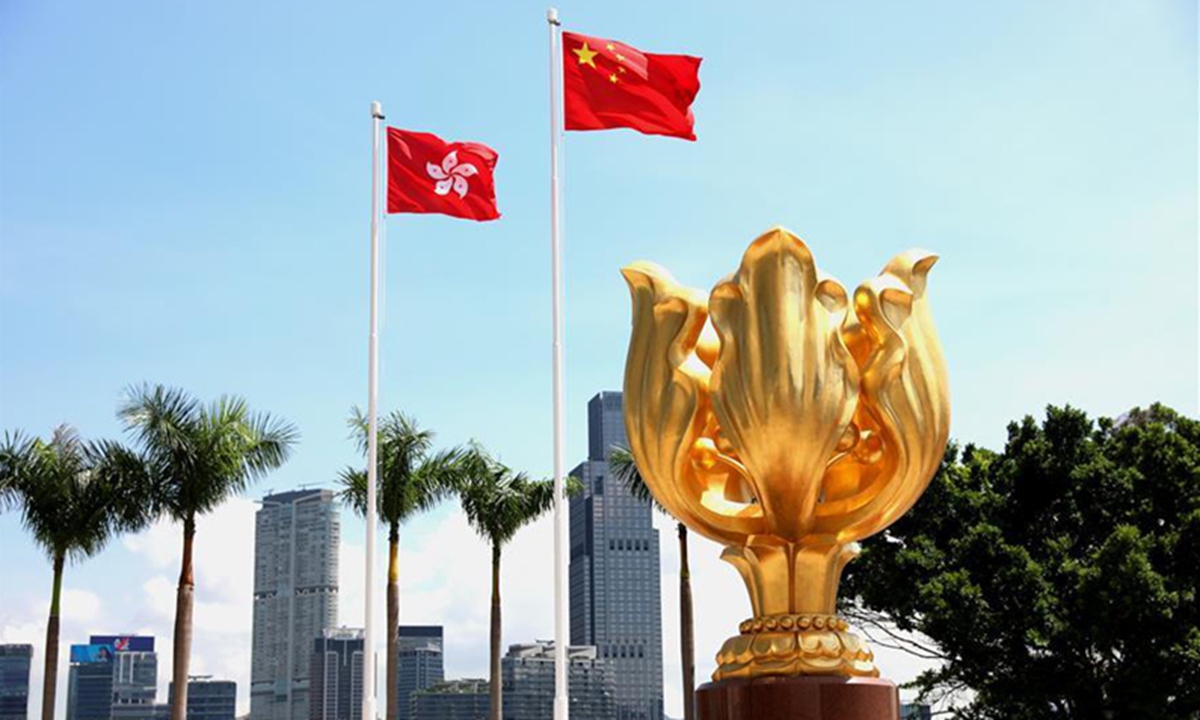
Hong Kong file photo
Amid escalating trade tensions and a renewed focus on supply chain resilience, the Hong Kong Special Administrative Region (HKSAR) is leveraging its institutional advantages under the "one country, two systems" framework to build a globally connected business ecosystem rooted in innovation, finance, legal infrastructure, and international talent, offering Chinese mainland manufacturers and tech firms a dual pathway to upgrade and expand globally, Loretta Lee, Associate Director-General of Investment Promotion at Invest Hong Kong (InvestHK), told the Global Times in an interview during the the 3rd China International Supply Chain Expo.
Lee noted that the 14th Five-Year Plan (2021-25) supports building the HKSAR into an international innovation and technology hub. In recent years, the city has deepened its integration with the Greater Bay Area (GBA) by leveraging its tax regime, capital flows, intellectual property protection, and talent pool to attract high-end mainland manufacturers to establish research and development (R&D) centers and regional headquarters.
According to Lee, mainland technology companies chose Hong Kong not only for its globally recognized legal and business environment, but also for its proximity to production hubs in Shenzhen and Guangzhou, enabling an integrated model of "R&D in Hong Kong, manufacturing in the GBA, and global sales."
The HKSAR is also deepening cooperation with emerging industrial regions across central, western, and northeastern parts of the mainland. In the first half of the year, InvestHK held promotional events with local governments and chambers of commerce in provinces and municipalities such as Hubei, Sichuan, Tianjin, and Liaoning, encouraging more inland enterprises to use Hong Kong for offshore financing, market expansion, and resource allocation, particularly in emerging sectors such as new energy, the low-altitude economy, and green logistics, Lee said.
She emphasized that as a free port and international financial center, Hong Kong offers a highly open environment for capital, legal services, language, and data flows. With more than 70 leading global banks and a world-class financial system, the city provides mainland companies with end-to-end support—from financing and compliance to risk management and global branding. These "soft infrastructure" strengths give Hong Kong a competitive edge over other Asian cities, she said.
According to InvestHK, the HKSAR helped more than 1,300 overseas and mainland companies to establish or expand their business in the city from January 2023 to June 2025, bringing in foreign direct investment of more than HK$160 billion ($20.5 billion), surpassing Policy Address performance indicators.
Lee recalled that during the Chief Executive's trade mission to the Middle East in May, which she joined as part of the delegation, many companies in Kuwait and Doha,Qatar expressed strong interest in having partnerships with Chinese firms. "They have capital and resources, but they lack people and advanced technologies," she said. "When we brought mainland companies to meet them, they were immediately impressed and eager to cooperate."
Lee highlighted the growing success of a collaborative model that pairs the technical strengths of mainland enterprises with Hong Kong's professional services—particularly in legal, financial, and accounting support. This "technology plus services" approach, she said, is gaining traction as an effective strategy for global expansion. "It's exactly this kind of synergy we aim to foster," she added.
To navigate global uncertainty, Lee said, Hong Kong is accelerating its engagement with Global South countries—including Africa and Latin America—as well as key emerging markets such as ASEAN, the Middle East, and Eastern Europe, to help mainland enterprises build ties with local governments, sovereign wealth funds, and institutional investors.
In the Middle East, for instance, Hong Kong has facilitated connections between regional capital and local startups and tech firms, while fostering deeper cooperation in areas such as fintech, green finance, and securities trading.
Lee said that Hong Kong will continue to serve as both a "super-connector" and a two-way platform—facilitating the flow of global capital, technology, and businesses into the mainland, while also helping mainland enterprises expand globally through Hong Kong. "The more uncertain the external environment becomes, the more Hong Kong's institutional stability, policy consistency, and international connectivity stand out," she said.
RELATED ARTICLES