AIT touts 'spaceport' cooperation between US and Taiwan region; experts say plan likely shifts cost burden to island to serve US ambitions
By Published: Jul 22, 2025 04:07 PM

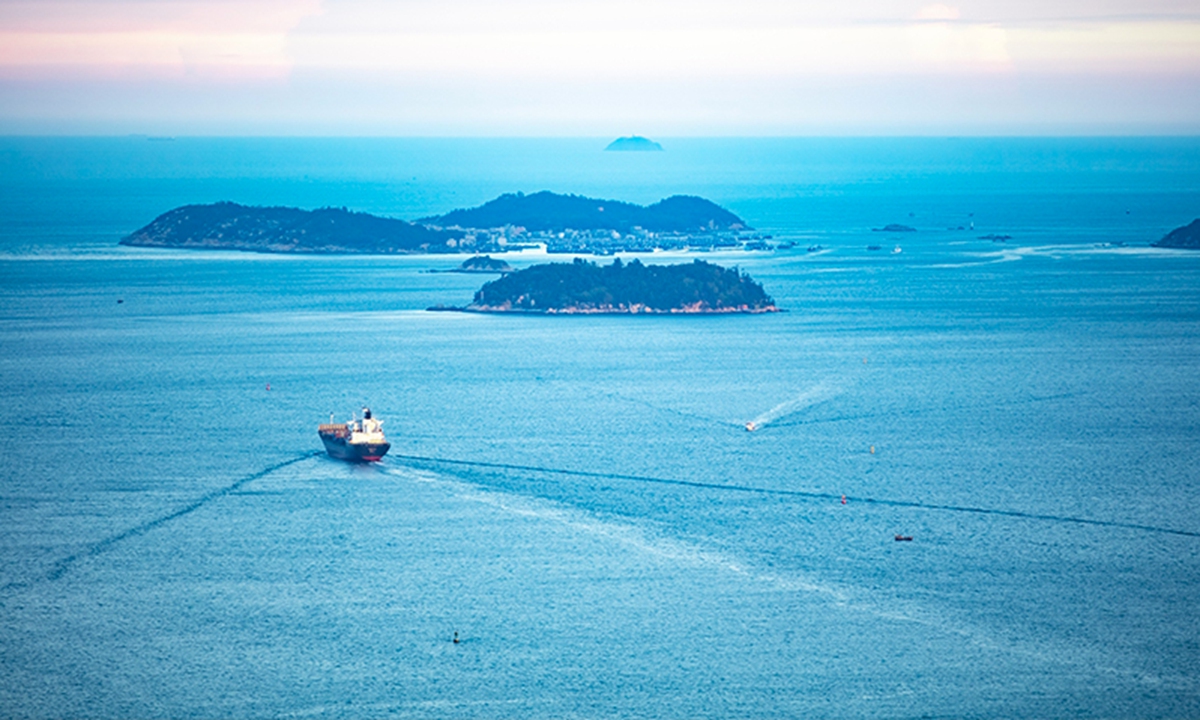
A view of the Taiwan Straits is seen from Xiamen port, in East China's Fujian Province. Photo: IC
The American Institute in Taiwan (AIT) touted that the US and the Taiwan island are exploring cooperation on a "spaceport," according to media outlets in Taiwan island. Some Chinese experts said that the plan of the US merely treats the island as a node in America's global space-logistics network — dangling new lofty promises while likely leaving Taiwan to foot the bill and bear the risks, only to advance US spaceport ambitions.In a post on Facebook Monday, the AIT claimed that possible spaceport cooperation between the US and the Taiwan island is "awaiting further evaluation and discussion for the future." It added "If suborbital flights were used, travel time between Taipei and Houston could be shortened to as little as 2.5 hours. Houston's Ellington Airport already has a legal spaceport license."
Taiwan island has selected Jiupeng in Pingtung as the site for its space mission launch facility, which could be expanded into a spaceport. The authorities of the island said that "specific plans and proposals will require additional evaluation and discussion," according to local media outlet ETToday.
Some island netizens ridiculed the "spaceport" plan, questioning whether it's just another ploy by the AIT and the Democratic Progressive Party (DPP) authorities to fleece taxpayers.
The so-called Taiwan "spaceport" plan is likely merely another US move to extract funds from the island. In the so-called cooperation, who pays, and who actually gains? Who finances the project, who supplies the technology, and who controls it? Taiwan island would probably shoulder the costs and provide the site, yet gain none of the critical know-how, offering no tangible boost to its own technological capacity, Zheng Jian, a professor at the Taiwan Research Institute of Xiamen University, told the Global Times.
The so-called "spaceport" is really just a "space logistics hub," using rockets to shuttle cargo, treating the island as another node in the US' global supply network, said Song Zhongping, a Chinese military affairs expert.
But one thing to note is that, if space logistics ever becomes routine, the US may use this route to supply Taiwan in an emergency — should sea and air lanes be blocked. Once it really comes to that point, this spaceport will inevitably become the primary target of attacks, said Song.
The DPP authorities have pursued space capabilities but still rely on external facilities to help launch their satellites, while the US has no intention of providing substantive support, said Song.
In fact, the US dangles another promise before Taiwan region, only to have the island foot the bill and bear the risks, all to advance America's spaceport ambitions, said the expert.
RELATED ARTICLES