China’s STAR market sees surge of hard technologies amid 6th anniversary
Board set to play greater role in advancing high-quality development, innovation-driven growth: expert

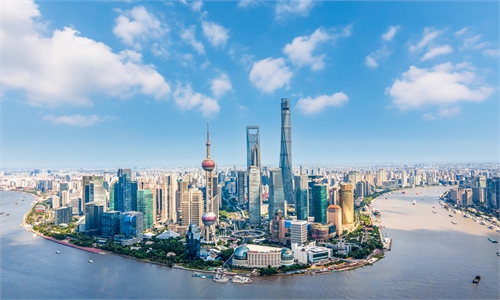
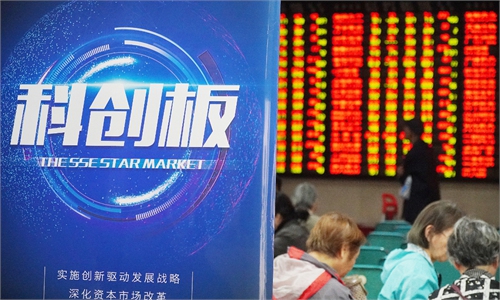
stock market Photo:VCG
The Nasdaq-style sci-tech innovation board of the Shanghai Stock Exchange, known as the STAR Market, marked its sixth anniversary on Tuesday. Since it was established, the board has grown from being the first market in China to pilot the registration-based IPO system to becoming a high ground for innovation.
Standing at the new point, the board will continue to play an important role in deepening reforms in China's capital market and boosting the high-quality development of the economy, experts said.
On July 22, 2019, the STAR Market started trading on the Shanghai Stock Exchange, with an initial batch of 25 companies. As of Monday, 589 companies had been listed on the board, and its capitalization stood at about 8 trillion yuan ($1.12 trillion), according to financial information provider iFinD.
As a board designed to support companies in the high-tech and strategic emerging fields, the STAR Market has mainly supported companies from such industries as semiconductors, biopharmaceuticals and artificial intelligence (AI), and nurtured a cohort of innovative enterprises with core technological capability.
Take the integrated circuit industry as an example. More than 120 such companies are listed on the STAR Market, including Chinese top chipmaker Semiconductor Manufacturing International Corp, leading chip equipment maker Advanced Micro-Fabrication Equipment Inc and silicon wafer leader National Silicon Industry Group Co, domestic financial media outlet the Securities Times reported on Tuesday.
"Since the STAR Market was launched, it has helped a number of sci-tech enterprises get access to the capital market, which also underscores the success of the registration-based IPO system," Yang Delong, chief economist at Shenzhen-based First Seafront Fund, told the Global Times on Tuesday.
Innovations in the STAR Market's trading mechanisms, pricing systems, and market maker systems have accumulated valuable experience for improving China's capital market, Yang said.
The STAR Market has played a demonstration role in the in-depth reform of other boards - for example, the registration-based IPO mechanism in the ChiNext board of the Shenzhen Stock Exchange and main boards, as well as the setting up of the Beijing Stock Exchange - and injected new vitality into China's capital market.
In June last year, the China Securities Regulatory Commission (CSRC) announced eight new measures to further reform the STAR Market, including giving priority to the listing of enterprises that have made breakthroughs in new industries, business patterns and technologies.
The Shanghai Stock Exchange and China Securities Index Co on January 20 launched new indices on the STAR Market to meet growing investor demand for richer tools representing market performance.
Xi Junyang, a professor at the Shanghai University of Finance and Economics, told the Global Times on Tuesday that the reform of the STAR Market is important for the high-quality development of China's economy and its industrial transformation and upgrading.
The STAR Market is a reflection of the reform and opening-up of China's capital market and the whole economy. In the future, the reform of the board needs to focus on guiding more long-term capital into the development of new quality productive forces and problems related to economic upgrading, Xi Junyang said.
"Standing at the new starting point, we will continue to fully leverage the demonstration effect of the STAR Market and step up efforts to roll out a '1+6' policy package to foster the STAR Market reform," Wu Qing, chairman of the CSRC, said during the 2025 Lujiazui Forum on June 18.
The core of the package lies in setting up a sci-tech growth tier on the STAR Market and resuming application of the fifth set of related listing standards for unprofitable enterprises, to provide more precise services to high-quality sci-tech firms.
With reforms in the pipeline, the STAR Market is expected to exhibit diversified, innovative, and internationalized development, playing a greater role in advancing the high-quality development of China's capital market and the country's innovation-driven development, Xi Junyang said.
RELATED ARTICLES