ARTS / CULTURE & LEISURE
Dinosaur footprints and fossils discovered in South China reveal ancient Asian biogeographic split
By Published: Jul 29, 2025 09:45 PM

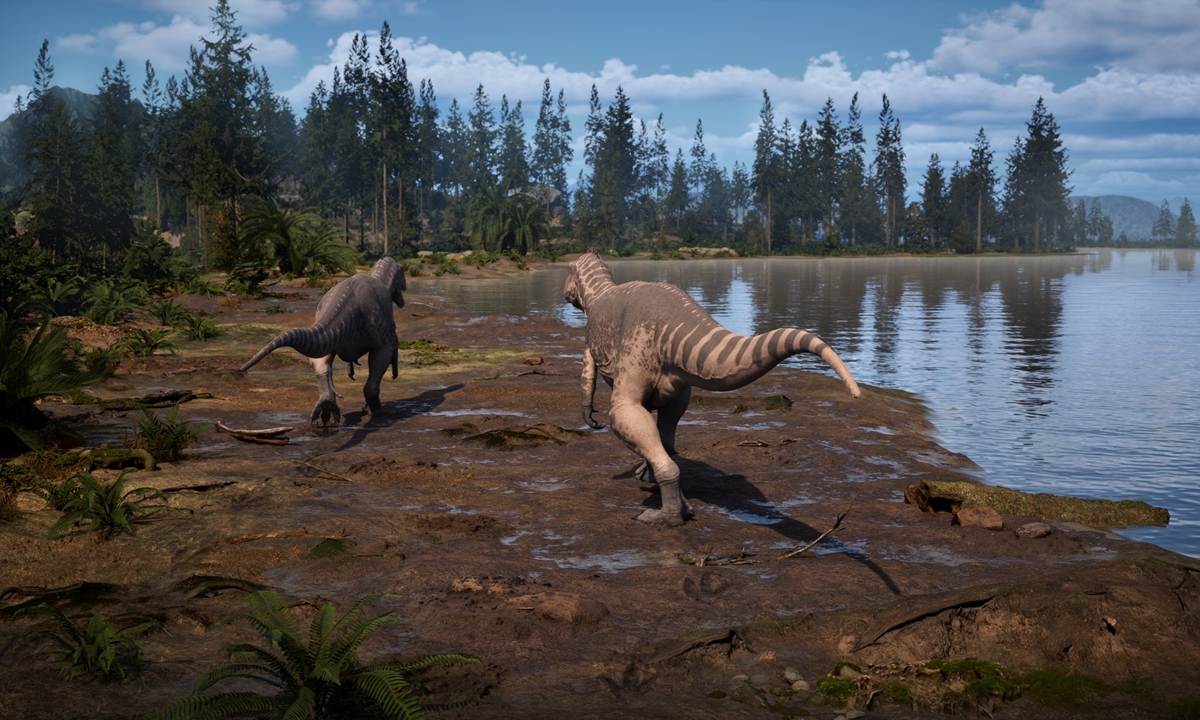
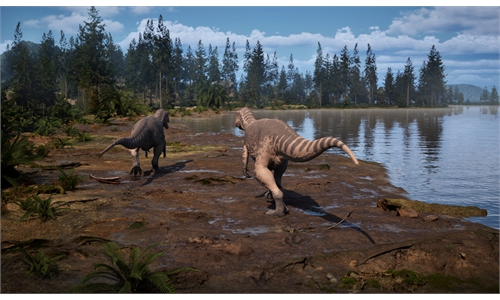
An illustration of the dinosaur fauna in today's Nanmushan village, Dongxing city, South China's Guangxi Zhuang Autonomous Region Courtesy of Xing Lida
A cluster of million-year-old dinosaur footprints, representing the southernmost known Jurassic carnivore traces in China, has been documented in South China's Guangxi Zhuang Autonomous Region, shedding new light on dinosaur diversity and paleoecology across southern Asia, Chinese paleontologist Xing Lida from the China University of Geosciences told the Global Times on Tuesday.
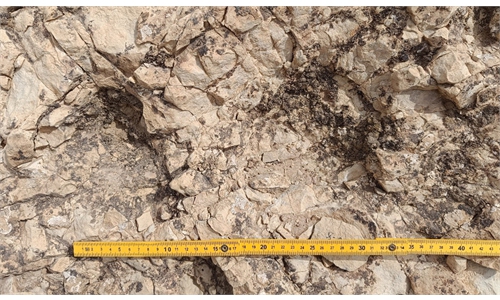
The study, published in Earth History and Biodiversity, details seven theropod footprints preserved on a 4-square-meter rock slab discovered at Nanmushan village in Dongxing city, a coastal area near the Beibu Gulf in Guangxi.
Unearthed during construction blasting in 2021, the tracks represent Guangxi's first recorded dinosaur footprints and China's southernmost evidence of Jurassic dinosaur activity, according to Xing.
Led by researchers from the Museum of Natural History in Guangxi, China University of Geosciences (Beijing), Dinosaur Odyssey Science Museum, Université PSL from the France, and Mahasarakham University from the Thailand, the team conducted detailed morphological analysis and 3D scanning in 2023.
The footprints reveal two distinct track types. Morphotype A which is 23-26 cm long features rare four-toe impressions alongside typical three-toe patterns, suggesting soft substrate deformation. The tracks, classified as similar to Chongqingpus, indicate a 3.3-meter-long carnivore walking at 1 meter per second, belonging to the Eubrontes morphotype tracks.
Morphotype B is 47.6 cm long. It is poorly preserved but indicates a much larger predator exceeding 6 meters in length, comparable in size to Szechuanosaurus from Sichuan Basin.
"The Nanmushan footprints show striking faunal similarities to late Middle Jurassic dinosaurs in Sichuan Basin," said Xing.
"This reinforces the existence of a shared dinosaur ecosystem across southern China during this period."
The discovery highlights Guangxi's significance as a "natural laboratory" for Mesozoic paleontology. Over 50 red-bed basins across the autonomous region contain dinosaur fossils spanning the Jurassic to Cretaceous periods.
For example, the 1963 discovery of Cretaceous ornithischian fossils in Shebu Basin, is Guangxi's earliest dinosaur discoveries.
Critically, the research identifies strong parallels between early Cretaceous dinosaur assemblages in Guangxi's Xinlong Formation and Thailand's Khok Kruat or Sao Khua Formations.
This supports the existence of a distinct "southern" biogeographic province in late Early Cretaceous East Asia, markedly different from northern Chinese fauna.
"Guangxi's systematic fossil record is unveiling the mysterious dinosaur world of southern China and Southeast Asia. With over a dozen confirmed dinosaur fossil sites, each excavation holds potential to rewrite paleontological history," Xing said.
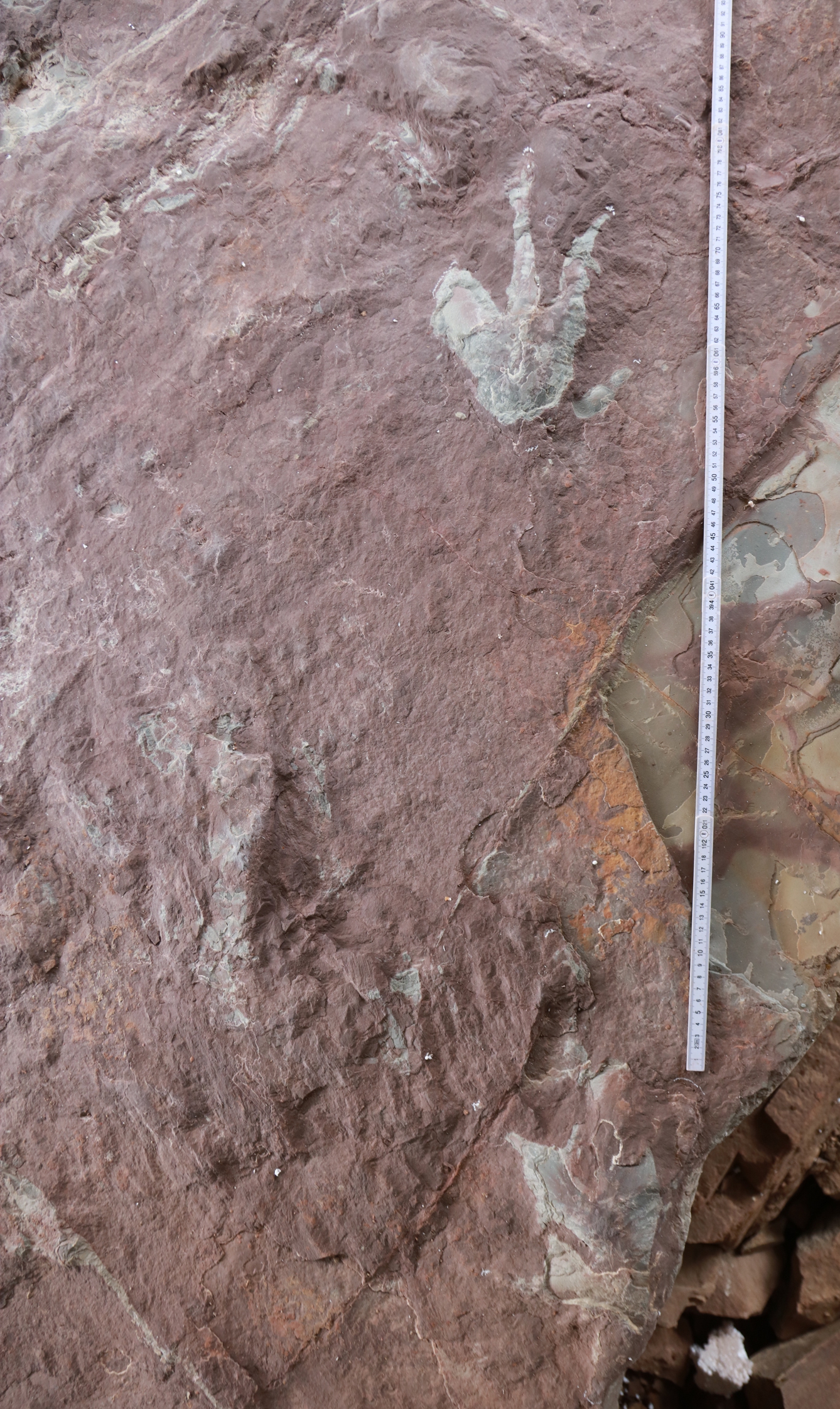
A dinosaur footprint discovered in South China's Guangxi Zhuang Autonomous Region in 2021 Photo: Courtesy of Xing Lida
RELATED ARTICLES