SPORT / MISCELLANY
Domestic football revival gathers pace
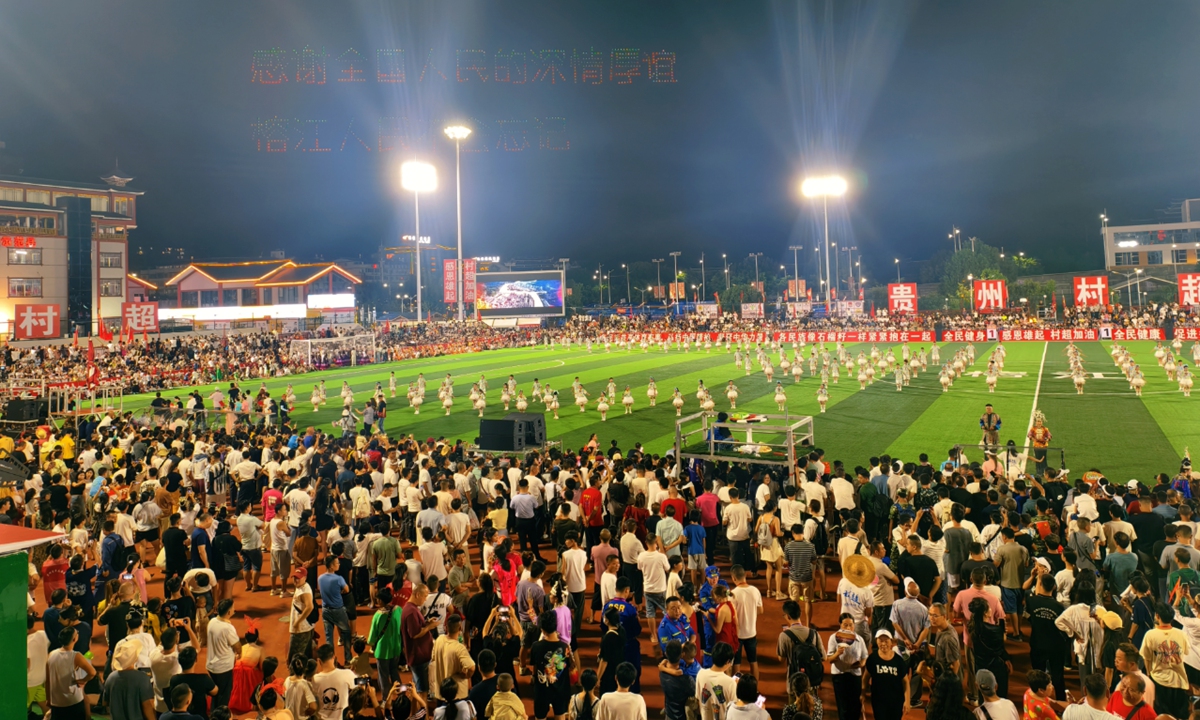
Cunchao Photo: VCG
There is now compelling reason to believe that Chinese football is on an upward trajectory, even though the Chinese national football team remains underachieving.Spectators are returning to stadiums not only for professional top-tier Chinese Super League (CSL) matches but also grassroots regional competitions. Reform-minded football governing officials are pursuing a cleaner governance model, and youth development is being treated as a national priority. Taken together, these forces offer a credible path toward a more sustainable, inclusive, and competitive football culture.
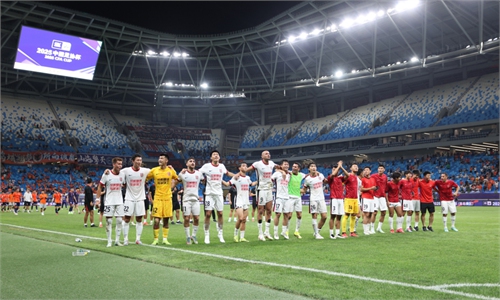
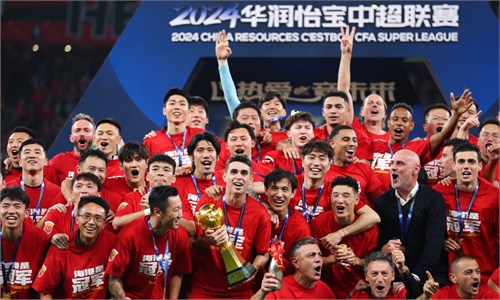
Over the past weekend, the 19th round of the CSL drew a total of 250,463 spectators, placing it third highest in CSL single round attendance history.
For years, brink attendance figures have been cited as evidence that public appetite for domestic football was elusive, especially in places where clubs did not have roots in the local communities.
But current sustained crowds not only fortify the game's commercial viability, they lend legitimacy to the idea that professionalism and passion can coexist in modern Chinese football.
Outside of the CSL, grassroots enthusiasm is even more salutary.
In Rongjiang county in Southwest China's Guizhou Province, the so called Village Super League, or more often referred to as Cunchao, recommenced after having been suspended due to catastrophic flooding. Thousands once again packed the fields and football felt alive and communal rather than staged in a plush corporate stadium.
This event, grounded in the rhythms of everyday rural life, did far more than deliver ephemeral spectacle: It represented football's most essential source of oxygen - the grassroots where people play for joy and identity.
Since 2023, the series reportedly transformed Rongjiang into a hotbed of local football, sometimes drawing up to 50,000 spectators per match day and even signing cultural exchange ties with the English Premier League.
Meanwhile, in East China's Jiangsu Province, the urban Jiangsu City Football League, known informally as Suchao, has become a social phenomenon in its own right.
In the first six rounds in mid-2025, local authorities said Suchao generated nearly 379.6 billion yuan ($52.6 billion) in tourism, dining, lodging, travel and venue service revenue, a year on year increase of 42.7 percent.
Local media report that over 95 percent of Jiangsu residents were aware of the event, and online video platforms featured hundreds of viral clips, particularly from non traditional, youth and family audiences. Rather than being imposed from above, Suchao grew organically, with municipal teams, weekend players, and universities collaborating to build passion at scale.
Of course, not all internet commentary has been constructive. Online discourse often falls into two extreme camps: One exalts Suchao as the savior of Chinese football while disparaging the CSL or the national team; the other pits grassroots football against professional football as if they are irreconcilably opposed. Yet both are misleading.
Yet Cunchao and Suchao and the CSL occupy different roles: The first two are grounded in grassroots enthusiasm and civil society; the last one is a competitive stage for elite athletes and clubs. The three of them should all be viewed as parts of a multi legged structure of football, not enemies. Community football (Cuncao and Suchao) provides players, fans and cultural energy, while professional football offers discipline, technical excellence and upward mobility. These two sides could reinforce each other.
A key enabler of progress has been the central government's resolution to clean house. The football reforms that began in 2022 - the widespread corruption probe into match fixing and bribery - continued into 2025 with more convictions. All 18 major defendants, including the former heads of the Chinese Football Association and the CSL company, have received prison sentences.
The sports governance system has reached a "formative end" to this crackdown, but "institutional vigilance remains essential" to prevent a relapse. In the sense that fair competition is the oxygen of the sport, what matters now is not only headline convictions but the procedural safeguards and cultural norms that ensure misconduct cannot emerge again.
That point is echoed in official policy. At the nationwide football work conference held in Beijing last week, the meeting reinforced that anti corruption must be sustained, "never leaving space for malpractice" while emphasizing youth football and campus training integration.
On the subject of youth development, Chinese policy is shifting from token pledges to real investment. In April, the government rolled out a renewed blueprint that requires professional clubs to run certified academies, supports franchised social training institutions and sets standards for coach licensing and infrastructure investment.
Meanwhile, Shanghai, Hangzhou, and other major cities have launched revamped high school and club football leagues to identify and retain talent at a young age. These are small but vital steps toward closing the talent gap and avoiding the breaks and fractures that have long characterized Chinese football's youth pipeline.
Of course, none of this guarantees international success. Domestic attendance might rise and grassroots players multiply, but competing at the international level still requires better coaching, tactical nous, and psychological resilience. While once the debate centered on whether to import marquee players or coaches, now it includes whether to respect local league organizers, how to fund youth centers sustainably, and how to maintain discipline in the sport without discouraging participation.
RELATED ARTICLES