What does ‘Dead To Rights’ topping global weekend box office indicate?: Global Times editorial
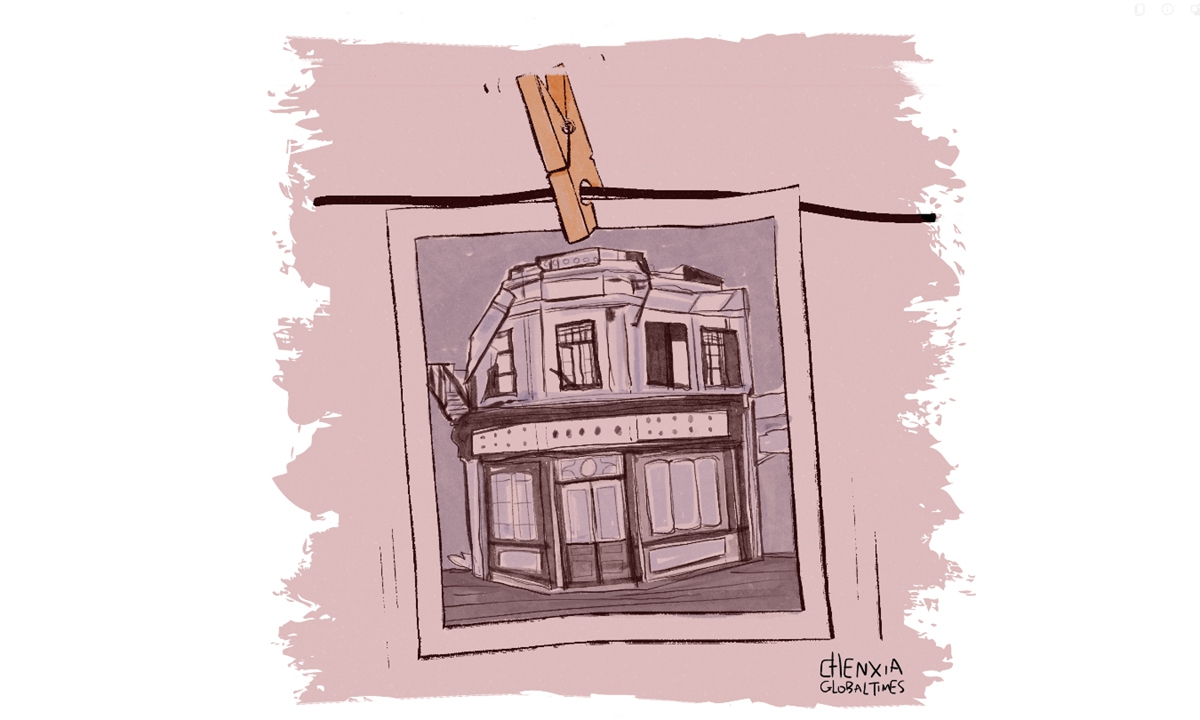
Illustration: Chen Xia/GT
The film Dead To Rights topped the global box office last weekend, thanks to its steadily climbing domestic box office performance. This has drawn attention from the well-known US magazine Variety. From August 7, the film will be released in theaters in Australia, New Zealand, the US, Canada, Malaysia, Singapore and other regions. Plans for release in countries such as Russia, South Korea, the UK, Germany and France are also underway. This means that the film's overseas influence will further expand, covering more countries and regions.
The reason Dead To Rights has sparked a moviegoing frenzy since its release lies in its exploration of historical justice from an artistic perspective. One highly rated user commented that the lessons of history must never be forgotten. Dead To Rights conveys Chinese filmmakers' profound reflections on history, humanity and justice. Such reflections transcend national borders. Remembering history by commemorating the victory of the World Anti-Fascist War is not to incite hatred, but to promote a correct historical perspective on WWII. By doing so, we aim to remind the world to cherish peace, oppose war crimes, and promote a consensus within the international community on safeguarding historical truths.
What is a correct historical perspective on WWII that withstands the test of time? It is a historical cognition system that, after 80 years of post-war scrutiny, defends historical truth, upholds fairness and justice, and promotes peaceful development. It is a perspective based on objective historical facts that looks at WWII comprehensively and impartially. Promoting a correct historical perspective on WWII means respecting historical facts, upholding a just stance, opposing historical nihilism and revisionism, opposing any distortion, falsification or glorification of wars of aggression, drawing lessons from the past, and defending the post-war international order centered on the UN. The correct historical perspective on WWII is not only the cornerstone of international order, but also a reflection of human conscience.
At present, some are deliberately distorting and downplaying the memory of the true history of WWII. This distorted historical narrative exhibits three dangerous characteristics: In terms of time, the fabrication of a "six-year WWII narrative" deliberately erases the extraordinary 14-year struggle of the Chinese people against Japanese aggression; in terms of geography, the promotion of "Western centrism" systematically downplays the decisive roles of the Chinese and Soviet battlefronts; in terms of nature, the propagation of the "Japan-as-victim" narrative seeks to portray the aggressor as the "victim." Even more alarming is that these erroneous historical perspective on WWII are being exploited by individuals with ulterior motives as ideological weapons to advance geopolitical agendas and undermine the postwar international order.
Against the backdrop of a growing rightward and conservative shift in Japanese politics, revisionist views of history have become increasingly prevalent in the country. However, there are still active forces committed to upholding a correct historical perspective on WWII. In response to recent reports by multiple Japanese media outlets suggesting that, under pressure from conservative factions within the ruling party, the Prime Minister is considering not issuing a statement on the 80th anniversary of the end of the war, Shigeru Ishiba publicly clarified on Monday that "such reports should not be believed." On the same day, Nagoya Mayor Ichiro Hirosawa expressed hope to resume exchanges with Nanjing during a press conference. When asked about his view on the Nanjing Massacre, Hirosawa stated that "it is an undeniable fact." The decision by the Nagoya city government to seek improved relations with China on the 80th anniversary of the end of the war reflects a certain degree of historical reflection and an aspiration for friendly ties between China and Japan.
During WWII, China, as the main battlefield in the East, fought the longest, bore the heaviest sacrifices, and made an indelible contribution to the ultimate victory of the World Anti-Fascist War. To remember history is also to serve as a mirror to the present. The main components of today's international order are closely linked to the course of WWII and its victorious outcomes. If the international community wishes to uphold fairness and justice, it must resolutely defend the hard-won achievements of the World Anti-Fascist War and firmly resist any actions that distort WWII history or attempt to glorify Nazi ideology and militarism. Only in this way can history become a source of safeguarding peace rather than inciting division.
Upholding a correct historical perspective on WWII is also a relay between generations. The eyewitnesses of that history are disappearing, and the responsibility of preserving the historical truth now falls on our shoulders. At a time when the postwar international order is facing challenges, upholding a correct historical perspective on WWII is not only a tribute to those who came before us, but also a duty to future generations. We must protect this historical memory with the utmost determination, ensuring that the truth remains etched into the fabric of our nation. No force should ever be allowed to alter or whitewash the history of aggression. This is a responsibility to history and also an obligation to our descendants.
"Photos may fade, but history does not." This line from the film Dead to Rights has struck a chord with many. At this critical historical juncture, the stance one takes on historical perspective on WWII has become a litmus test for human conscience, a barometer for defending the postwar international order, and a vital reminder of why we must preserve correct historical perspective on WWII. Remembering the past is not to perpetuate hatred, but to build a better future - one where our children never again face the horrors of war. The correct historical perspective on WWII is a mirror: while it reflects right and wrong and the hearts and minds of the people, it also guides the road ahead and helps the international community locate the spirit of our times and its rightful course of development.
RELATED ARTICLES