China-EU robot cooperation remains positive amid global uncertainties: EU robot expert
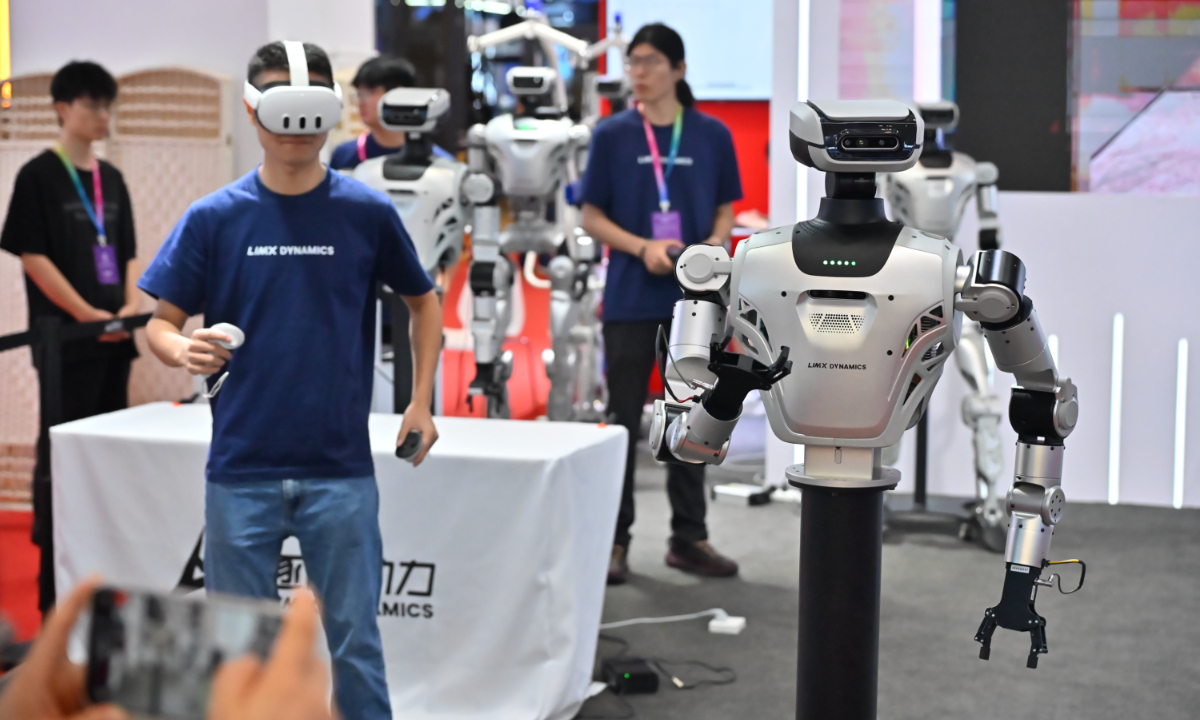
A staff showcases the remote control function of a robot at the 2025 World Robot Conference on August 8, 2025. Photo: Tao Mingyang/GT
Amid current global uncertainties such as supply chain disruptions and conflicts, cooperation between China and Europe in the robotics sector remains on a positive trajectory, Juha Röning, vice president of euRobotics and professor of embedded systems at the University of Oulu in Finland, told the Global Times on the sidelines of the ongoing 2025 World Robot Conference (WRC) on Saturday. He noted that China's humanoid robots are high-quality, affordable, and supported by a strong component base, with notable advances in artificial intelligence (AI) in miniaturization and energy efficiency.
Röning said he observed a rich variety of highly innovative robotic products at the 2025 WRC. Although his time was limited, he still planned to explore more exhibits in depth, believing that the conference offered many insights for the future development of robotics .
Röning noted there are few differences in the development approaches of Chinese and European robotics companies. However, he said, "where I see a difference—and what struck me—was in AI development, such as large language models and generative models."
Large companies typically use massive computing power and resources before releasing models, but the recent DeepSeek approach achieves strong results with much less energy and smaller scale, Röning said.
He appreciates this approach because his professorship is in embedded systems. Throughout his career, Röning has focused on developing systems with limited processing power, memory, and extremely short calculation times, knowing that in real-time systems, delayed decisions lead to failure or crashes.
"That's why I like the idea that models [DeepSeek] can be handled in a cheaper, more efficient way. This would also allow robots to handle situations in real time, use less energy, and hopefully still work in real time," he said.
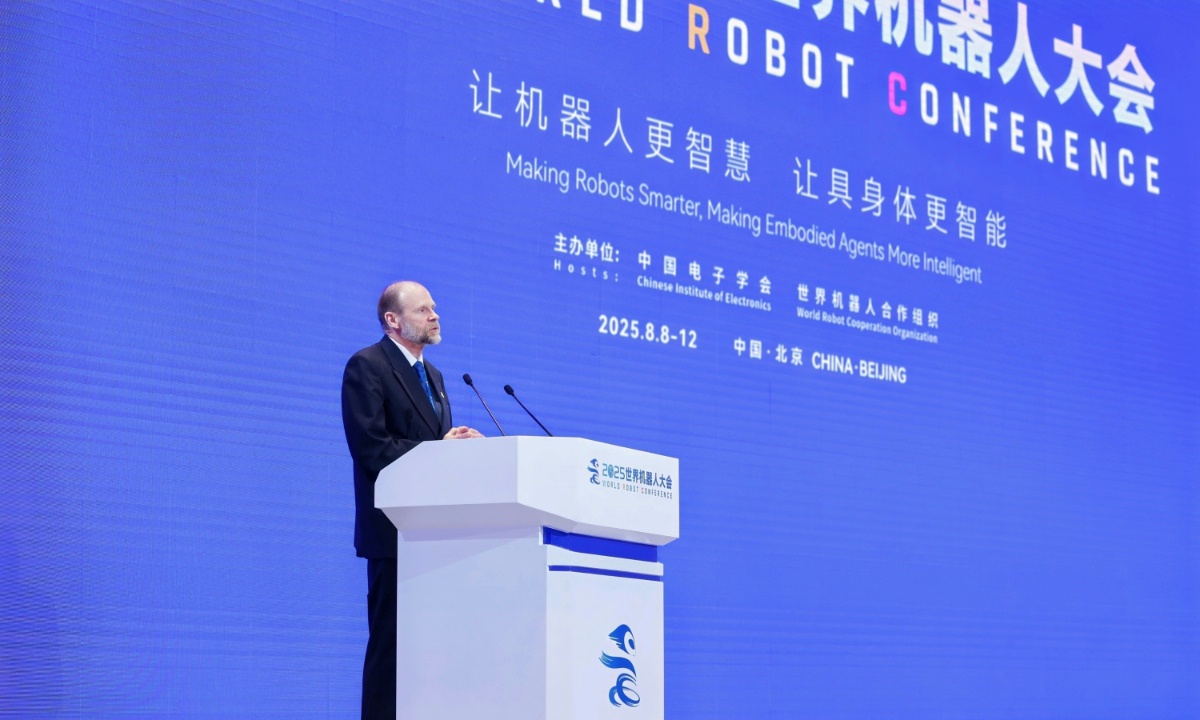
Juha Röning Photo: World Robot Conference
When asked about future cooperation in specific types of robotics between China and Europe, Röning said nearly all the application areas are possible, adding that industrial production remains the most advanced as it is already underway.
"We need production capacity in Europe, and I think China needs production capacity as well. Both sides need it, and there will surely be healthy competition between companies, whether in China or in Europe," he said.
Röning also highlighted the significant long-term potential for China-Europe cooperation in applying robotics to fields such as healthcare and agriculture. He was particularly impressed by a surgical robot at the conference, noting, "Even when the doctor must be extremely precise, the robot doesn't get tired or shaky. If you are human and tired, you might make mistakes."
At the current stage of global robotics development, Röning stressed that "safety comes first," and called for joint efforts from difference countries to establish international standards or regulations that all robotics companies must follow.
"To guarantee that everyone follows the same rules, we need agreements through organizations like ISO and other global bodies, which have members from China, Europe, and the US. If they decide together, then it will be good, and we can collaborate," he said.
RELATED ARTICLES