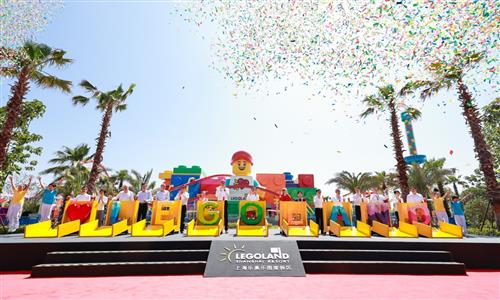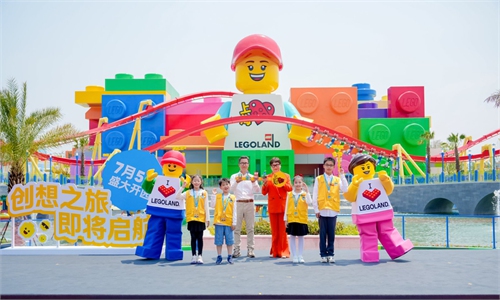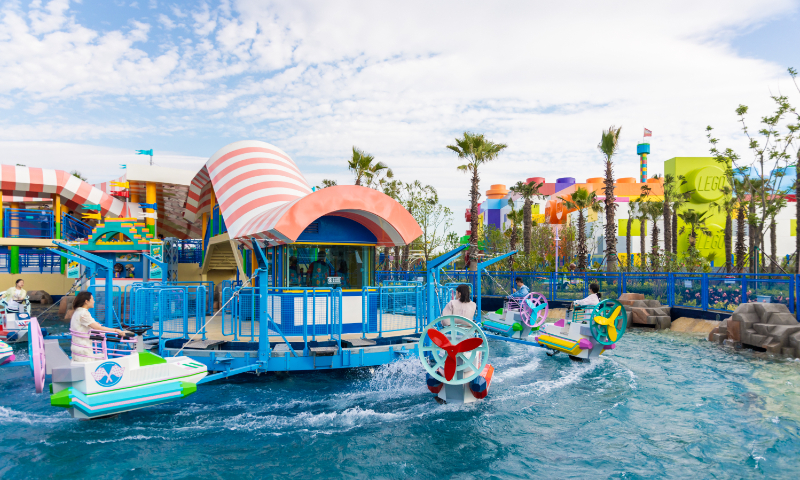
Visitors participate in activities during internal test and trial operation of the Shanghai LEGOLAND Resort on June 6, 2025. Photo: VCG
As China's consumer market grows increasingly vibrant and diverse, global theme park giants are doubling down on their efforts in the country, capitalizing on the rising demand for immersive entertainment and family-oriented leisure attractions during summer vacation.
The LEGOLAND Shanghai Resort was in full swing in its first month of operation by hosting up to 1,700 performances, including more than 950 character meet-and-greets, offering visitors close interactions with Legoland characters in over 600 atmospheric performances, and captivating audiences with their distinct storylines, according to information the company shared with the Global Times on Tuesday.
LEGOLAND Shanghai Resort opened for business on July 5, marking a new milestone in the country's cultural and tourism development.
Since its opening, the eight creative workshops within the resort become incredibly popular. Nearly 1,000 creative building sessions were held within a month, with more than 12,000 children experiencing the joy of building under the guidance of professional builders, the company said.
Among visitors to the park, families with preschool and elementary school students are the main force, among which parent-child families aged 2-12 account for more than 70 percent, and this proportion is still rising, said Jeanette Chen, general manager of LEGOLAND Shanghai Resort.
The Universal Beijing Resort also has made good plans for visitors, such as from August 4 to September 1, the Wizarding World of Harry Potter at the resort will hold a series of activities to celebrate Harry Potter Back to Hogwarts.
Marking its ninth anniversary in June, Shanghai Disney Resort exemplifies this trend through ongoing expansion. The resort announced major upgrades to its Tomorrowland and Adventure Isle-themed areas, introducing new attractions designed to enhance the visitor experience, the Global Times learned.
Analysts attributed the surge in the entertainment investments to China's massive consumer market and unwavering commitment to opening-up.
The first-tier cities such as Beijing, Shanghai, and Shenzhen have become the top choices for theme park development relying on their economic strength, mature tourism markets, and policy support, Lin Huanjie, director of the Institute for Theme Park Studies in China, told the Global Times on Tuesday.
China's ongoing efforts to expand services consumption present great market opportunities for foreign-funded theme parks, particularly in emotional value and digital experiences. Policy incentives—including cultural tourism support, relaxed foreign investment access, and regional development plans—create a favorable environment for foreign investment, Lin added.
Meanwhile, foreign companies are optimistic about China's favorable policies for foreign investment, confident in the country's vast tourism market, and encouraged by China's economic growth, which offers international investors great promise, Lin said.
According to the Institute for Theme Park Studies in China, every 1 yuan ($0.14) earned by a theme park can generate 3.8 yuan for the city and drive 6 to 15 yuan in revenue for upstream and downstream industries.
China is stepping up efforts to liberalize its services sector. The State Council has greenlit a new plan to expand comprehensive pilot programs, targeting 155 reform measures across critical areas—including market access for key services industries and fostering innovation-driven industrial development.
A total of 30,014 foreign-invested enterprises were newly established in the Chinese mainland in the first six months of this year, representing year-on-year growth of 11.7 percent, the Ministry of Commerce said earlier.
Global Times
RELATED ARTICLES