14 former HiSilicon employees sentenced for stealing Huawei's chip technology: media
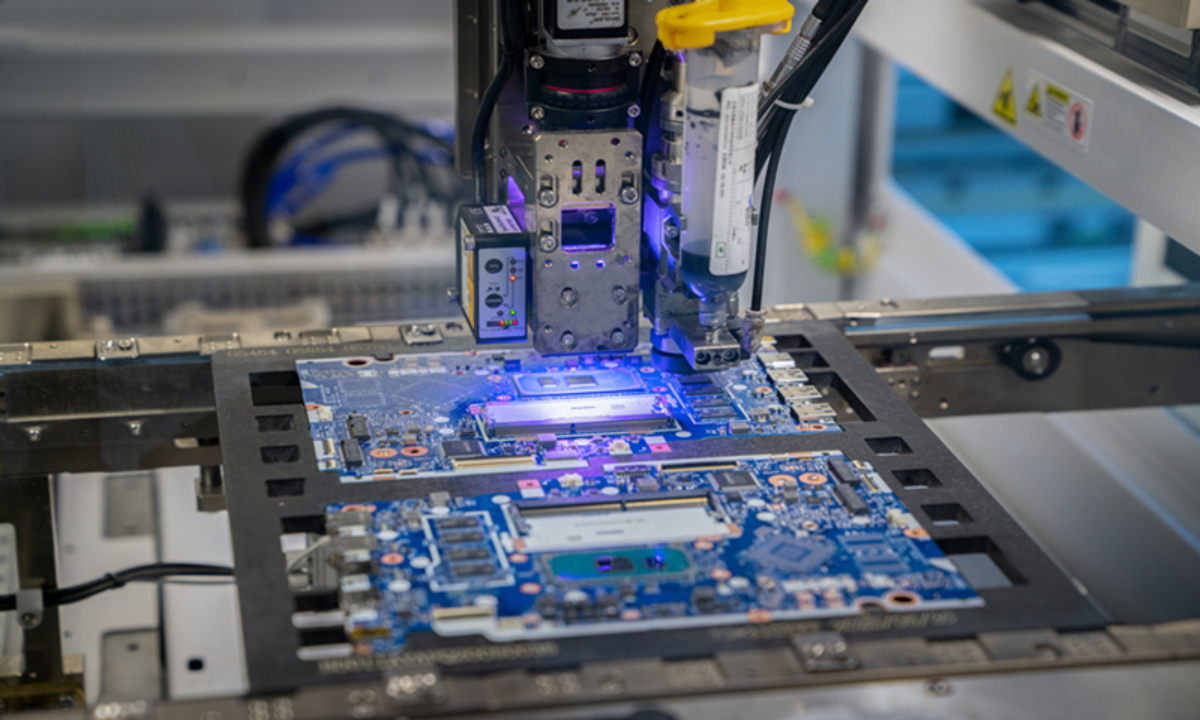
A chip manufacture machine Photo: VCG
A nearly four-year-long intellectual property (IP) theft case that shook China's semiconductor industry has finally reached a verdict after a Shanghai court recently issued a first-instance ruling in the case of Zunpai Communications Technology Co infringing on trade secrets of Shanghai HiSilicon Technology Co, a Chinese semiconductor company wholly owned by Huawei, the Science and Technology Daily reported.The judgment found that 14 Zunpai employees illegally obtained core Wi-Fi 6 chip technology from HiSilicon, their former employer, constituting the crime of trade secret infringement. The 14 individuals have received prison sentences and a total fine of 13.5 million yuan ($1.89 million).
The primary offender, Zhang Kun, Zunpai's founder and former Huawei HiSilicon technical director, was sentenced to six years in prison, fined 3 million yuan, and banned from engaging in the chip industry for five years, thepaper.cn reported.
According to Science and Technology Daily, the Zunpai case is regarded as one of the "most egregious technology theft cases" in the semiconductor industry.
Judicial appraisal results from the Ministry of Industry and Information Technology confirmed that Zunpai's infringing chip technology included up to 40 core technical points with over 90 percent similarity to Huawei's trade secret-protected points, constituting substantial similarity. This appraisal became the "ironclad evidence" for the conviction.
"This case, as one of the most severe IP cases involving a large number of individuals and heavy penalties, is a milestone in China's semiconductor IP protection. It has sparked deep reflection within the industry on investor responsibilities and technical compliance reviews," Wu Shenkuo, deputy director of the reseach center at the Internet Society of China, was quoted as saying by the Science and Technology Daily.
Cui Jun, a senior partner at Beijing Deheng (Shenzhen) Law Firm, said investors should conduct thorough pre-investment screenings of the technical origins of startup teams, incorporating IP compliance into core due diligence to avoid funding infringing activities, according to Science and Technology Daily.
According to corporate information platform Tianyancha, Zunpai Communications Technology Co, established in March 2021, focused on Wi-Fi chip development, particularly Wi-Fi 6 chips. Just two months after its founding, the company secured nearly 100 million yuan in angel-round financing.
On July 14, 2023, a Shanghai court publicized a first-instance non-litigation preservation ruling regarding HiSilicon's property preservation application against Zunpai and others. The ruling indicated that Shanghai HiSilicon Technology Co applied to freeze 95 million yuan of Zunpai' bank deposits or to seize, freeze, or detain other assets of equivalent value. The Shanghai Intellectual Property Court reviewed and approved the application, deeming it compliant with legal provisions.
According to a December 2023 disclosure by Shanghai Public Security Bureau in a post published on its official WeChat account, Shanghai police successfully cracked a case involving the theft of chip technology trade secrets, arresting 14 suspects and seizing seven servers storing the infringing chip technology in April.
Investigations revealed that former HiSilicon executives, including Zhang and Liu, established a technology company after leaving Huawei's HiSilicon. They lured multiple R&D personnel from the original rights-holding company to join their firm with high salaries and equity incentives. These individuals were instructed to illegally obtain Huawei's chip technology information before their departure. The stolen technology was then replicated and applied to the same type of chips designed by Zhang's company, with the intent to profit unlawfully, according to the post.
Xinsheng Community, Huawei's online community for its employees, posted after the verdict, calling it a "decisive victory in the battle to defend intellectual property rights," according to a report by thepaper.cn on Wednesday.
Global Times
RELATED ARTICLES