Expanded US steel, aluminum tariffs deepen global trade and supply chain risks, raise further cost for US firms, consumers: expert
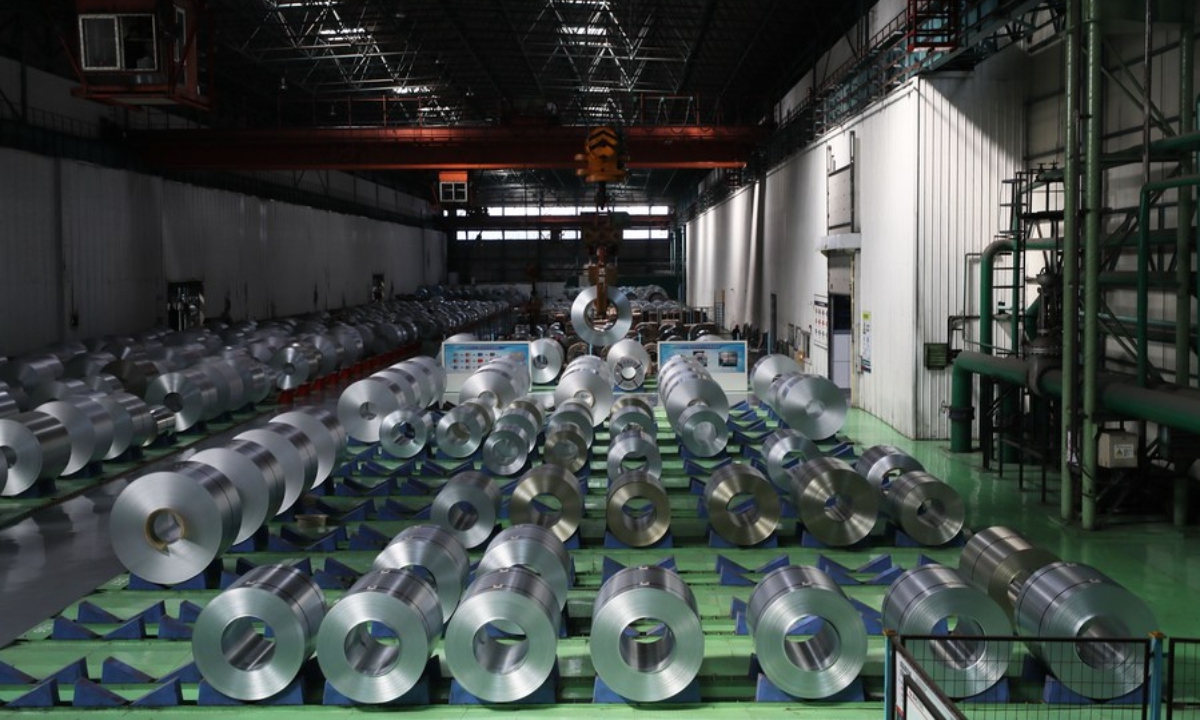
Steel rolls Photo: Xinhua
The US' decision to widen the scope of products subject to steel and aluminum tariffs on top of the June increase to 50 percent, is expected to further escalate global trade and supply chain risks, raising costs for US businesses and consumers, a Chinese expert warned.The US government on Friday expanded the reach of its 50 percent tariffs on steel and aluminum imports by adding 407 derivative products to the list, effective August 18, Reuters reported.
This latest move, coming after the June hike from 25 percent to 50 percent, marks another unilateral adjustment of US trade policy and adds further uncertainty to global trade, Zhou Mi, a senior research fellow at the Chinese Academy of International Trade and Economic Cooperation, told the Global Times on Saturday.
In June, the US raised tariffs on steel and aluminum imports from 25 to 50 percent, sparking concerns of supply chain disruptions and higher costs in the US and among major trade partners, according to media reports.
The non-steel and non-aluminum content will be subject to the tariff rates the Trump administration has imposed on the goods originating from specific countries, the latest notice said.
The levies on the goods on the expanded list go into effect on August 18.
The expansion of several hundred new items to the tariff hike has created fresh shocks to supply chains, with related upstream and downstream industries facing sharply higher costs. All parties involved will need more time to reassess and weigh how to continue trading with the US, Zhou said.
The repeated tariff adjustments will make trade partners see doing business with the US as risky. Even if American buyers accept higher costs, suppliers may act more cautiously, leading to potential import shortages and adding to US inflationary pressures, according to Zhou.
Foreign-made steel and aluminum are used in household products like soup cans and paper clips, as well as big-ticket items like stainless-steel refrigerators and cars. Economists warn that such heightened tariffs could significantly squeeze the wallets of both companies and consumers, AP reported in June.
Many product categories lack suitable domestic alternatives in the US, forcing downstream businesses and consumers to rely on imports. Higher tariffs will raise costs, reduce profit margins, and weaken market competitiveness, Zhou noted.
Commenting on the US' tariff hike on all steel and aluminum imports, He Yongqian, a spokesperson of the Chinese Ministry of Commerce, noted earlier that the US actions are typical examples of unilateralism and protectionism. Many countries have clearly expressed their opposition, and there is significant opposition within the US as well. A WTO panel had already ruled in 2022 that the US' previous Section 232 tariffs on steel and aluminum violated WTO rules. But not only did the US keep the existing Section 232 tariffs, but has actually further lifted tariffs on steel and aluminum.
"This severely harms the interests of all countries, seriously undermines the rules-based multilateral trading system, and impacts the global supply chain," He said.
RELATED ARTICLES