ARTS / CULTURE & LEISURE
2 bronze artifacts from Fuyu Kingdom dating back 2,000 years unearthed in NE China
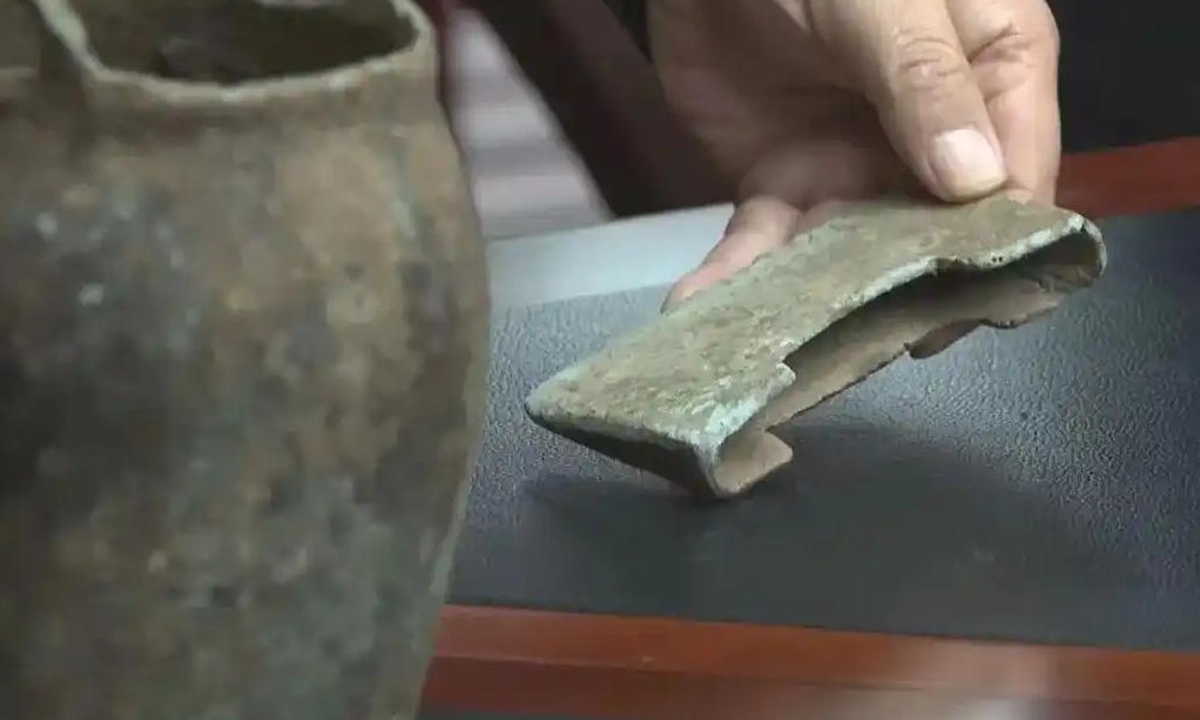
Two bronze artifacts dating back to the ancient Fuyu Kingdom about 2,000 years ago have been discovered in Northeast China's Jilin Province. Photo: Screenshot ffrom website
According to reports, the finds were made in Yushu county, Changchun, during China's fourth national cultural relics survey.
The Fuyu Kingdom, which existed from the 2nd century BC until AD494, was the first frontier regime established by an ethnic group in the northeast region. This new discovery is considered important evidence of China's multi-ethnic civilization, according to CCTV News.
In April, a villager from Sanyi village in Yumin town turned over a bronze vessel and a bronze spade he had unearthed years earlier while digging a cellar to local cultural heritage authorities. Both are well preserved and match artifacts unearthed from the Mao'ershan Fuyu tombs in Jilin City, suggesting they were burial artifacts from a high-ranking grave.
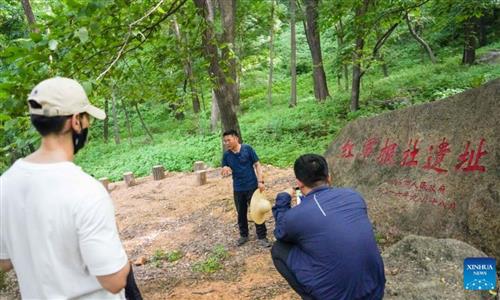
Archaeologists believed the area in Sanyi village is a location of ancient tombs. After a month of surveys, they confirmed the extent of the burial site, according to the report.
Gong Jianzhe, director of the History and Culture Research Center of the Fuyu Kingdom at Beihua University, told the Global Times on Sunday, "Fuyu people were among the earliest ethnic groups in Northeast China to enter a civilized era independently, holding an important place in the history of Chinese civilization."
The mainstream academic view holds that the early capital of the Fuyu Kingdom was located in present-day Jilin city, where large numbers of relics have been unearthed at the Dongtuanshan site and extensive tombs were discovered at the Mao'ershan site. "These finds provide important evidence for research," he noted.
Gong added that Fuyu culture was deeply influenced by Han Dynasty (206BC-AD220) culture and helped spread it to the surrounding regions. Historical records state that a Fuyu king was buried in jade suits granted by the Han Dynasty, a fact which underscores both the kingdom's cultural traits and its ties to the Central Plains.
"The newly discovered two bronze artifacts provide further evidence of the spread and exchange of Central Plains culture into Northeast China," noted Gong.
According to Gong, in recent years, Jilin Province has actively promoted research on frontier civilizations, including Fuyu culture. At the Dongtuanshan site exhibition hall in Jilin, numerous artifacts illustrate the interaction between Fuyu and the Central Plains.
"The shapes, craftsmanship, and patterns of pottery and tiles indicate that many Fuyu production techniques were influenced by the Central Plains dynasties," Gong told the Global Times.
Authorities are aiming to advance excavation and preservation work at multiple sites, according to a report by China News Service.
RELATED ARTICLES