SPORT / MISCELLANY
Humanoid robots can only truly enter households after they achieve Physical AI: vice president of RoboCup federation
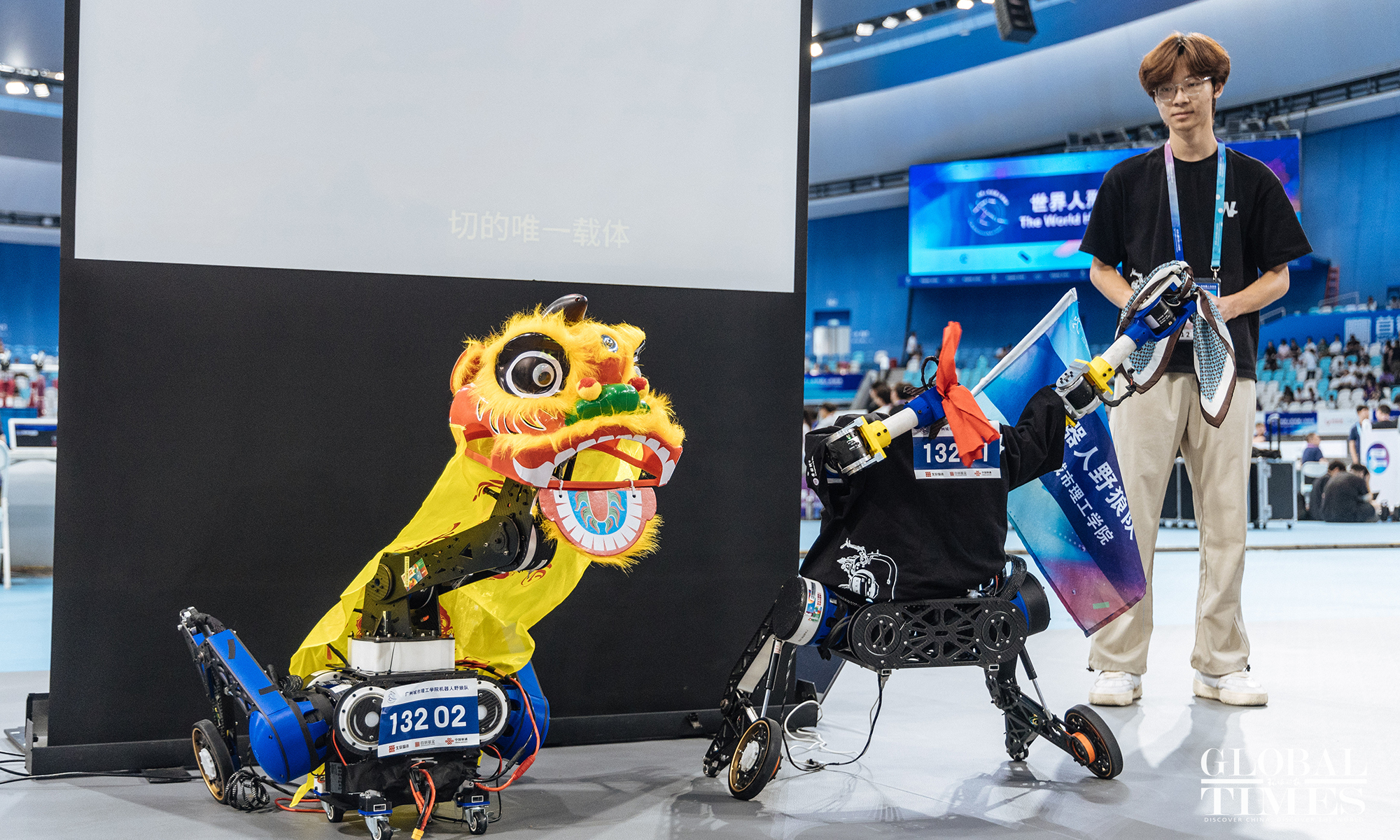
Photo: Li Hao/GT
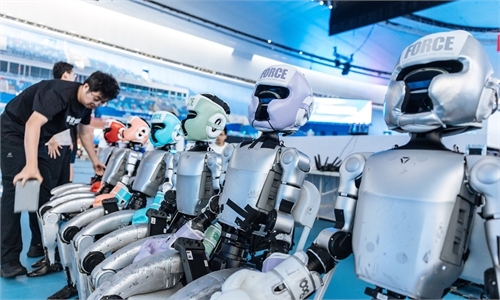
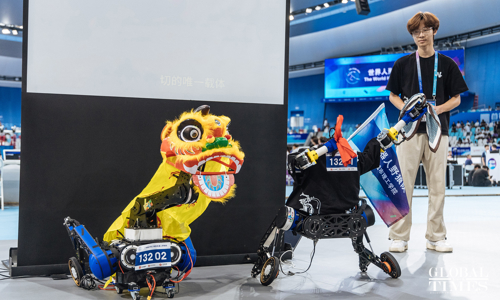
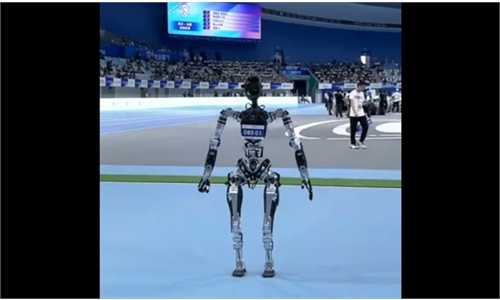
After three days of intense competition, the inaugural World Humanoid Robot Games (WHRG) reached its final day on Sunday. Beyond the medals and results, the event has been marked by moments of levity, heated debate, and far-reaching reflections on the future of robotics, drawing significant attention from both the public and the industry.One of the most discussed controversies came from Hangzhou-based Unitree Robotics, whose victories in the 1,500-meter and 400-meter running events sparked debate when it was revealed that its robots were remotely operated rather than fully autonomous.
Unitree CEO Wang Xingxing defended the practice, saying that while autonomy inevitably slows robots down, “switching to full autonomy is an easy change.”
In the Games, only one team, Tiangong from National and local co-built Embodied Artificial Intelligence Robotics Innovation Center chose to compete fully autonomously in track and field events. To ensure fairness, the rules stipulate that the The final result for fully autonomous robots is calculated as the actual time taken multiplied by 0.8. By contrast, in football matches, all participating robots competed without human intervention.
In an exclusive interview, Zhou Changjiu, Vice President of the RoboCup Federation, addressed the ongoing debate, the meaning of the Games, the difference between China and US on humanoid robots, and what the future of humanoids might look like.
“I believe that by next year, most competitions will be fully autonomous,” Zhou said. “Remote operation will become less common. And even when remote control is used, it is not a problem—it already demonstrates advanced hardware and motion control capabilities. The only difference is that decision-making is still human-driven.”
He added that the next wave of breakthroughs may come from fundamental research in actuation and sensor materials. Reinforcement learning, Zhou explained, is already providing robots with vast amounts of training data. “This is why the development pace is accelerating.”
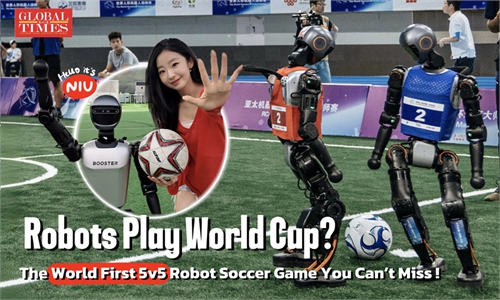
Indeed, at the 5v5 football final on Sunday between Tsinghua University’s Hephaestus and Germany’s HTWK Robots, it was observed that humanoid robots were performing coordinated decision-making. On one occasion, a Tsinghua robot facing a scoring opportunity passed the ball back to a teammate, demonstrating emerging team play.
“In 5v5 football, only teamwork determines victory,” Zhou said. “Offense, defense, passing, positioning, even goalkeeper decisions—all rely on artificial intelligence achieving more complex judgment and execution. That is what we mean by fully autonomous Physical AI.”
But videos of Unitree robots colliding with competitors and even knocking over operators also went viral, fueling doubts about the Games’ purpose. “You cannot expect robots to be immediately ready for real-world applications,” Zhou responded. “Humans also learn to walk before they can run.”
If you carefully check the history of Robocup, until 2023, all partners of the RoboCup were foreign companies. That changed in 2024, as China’s rapid progress in AI and humanoid robotics began to reshape the field. “China has made remarkable breakthroughs in humanoid hardware,” Zhou said.
It’s worth noting that all the humanoid robot football matches in the Games come from Chinese company Booster Robotics.
China’s advantage, he added, also lies in talent and education. “Chinese children are deeply engaged in STEM—science, technology, engineering, and math. There is enormous interest, and that passion fuels the pipeline of future innovators.”
When asked about the difference between China and US on humanoid robot development, Zhou noted that Tesla’s ecosystem gives the US an edge in applied AI through autonomous driving, which helps solve real-world modeling problems. China, however, benefits from abundant application scenarios and government support. “With strong hardware, motion control, and AI, China will lead in many vertical domains. Application is key, and China has no shortage of contexts in which to experiment.”
The progress has been rapid. At the 2024 RoboCup, robots still required human handlers to prevent falls. By October of that year, fully autonomous 2v2 matches took the stage in Qingdao. By April 2025, 3v3 competitions were introduced in Singapore, driven by Chinese universities.
“This is how quickly the field is moving,” Zhou said. “And it is pushing global rulemaking forward.” Looking ahead, Zhou envisions robots equipped with electronic skin, artificial muscles, and even human-like body temperature, making them suitable for home environments. “Today they are made of aluminum and motors. Tomorrow, they will resemble living beings,” he said.
Still, people would ask, what will the future be like for humanoid robots outside sports events?
For Zhou, the significance of humanoid football lies far beyond sport. “It is not about scoring goals or playing matches. It is a test-bed for algorithms, coordination, and decision-making. Football is just the surface. Behind it are technologies such as human–machine interaction, hardware, motion control, learning systems, communication, multi-robot coordination, and even future battery management.”
The broader vision, Zhou stressed, is Physical AI—artificial intelligence that can understand and interact with the physical world in the same way humans do.
“Now robots can autonomously play football. Next, they will assist with carrying heavy objects at home. The Games help them move toward Physical AI. So it’s not about football itself, but about meaningful applications.” Past industrial applications provide a clear precedent.
How far are robots from entering households? Zhou suggested the answer depends on market demand.
“If my child only needs assistance for a few months, or if an elderly family member is recovering from an injury for half a year, then a rental model makes sense. Just as car dealerships evolved from 4S to 6S service models, we will see humanoid robot services expand into customization, personalization, and leasing.”
Ultimately, it is believed that only when robots achieve human-like cognition and environmental understanding—Physical AI—will they truly become part of everyday life.
“When AI reaches Physical AI, robots’ perception and decision-making will mirror our own,” Zhou said. “That is when they will enter households and truly serve humanity.”
RELATED ARTICLES