China’s ecological vision a ‘beacon’ for the world, contributing wisdom, strength to global ecological civilization: former Belgian envoy

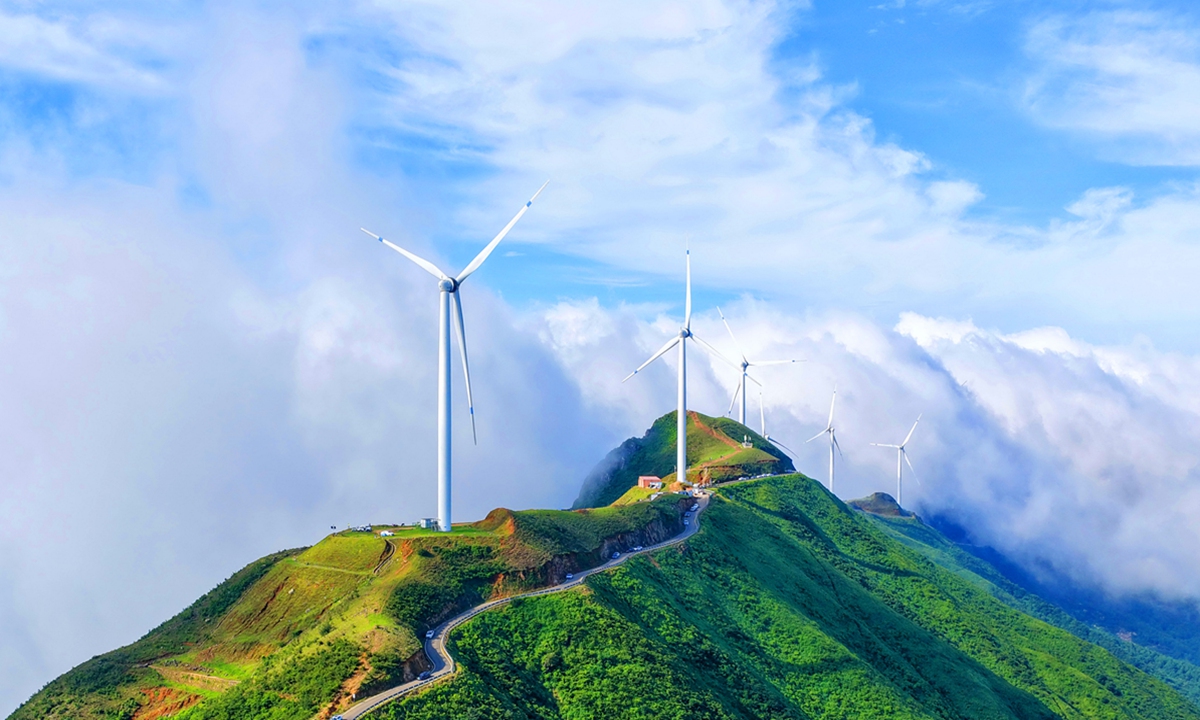
Wind turbines spin in the breeze on a mountain in Shangyou County, Ganzhou, East China's Jiangxi Province, on August 6, 2025. Photo: VCG
China has done something unique in human history by catching up on the industry in about 40 years, while it might take other countries 200 to 300 years to achieve the same. It's inevitable that there are consequences along with a country's leapfrog development. In order to compensate, China has taken resolute measures to repair the environmental damage caused by such rapid development — and it succeeded. I clearly remember that when I first landed in Shanghai Hongqiao International Airport in 1997, the city's skyline still bore the scars of early industrial development. Over the past two decades, China's environment has undergone a tremendous transformation under the leadership of the Communist Party of China (CPC).
The Europe China Joint Innovation Center recently released a report on the green development of China, which shows that China has been consistent in its commitment to transitioning its economy and restoring natural ecosystems. For example, in regions including North China's Inner Mongolia Autonomous Region and Northwest China's Gansu Province, there are big and consistent plans to fight back against the desert and there are major national campaigns for reforestation. It's not easy, but China is making steady progress. I can clearly see this in Southwest China's Yunnan Province.
After stepping down as the Belgian Ambassador to China in 2013, I settled in Yunnan, and have worked actively to support green development. Yunnan has long been my dream destination for its pristine natural ecology, boasting extremely rich biodiversity and standing as one of the best places to build a new type of ecological civilization. In the deep mountains of Yunnan, I established a demonstration park for ecological farming. Next to the farm, I established an international sustainable community called Kabissa, which serves as a hub for learning, collaboration, and innovation. It demonstrates how practices rooted in local ecological wisdom can have global impact.
The important concept that "lucid waters and lush mountains are invaluable assets," also known as the "two mountains" concept, has now become the cornerstone of China's ecological civilization development and has become a beacon for the world.
Viewed within a broader historical context, China's environmental governance is by no means an achievement accomplished overnight. In 1972, China attended the first United Nations Conference on the Human Environment. In the subsequent years, China gradually built a comprehensive environmental policy system. Entering the 21st century, China's vision expanded further. Since the 18th CPC National Congress, the CPC has regarded ecological conservation as the fundamental strategy for the sustainable development of the Chinese nation, and carried out a series of groundbreaking work with unprecedented determination, intensity, and effectiveness.
Today, the principles of green development, ecological priority, and high-quality development are not only integrated into national strategies but also deeply embedded in the genes of Chinese modernization. Ecological civilization is no longer a vision but an unfolding reality - a model, a mirror, and a roadmap that the world can draw upon. In an era intertwined with climate crises, biodiversity loss, and ecological pressures, "lucid waters and lush mountains are invaluable assets" deserve to become a universal creed for global ecological governance. This is not just China's wisdom, but a shared human consensus.
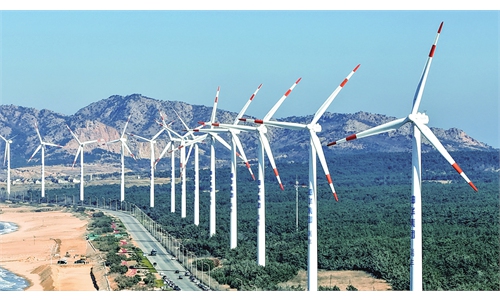
China has become a leader in green sectors such as wind power and new-energy vehicles (NEVs), and the world needs China for the green transition. In recent years, I have witnessed solar panels and wind turbines everywhere in China. The green energy industry has developed rapidly, with unparalleled hardware and infrastructure capabilities. China's investments in renewable energy are among the highest in the world, with solar and wind energy capacities growing rapidly. Moreover, China's NEV industry has achieved rapid development, maintaining the world's largest production and sales volume for 10 consecutive years, thereby making significant contributions to global carbon neutrality efforts.
While some politicians in the West hyped so-called "overcapacity" in China's NEV sector, this criticism is entirely unfounded. The root cause lies in the interests of Western companies. We must put an end to this traditional geopolitical noise and return the world to a cooperative framework of mutual benefit. Otherwise, we will achieve nothing and even shoot ourselves in the foot.
In this regard, Europe should draw closer to China in many aspects, rather than fixating on ideological disputes over "overcapacity" and "de-risking." China cannot thrive without the world, nor can the world thrive without China.
The communique of the third plenary session of the 20th CPC Central Committee clearly stated that Chinese modernization is the modernization of harmony between humanity and nature. China has played an increasingly pivotal role in international environmental forums, particularly through its active participation in the Paris Agreement, demonstrating its responsibility as a global environmental governance leader. By sharing expertise and technologies, China is contributing its wisdom and strength to the global ecological civilization.
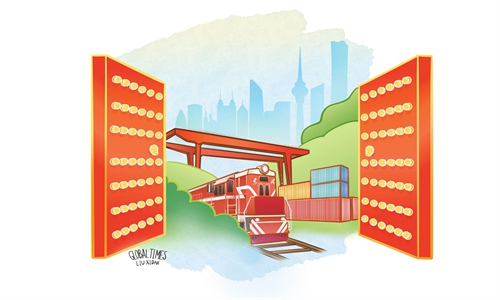
The Belt and Road Initiative (BRI) is becoming greener and more sustainable. The BRI has seen remarkable outcomes in areas including green infrastructure, energy and transportation in over 10 years, with a number of signature hydro, wind, and solar power plants and railway lines completed under the program. Today, the world still faces profound climate challenges, requiring sustained efforts. We must continue to support the joint construction of the BRI, promoting greater progress in clean and sustainable development worldwide.
The author is former Belgian Ambassador to China and co-founder of the EU-China Joint Innovation Center.

Patrick Nijs Photo: Courtesy of Patrick Nijs
RELATED ARTICLES