ARTS / FILM
Movie ‘Dead To Rights’ inspires thousands to trace family history at the Nanjing Municipal Archives
As a result, since July 23, more than 8,000 people have requested access to their family records, with about 100-300 requests being submitted every day, according to data released by the Nanjing Municipal Archives. Photo: Coutesy of Zhang Caiyun
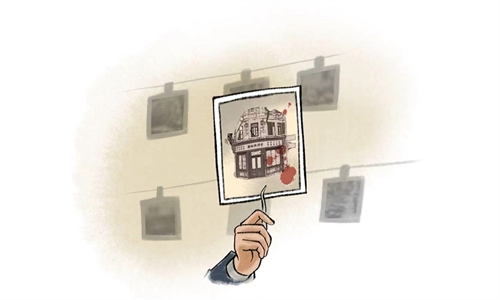
Dead To Rights, a film based on tragedy of the Nanjing Massacre in 1937, has inspired many residents of Nanjing, capital of East China's Jiangsu Province, to visit the Nanjing Municipal Archives and research their family histories.In the movie, a photo wall features depictions of common people's daily life in Nanjing around some landmarks in the city. After watching the film, many moviegoers in Nanjing got curious about what their ancestors' life might be.
Yang Sixian, one of the many Nanjing residents who submitted a research request to the Nanjing Municipal Archives in late July right after the release of the movie, told the Global Times that researching about one's own ancestry through archived materials has become a trend among her friends.
In her search request, submitted through a WeChat mini program, Yang searched for her grandfather and grandmother's ancestors. It turned out that her great-grandfather was an electrician. This was the first time she got to see a photo of her great-grandfather.
"When I saw his photos, I was touched by a sense of family closeness and tears came to my eyes," Yang recalled.
Yang also learned that her grandmother's family, which bore the surname Ma, had owned a pressed salted duck restaurant in Nanjing since the Qing Dynasty (1644-1911).
Li Xin, a Nanjing citizen who works in the IT sector, told the Global Times that he has been working on his family tree since 2021. This movie has offered more opportunities for him to complete his research at the Nanjing Municipal Archives.
"Our [old] house was forcibly confiscated by the Japanese army during the invasion. I have found the records of the house in the archives," Li said.
Li was able to track down a business registration made in 1930 by the Chinese government. His family was in the silk business, owning four satin machines. The elder generation in his family had passed down to him stories about how each of the machines were operated by three people in his family memoirs.
Li also found out he is one of the descendants of the 1937 Nanjing Massacre survivors. The 1946-48 household registration cards collected at the Nanjing Municipal Archives provided precious photos of his ancestors, which is a remarkable family memory.
"The history of my family is part of the history of our country," Li said. His old ancestral home was located nearby the Xinjiekou area in Nanjing, which, after the reform and opening-up, has become a prosperous business district.
"After nearly 100 years, China has grown from a poor and weak nation that was invaded by other countries to a power with a prosperous economy and its own voice in the world today, Nanjing is a mirror that reflects such rise," he noted.
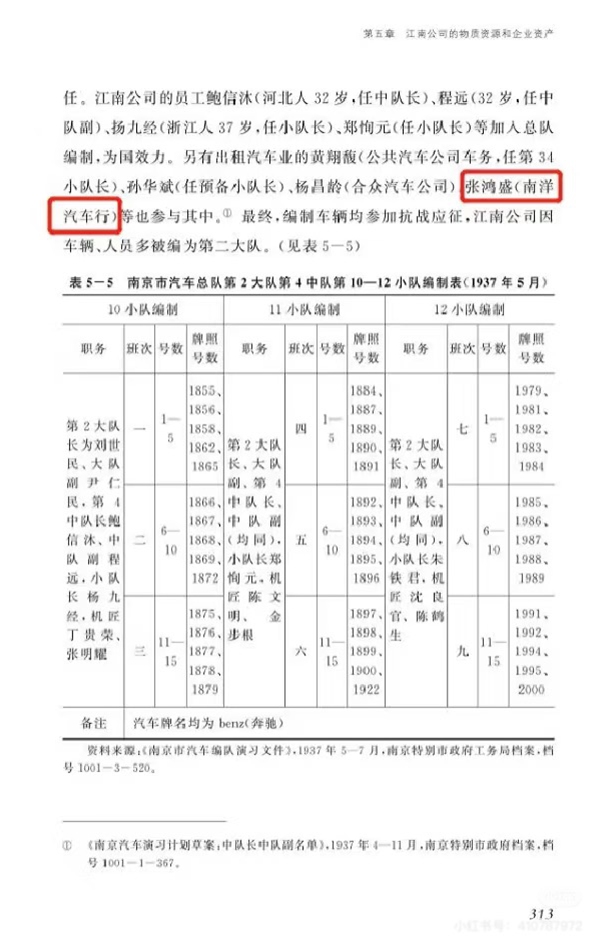
Another Nanjing citizen, Zhang Caiyun, said she found out that her great-grandfather had ran a taxi business. In 1937, her great-grandfather Zhang Hongsheng donated his business to the resistance and actively took part in the War of Resistance Against Japanese Aggression.
"I used to think my ancestors were nobody. To my surprise, my great-grandfather's generation was part of the resistance during the national crisis. I feel incredibly proud of my family, who were hard-working and part of the efforts against foreign invasions," she said.
Zhang is now studying as a candidate for a master's degree in Dallas, the US. Given it took her more than a decade to trace her family's history, she would like to contribute to the preservation and digitalization of the records so as to provide a more convenient access to them.
"When my grandparents died, I realized I knew so little about them and my ancestors. It is important to make history relevant and traceable," she told the Global Times.
RELATED ARTICLES