SCI-TECH / DISCOVERY
Paper on warming climate and water withdrawals threatening river flow connectivity in China published in US

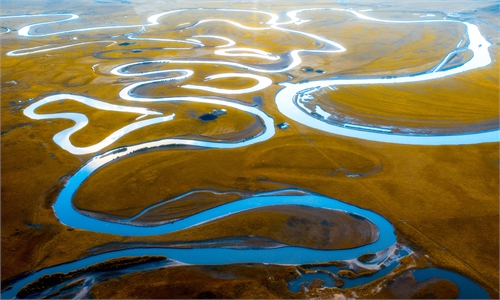
River Photo: VCG
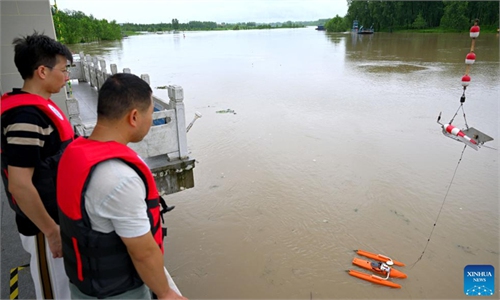
Chinese, US, UK, and Saudi Arabia scientists reconstructed high quality and long-term natural streamflow of 217,001 river reaches across China and analyzed the spatial and temporal patterns of natural river flow connectivity during 1961-2020, emphasizing warming climate and water withdrawals threaten river flow connectivity in China, and highlighting the urgent need to maintain sustainable water resources, particularly in drying regions, the Global Times learned from a research team of the Beijing Normal University on Wednesday.
The related research was recently published in the Proceedings of the National Academy of Sciences of the United States of America (PNAS), the Global Times learned.
Those scientists are from the Beijing Normal University, Peking University, University of California, Bohai University, China Institute of Water Resources and Hydropower Research, University of Oxford, The University of Edinburgh, and King Abdullah University of Science and Technology.
According to the research team, the river flow connectivity, widely defined as the flow status and carrying capacity of a river and is associated with a range of important ecological and societal benefits, plays a pivotal role in ecosystem sustainability, regional socioeconomic development, and human well-being. Natural river flow connectivity is highly sensitive to changes in aridity, which is vulnerable even to small changes in climate, especially during prolonged droughts. Furthermore, as one of the fastest growing countries and the world's second-largest economy, China has experienced a doubling of water consumption from 1965 to 2013.
In the context of accelerated climate change, the effects of warming climate and human water abstraction on the spatial-temporal variation of river flow connectivity have yet to be fully investigated. In China, connectivity has only been examined for individual basins, and there is a lack of information on the number of intermittent rivers flowing through different hydroclimatic zones, the scientists noted.
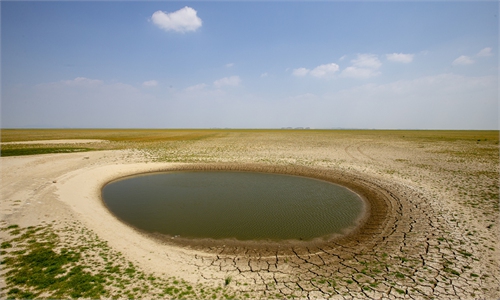
According to the joint study, the estimated naturally intermittent rivers represent about 13 percent of all river reaches, with a large contrast between northern and southern China. Although river intermittency decreased slightly during this period, warming temperatures offset this decrease by reducing surface water persistence, causing the decrease to double when removing the long-term temperature trend.
The scientists then analyzed whether a given river can meet water consumption and environmental flow requirements. According to Gou Jiaojiao, a team member, the length of intermittent rivers increased remarkably when considering human water withdrawal by agricultural, domestic, and industrial sectors, in addition to environmental flow requirements.
Consequently, Miao Chiyuan, the team leader, called for urgent efforts to maintain sustainable water resources, particularly in drying regions, prompting the study to discuss potential solutions.
Global Times
RELATED ARTICLES