Illustration: Liu Xiangya/GT
India has made notable strides in export-driven manufacturing, garnering global attention. Recently, New Delhi has signaled its intent to further expand its manufacturing exports. A key issue worth exploring is whether the country's trade ambitions can evolve into a mutually beneficial investment cycle, which is expected to support the continued growth of its manufacturing exports.Over the past decade, India's automobile exports have experienced significant growth. The Indian Express reported on Sunday that Prime Minister Narendra Modi said a "major program" related to India's automobile exports was in the offing.
According to the report, Modi said earlier policies were focused "heavily on imports" and driven by "vested interests;" but now self-reliant India is setting new export records.
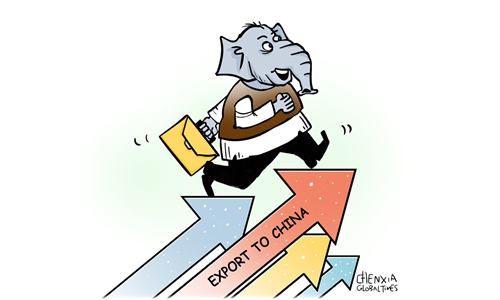
India's total exports touched an all-time high of $824.9 billion in the financial year 2024-25, according to data from the Indian Ministry of Commerce and Industry. This marks a growth of 6.01 percent year-on-year, setting a new milestone in the country's trade trajectory.
The increase in exports is a natural outcome of India's export-oriented manufacturing growth. In turn, this seems to have bolstered the country's confidence in developing its manufacturing sector, transforming it into a driving force for further industrial advancement.
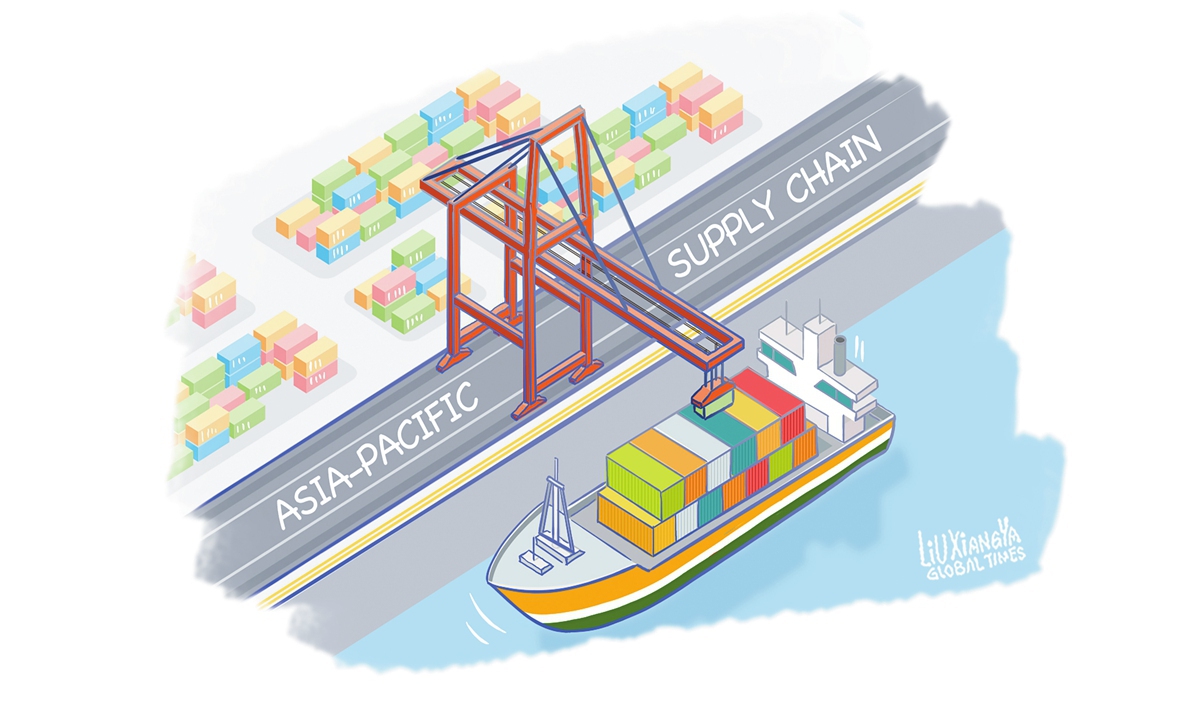
The growth of a country's export-oriented manufacturing sector is often influenced by a variety of factors. These include internal elements like resource endowments and development policies, as well as external factors such as the international trade environment and regional industrial collaboration. The well-established manufacturing supply chains in Asia have played a positive role in supporting India's manufacturing growth, providing essential raw materials and components needed for the development of its assembly manufacturing sector.
China is an integral part of the Asian supply chain. Experts note that in recent years, India has imported a significant amount of intermediate goods from China, which has been a beneficial factor in advancing India's assembly manufacturing industry.
China is in the process of transitioning from being a manufacturing hub to becoming a more advanced player in industry, aiming to climb up the value chain. Generally, China and India occupy different positions within the global manufacturing value chain, laying the foundation for complementary development. From this perspective, while there is competition between the two countries in manufacturing, there are also significant opportunities for collaboration.
Earlier this month, the foreign ministers of China and India held talks that resulted in 10 key agreements, reported the Xinhua News Agency. Among these was a commitment from both sides to implement specific measures aimed at facilitating the flow of trade and investment between the two countries. This development indicates a mutual interest in strengthening economic and investment cooperation, as well as enhancing the ease of doing business across borders.
Investment plays an important role in advancing India's export-driven manufacturing sector. On the one hand, Indian companies can enhance "Make in India" by "investing in China." On the other hand, attracting Chinese investment can channel financial resources, technological expertise, and skilled workforce from China into drivers of growth for India's manufacturing industry.
Chinese Ambassador to India Xu Feihong said recently that the Chinese side welcomes more Indian enterprises to invest in China, and "it is also hoped that the Indian side could provide a fair, just and non-discriminatory business environment for Chinese enterprises in India, so as to promote the common development of industries and benefit the people of the two nations."
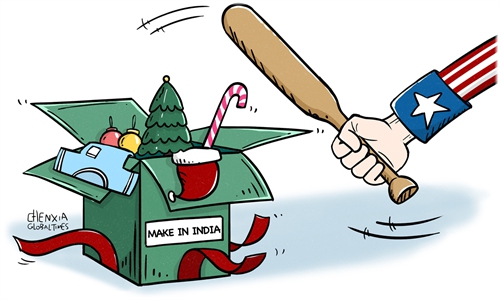
Amid the rise of global trade protectionism, India is likely to face certain challenges in boosting its exports. In this context, enhancing both outbound and inbound investments is crucial. Such investments can significantly strengthen India's export-driven manufacturing sector, helping it withstand the impact of global trade protectionism.
Encouraging investment collaboration between China and India could benefit the growth of India's manufacturing sector. Amid the challenges posed by increasing global trade protectionism, India can strengthen its manufacturing and export potential by actively seeking and promoting investment partnerships with other countries, including China.
RELATED ARTICLES