ARTS / BOOKS
Professor-novelist traces intellectuals’ wartime endurance
By Published: Aug 27, 2025 10:33 PM
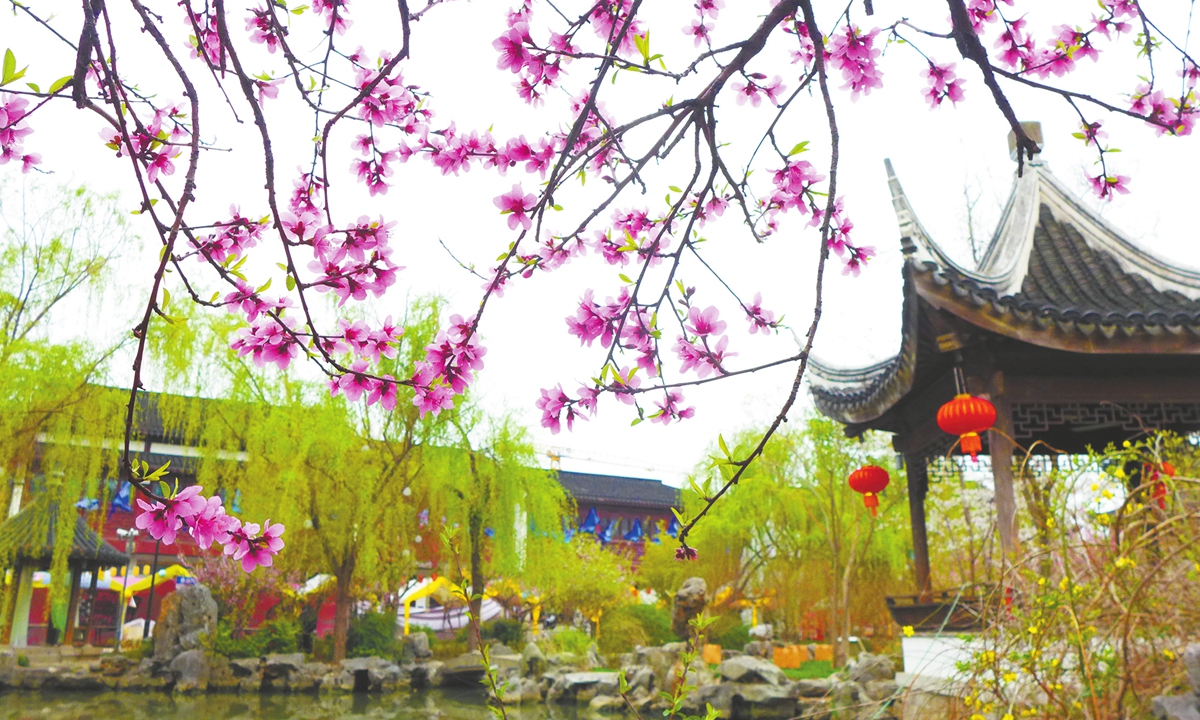
A scene in the Taohuawu historical and cultural district of Suzhou, East China's Jiangsu Province Photo: VCG
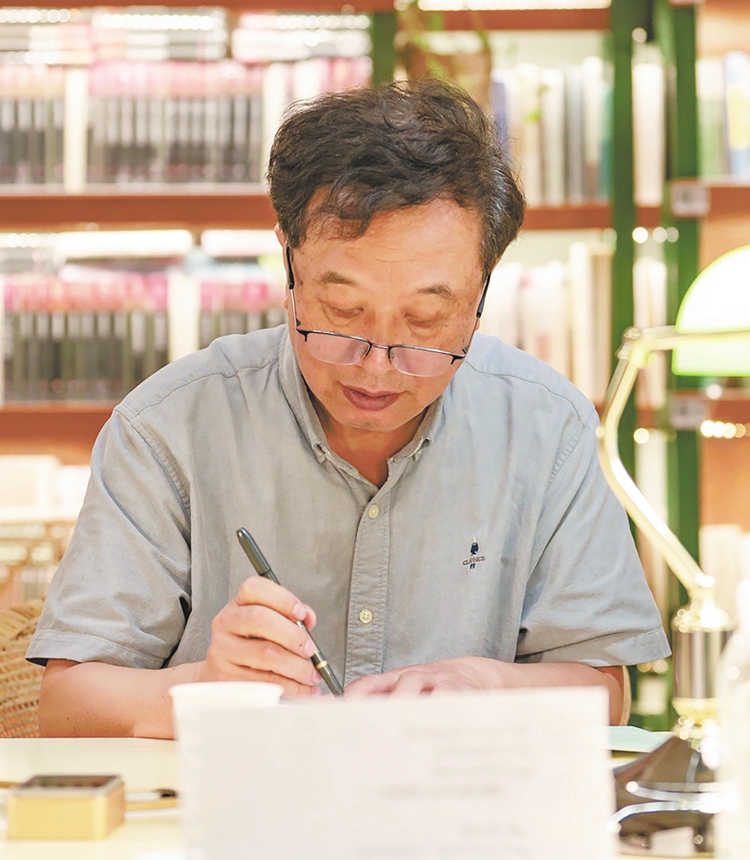
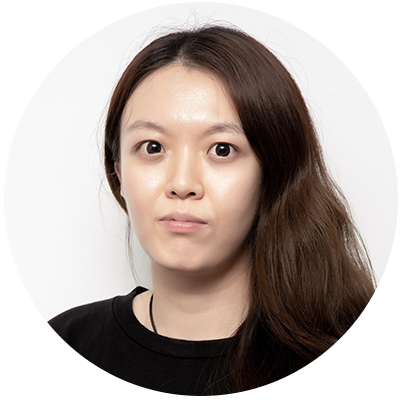
Writer Wang Yao Photo: Courtesy of Wang Yao
Editor's Note:
World War II has inspired countless literary works worldwide, and in China, the 14-year War of Resistance Against Japanese Aggression forged a powerful tradition where literature and national destiny are intertwined. Today's Chinese writers, shaped by different backgrounds and times, continue to draw on this legacy - some as elderly survivors who experienced the war as children, some younger as digital authors using new storytelling forms to revisit the tales of resistance. Marking the 80th anniversary of victory in the war, the Global Times invites three writers across generations to share the stories behind their published works. This is the second installment.
"If I were a teacher or student at National Southwestern Associated University during those years of chaos (the War of Resistance Against Japanese Aggression), what would I have chosen?"
This is a question that Wang Yao - a novelist, chair professor at Soochow University - often poses to himself. How would he fight when facing the invaders at that time? Would he pick up a pen or join the army?
A few years ago, he posed this question during a lecture on the greatness and challenges faced by the university's celebrated scholars during wartime.
Later, as he prepared to write his novel Taohuawu (lit: Peach Blossom Dock), Wang again confronted this question, determined to trace the journey from Suzhou to Kunming in his book to illuminate the steadfast decisions made by Chinese intellectuals standing at the crossroads of war.
In 1938, the National Southwestern Associated University was established in Kunming, Southwest China's Yunnan Province, as a temporary institution formed by scholars and students relocated from Peking University, Tsinghua University, and Nankai University due to the turmoil of war. It was dissolved on July 31, 1946.
Though it existed for just over eight years, this university, born of wartime chaos, created a miracle in the history of modern Chinese education: It nurtured two Nobel laureates of Yang Zhenning and Li Zhengdao, and more than 100 humanities scholars, according to the People's Daily.
In makeshift classrooms covered with tin roofs, by candlelight in teahouses late into the night, and beside the damp, cold walls of air raid shelters, these scholars dedicated themselves to learning and passing on knowledge during wartime. Wang told the Global Times, "This was their way of resisting invasion."
This July, Wang's new novel - telling the story of Chinese intellectuals' choices and destinies during the war - was published.
The pen as a weapon of resistance
A detail often haunts Wang Yao's memory: Japanese planes roaring over a small town, and his grandmother hiding under a table with his father and a young child. To this day, Wang has always imagined the love between mother and son beneath that table.
In Taohuawu, Wang wrote of invaders destroying beautiful streets in Suzhou, East China's Jiangsu Province, shattering homes, and taking away loved ones.
Through his protagonist's eyes, he depicted the desolation that followed: The peace and harmony of a once-idyllic peach blossom land now lost, its blossoms no longer blooming.
Yet the people of Taohuawu Street were resilient, embodying the indomitable spirit of ordinary Chinese people in those years. Wang pointed out that Suzhou's intellectuals, before and after occupation, were always at the forefront of resistance. They organized practical efforts, such as aiding the wounded during the Battle of Shanghai, and did whatever they could to support the war effort amid the flames.
Wang's novel is deeply rooted in the nationwide struggle against Japanese aggression. He set the story's origins in Hangzhou in the early 20th century, home to Zhejiang First Normal School, where literary giants like Lu Xun and Zhu Ziqing once taught. The novel then journeyed to the era of National Southwestern Associated University, with its protagonist becoming a student of real historical figures such as Wen Yiduo.
"Literature during the War of Resistance was not merely decoration, but a weapon," Wang explained, while recalling writers' works such as Wen Yiduo's The Red Candle.
In those years, some intellectuals enlisted and went to the battlefield, while others raised the pen as a banner and used words as their weapon. Guo Moruo's play Qu Yuan and Lao She's novel Four Generations Under One Roof awakened the nation with their words.
Pride in Chinese cultural identity
Over the years, Wang's novels and research have centered on the lives and spirit of Chinese intellectuals. His work bridges past and present, using historical figures, events, and daily life as the foundation for authentic storytelling. Without this grounding, he believed his fiction would lose both structure and truth.
The fruits of his research are also collected in another of his books, Everyday Songs - Echoes of the Southwestern Associated University, which contains many "fragments of history" reflecting the collective image of intellectuals during the war.
Wang recounted the hardships faced by the university's professors. For instance, the renowned poet Wen Yiduo had to carve and sell his own seals to make ends meet.
Yet, Wang noted that he never found a single word of pessimism or despair in their memoirs - they always remained steadfast in their cultural identity and preserving cultural roots.
Famous writer Wang Zengqi, in his memoir At the Southwestern Associated University, also recalled how teachers and students dressed in ragged clothes but pursued their studies with tireless dedication. "They were poor, but their resolve only grew stronger, never giving up their lofty ambitions."
"Chinese intellectuals became an integral part of the War of Resistance," Wang said. "Beyond their academic and cultural pursuits, they found their own ways to actively participate in the nation's struggle."
The answer to Wang's question - what choice he would have made - is no longer what matters most. What's more important is that more writers and readers have recognized that the stories of intellectuals during the war deserve to be written and rewritten; read and reread.
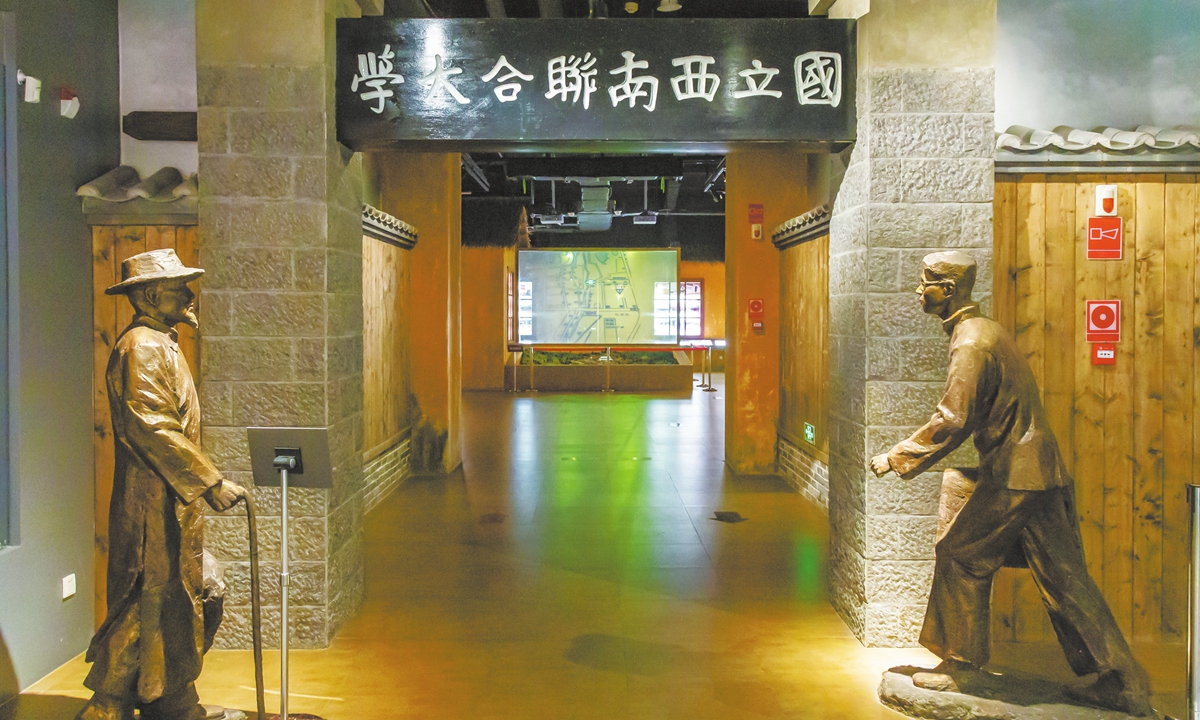
The entrance of the museum of National Southwestern Associated University in Kunming, Yunnan Province Photo: VCG
RELATED ARTICLES