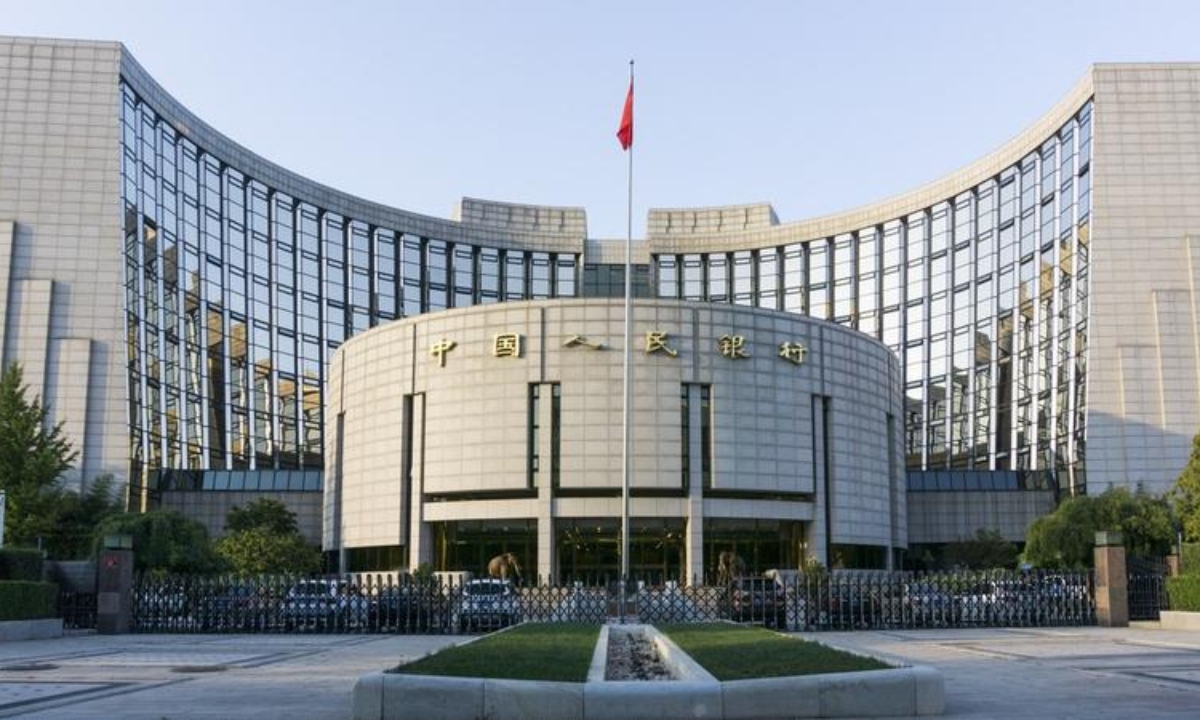
The headquarters of the People's Bank of China in Beijing Photo: IC
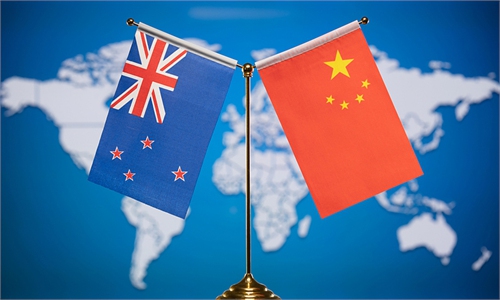
The People's Bank of China (PBC), the country's central bank, has renewed a bilateral currency swap agreement with the Reserve Bank of New Zealand. The renewed deal covers 25 billion yuan ($3.5 billion), the PBC said in a statement on its website on Thursday.
The arrangement is valid for five years and can be renewed upon mutual consent, the statement said.
The renewal of this arrangement will deepen monetary and financial cooperation between China and New Zealand, facilitate bilateral trade and investment, and contribute to financial market stability, according to the PBC.
Bilateral currency swaps between central banks are financing arrangements in which one country's central bank can exchange its own currency for another. The swap funds can be used to support bilateral trade and investment activities, helping save exchange costs and reduce exchange rate risks.
"The renewal of the bilateral currency swap agreement between China and New Zealand will help deepen bilateral trade ties and facilitate the increased use of the yuan in New Zealand. Strengthening monetary cooperation between the two countries will send a positive signal of collaborative progress to the market, enhancing market confidence and contributing to regional and global financial stability," Chen Hong, director of the Asia-Pacific Studies Centre at East China Normal University, told the Global Times on Thursday.
China has long maintained its position as New Zealand's largest goods trading partner and export destination. According to data from Chinese customs, bilateral trade in goods reached $20.15 billion in 2024, with China's exports totaling $7.74 billion and its imports amounting to $12.42 billion.
Bilateral economic and trade relations have transcended traditional commodity trade to evolve into a diverse and deepening international economic cooperation framework, encompassing agricultural product deep processing, scientific and technological innovation, green finance, and the digital economy, analysts said.
With the sustained release of the dividends from the upgraded China-New Zealand Free Trade Agreement, bilateral economic and trade exchanges will be injected with new momentum, Chen said, noting that accelerating bilateral economic and trade cooperation in frontier fields such as food science, low-carbon technology, the agricultural economy, digital trade, and biopharmaceuticals will be critical.
As of May 31, the PBC had signed bilateral currency swap agreements with central banks or monetary authorities in 32 countries and regions, according to data from the central bank.
RELATED ARTICLES