ARTS / CULTURE & LEISURE
Savoring the flavor of wild mushrooms safely
From forest to dinner table
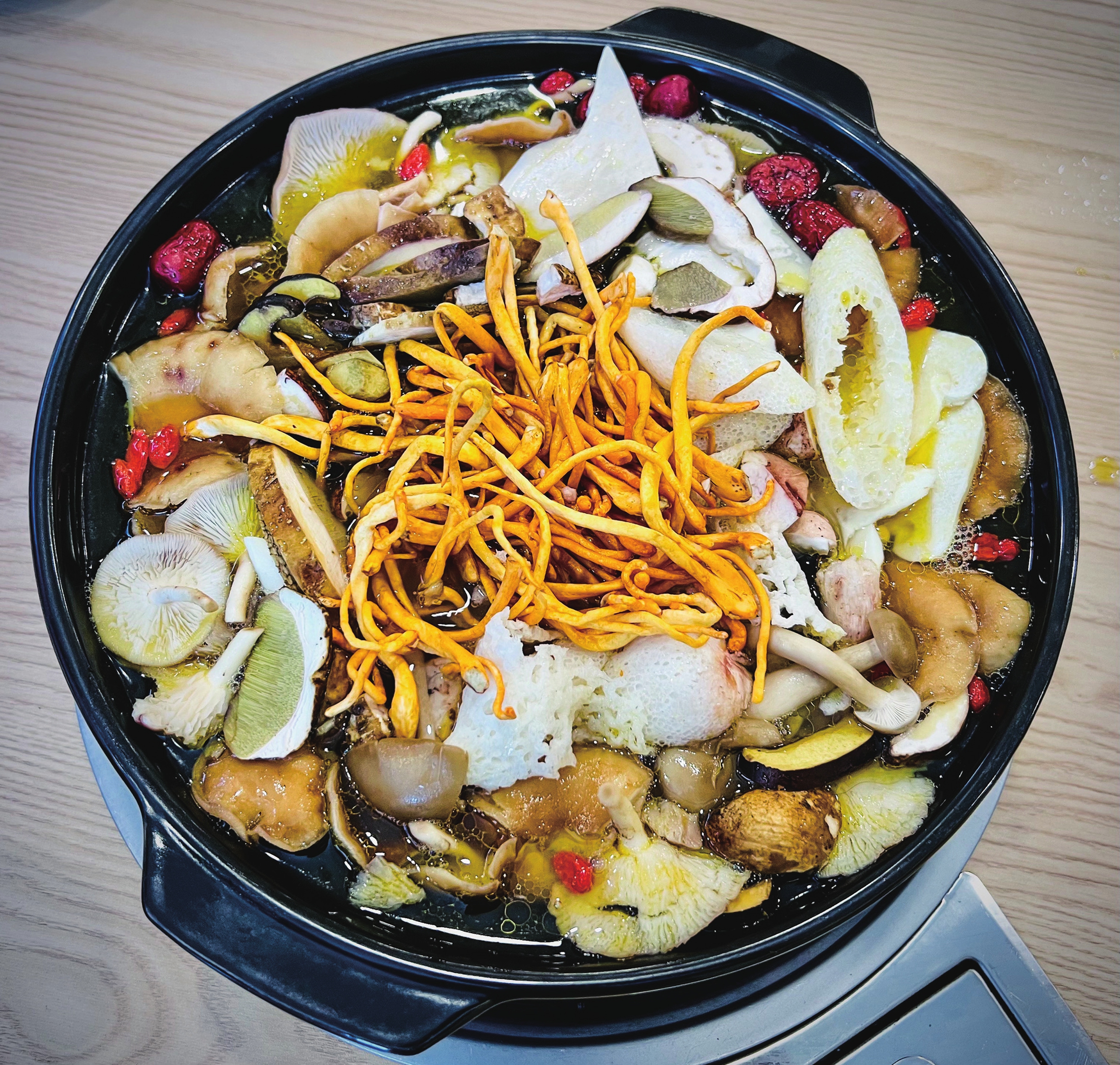
A wild mushroom hot pot in Lijiang, Southwest China's Yunnan Province Photos: VCG
On August 19, nine members of the same family were sent to the Affiliated Hospital of Yunnan University after a homemade meal of foraged wild mushrooms left them gravely ill.Their case is not an isolated one. Each summer, as rains soak the mountains and forests of southwestern China, provinces like Yunnan enter mushroom season, offering a rare culinary delight.
"Going to Yunnan for mushrooms" has become a popular topic on social media. Alongside the excitement for the cuisine, occasional reports of poisoning and hallucinatory experiences, such as seeing "little people," also emerge.
Seeing "little people" is a neuropsychiatric reaction to mushroom poisoning, Shi Jun, a member of the Chinese Botanical Society's science communication committee, told the Global Times. "And that's hardly the only symptom. Eating poisonous mushrooms doesn't just make you hallucinate - it can also bring people face-to-face with death."
What's the secret behind the irresistible taste of wild mushrooms? And how can diners enjoy them without risk? Experts share their insights with the Global Times.
Nature's bounty
Chinese people's history with mushrooms runs deep. At three Neolithic sites in East China's Zhejiang Province, archaeologists unearthed five suspected Lingzhi (or Ganoderma lucidum) samples. Analysis suggests that as far back as 6,800 years ago, early inhabitants were already collecting and using Lingzhi.
That legacy is particularly alive in Yunnan, a province known as the "Kingdom of Wild Mushrooms" in China. There are around 2,500 edible wild mushroom species in the world, Yunnan alone boasts more than 900, about 36 percent of global diversity and nearly 90 percent of China's known varieties, according to the Xinhua News Agency.
The province's geography is key. Yunnan sits on a low-latitude plateau where sharp differences between day and night temperatures and high humidity create ideal conditions for mushrooms. Its rugged terrain, with forests covering the mountains, offers mushrooms an abundance of fallen leaves and organic matter to thrive on, Shi explained, adding that from May to October, Yunnan's heavy rainfall and high humidity fuel the growth and spread of various mushrooms.
The allure is not just variety, but flavor. Mushrooms often mimic the texture of meat because of their fungal polysaccharides. Their savory depth comes from amino acids such as glutamic acid and aspartic acid, along with nucleotides like inosinate and guanylate, Shi said.
"The deep, complex flavor of wild mushrooms comes from the soil, the forest, and the natural world that nurtures them," Zhu Yi, an associate professor of food security and nutrition at China Agricultural University in Beijing, told the Global Times.
"Trace elements, humus, tree root secretions create a complex mix of compounds that produce especially high concentrations of flavor."
For travelers, the experience can be unforgettable.
Liu Mo, a tourist from Beijing, visited Yunnan in July with the intent of trying the local mushrooms. Here, he sampled stir-fried porcini and joined friends at a mushroom hot pot restaurant.
"We ordered a big platter with morels and bamboo fungus," Liu told the Global Times. "The waiter set a timer and didn't give us our chopsticks until the mushrooms were fully cooked. It felt strict, but also reassuring."
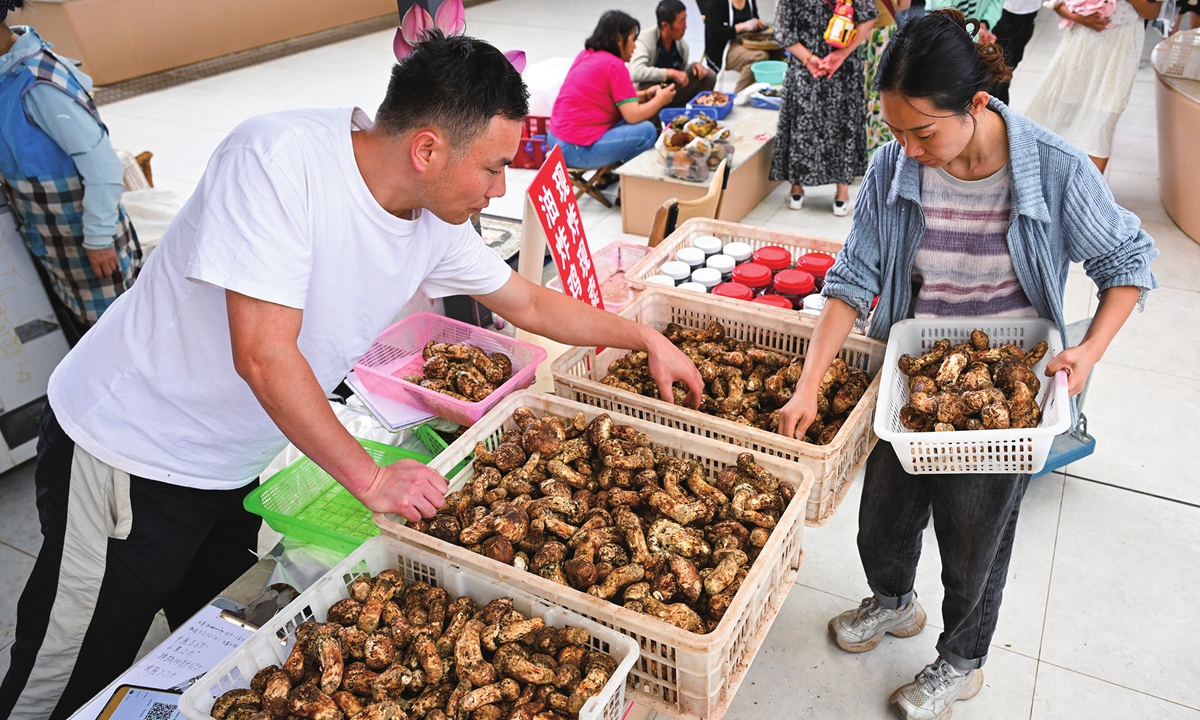
Vendors prepare Matsutake mushrooms in a market in Nanhua county, Southwest China's Yunnan Province, on August 8, 2025. Photo: VCG
Balancing allure, cautionDespite the gourmet appeal, risks remain real. Mushroom poisonings make headlines every season. China has more than 500 known poisonous wild mushroom species, with over 200 found in Yunnan alone, including more than 20 that are highly toxic.
From June to September, when Yunnan enters its annual "mushroom season," residents routinely receive safety alerts on their phones, "Do not pick, sell, or eat unfamiliar or high-risk wild mushrooms..." While wild mushrooms offer a seasonal treat for the palate, they also carry real food safety risks.
On August 24, Dali city in Yunnan, warned against unregulated "mushroom foraging tours" and "study camps" to Cangshan Mountain, following recent poisoning incidents.
Still, temptation persists. Some online users boast of ordering wild mushrooms like Jian Shou Qing, a highly sought-after wild mushroom species native to Yunnan, to cook at home. Experts warn this is dangerous.
With so many species and similar appearances, wild mushrooms are extremely difficult for the average person to identify. Foraging and eating them blindly carries serious risks, not only of poisoning but also of damaging the region's fragile ecosystem.
Shi stressed that the best way to avoid wild mushroom poisoning is avoiding picking wild mushrooms.
Besides, while cooking the mushrooms at high heat can remove toxins from some species, like Jian Shou Qing, it won't work for others.
Mushrooms in the Amanita family, for instance, contain toxins so stable that they remain poisonous even after boiling or steaming. Not all mushrooms are safe once cooked, added Shi.
For city dwellers far from Yunnan, Zhu advises that cultivated varieties are also a good choice. Nutritionally, wild mushrooms are very similar to cultivated ones, with comparable levels of protein and dietary fiber, she noted.
Cultivated mushrooms, such as king oyster mushrooms or domesticated shiitake, offer a safe, convenient, and affordable option for everyday meals, said Zhu.
Wild mushrooms are nature's intricate creations, providing the taste of the mountains and forests. Cultivated mushrooms, on the other hand, are the product of agricultural technology, offering everyday nutrition and safety, Zhu told the Global Times.
"Whether you seek the wild flavors of the forest or reliable, healthy meals, both are excellent choices for the table, each with its own irreplaceable qualities," noted Zhu.
RELATED ARTICLES