ARTS / CULTURE & LEISURE
New excavations in Shanxi offer clues to China's Xia, Shang civilization
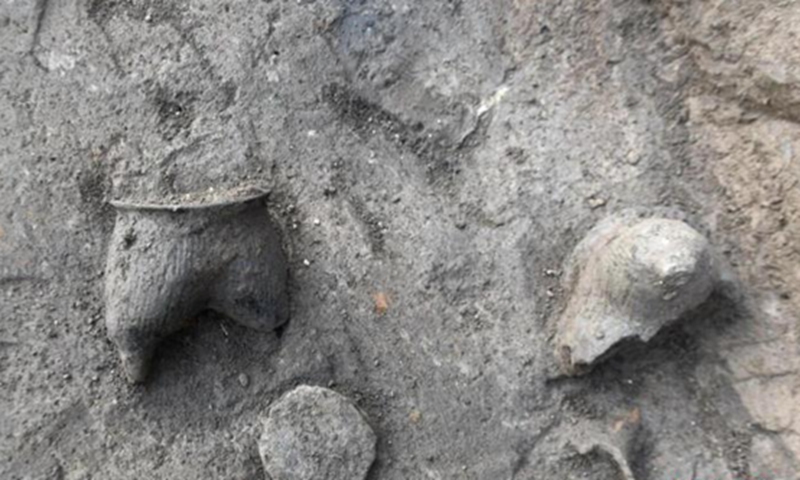
A pottery unearthed from the Lüru site Photo: Shanxi provincial institute of archaeology
New archaeological findings at the Lüru site in North China's Shanxi Province were released by the Shanxi provincial institute of archaeology on Friday, which reveal life of early settlers and hold significant academic value for advancing research on Xia (c.2070BC-c.1600BC) and Shang (c.1600BC-1046BC) civilizations, according to a report by Chinanews.com.
Located in Lüru village, Yuncheng city of Shanxi and about 7 kilometers south of Yanhu Lake, the Lüru site is a large settlement complex that developed continuously during the pre-Qin period (221BC-206BC).
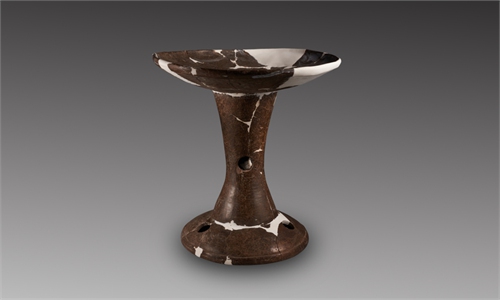
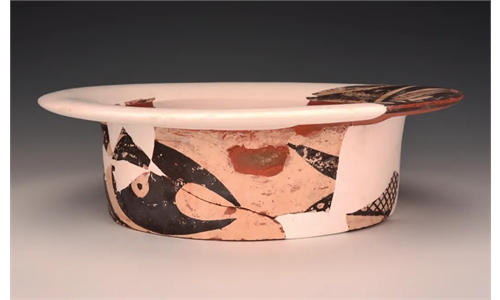
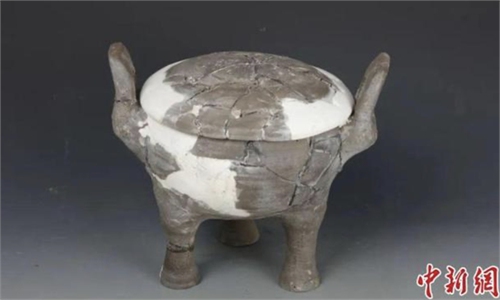
From January to May 2025, archaeologists uncovered 310 ash pits dating to the Early Shang, Western Zhou (1046BC-771BC), and Spring and Autumn periods (770BC-476BC), along with five tombs at the site. Unearthed artifacts included pottery such as li tripods, large-mouthed zun vessels, basins, small-mouthed jars, and round-bellied jars. Other finds included a pottery turtle, oracle bones in small quantity, a bronze chisel, a stone axe, shell ornaments, bone awls, round pottery disks, and pottery spindle whorls, the report said.
The Lüru settlement cluster is rich in cultural significance and spans a long period of time, with remains mainly from the Xia, Shang, and Zhou dynasties. It holds significant academic value for studying the early development and utilization of Yanhu Lake, understanding the evolution of settlement patterns around the lake, and advancing research on Xia-Shang civilization and Shanxi culture, said the archaeological team.
RELATED ARTICLES