China, Kazakhstan, Malaysia firms accelerate partnerships in Beijing after SCO Summit
Bilateral dialogues yield new deals in energy, digital economy, trade, highlighting closer China ties with Central and Southeast Asia
China on Tuesday hosted separate high-level business dialogues with Kazakhstan and Malaysia in Beijing following the Shanghai Cooperation Organisation (SCO) Summit, where companies held direct talks to explore new opportunities for cooperation. The meetings were attended by Kazakh President Kassym-Jomart Tokayev and Malaysian Prime Minister Anwar Ibrahim.
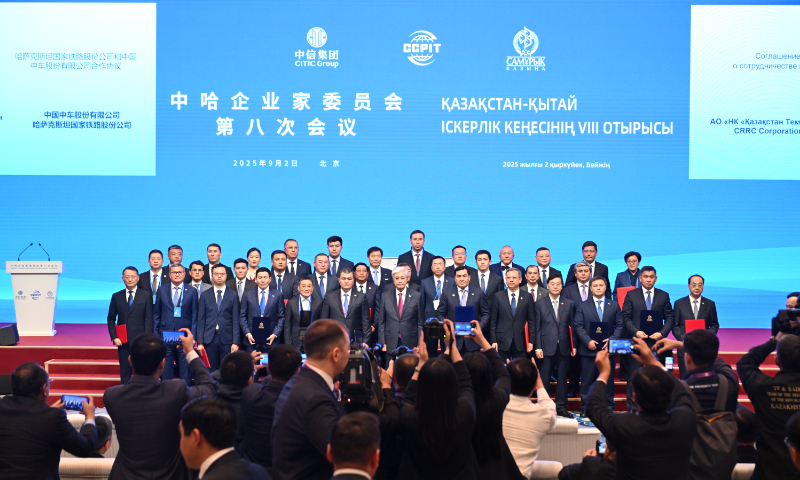
During the 8th China-Kazakhstan Business Council held the same day, enterprises from both countries signed 18 cooperation projects and agreements spanning new energy, finance, robotics, the digital economy, logistics and industrial parks, marking a major step forward in bilateral economic ties.
Prior to the Tuesday business events, Tokayev and Ibrahim attended the SCO Summit 2025 held in North China's Tianjin, according to the Xinhua News Agency.
Li Kangchao, general manager of Beijing Polyking New Horizons Technology Industry Co, highlighted the immense potential for China-Kazakhstan cooperation in e-commerce and logistics, integrating technology with traditional industries.
"The signing of the cooperation agreements was witnessed by President Tokayev. The Kazakh government has consistently assigned dedicated personnel to oversee progress in payment settlements, logistics infrastructure, and e-commerce platform development between Chinese and Kazakh enterprises. This reflects the strong commitment of President Tokayev and Kazakhstan's business communities to actively collaborate with China," said Li.
The Beijing company signed an agreement with Kazpost JSC, the national postal operator of Kazakhstan, on e-commerce platform cooperation during the first China-Kazakhstan Forum on Exchanges and Cooperation in High-Tech Industries held in June, according to Xinhua.
Bilateral trade between China and Kazakhstan reached $43.82 billion in 2024, with China remaining Kazakhstan's largest trading partner, Xinhua reported.
"We are generally open to working with companies from China," Bekezhan Zhakeev, chairman of the board of Kazpost JSC, told the Global Times on the sidelines of the 8th China-Kazakhstan Business Council.
"At a meeting in Beijing on Monday, Yu Weijiao, chairman of YTO Express Group Co and I discussed the development of the KazPost-YTO joint venture, the implementation of YTO Express' strategy to enter Central Asia, and the expansion of international transit routes."
Zhakeev also noted that Kazpost JSC's cooperation with CITIC Poly Fund is based on a strategic vision for the development of the postal and logistics industry in Kazakhstan and Central Asia. "The key areas of cooperation will be the development of a marketplace, logistics infrastructure, digitalization of services and the introduction of innovative solutions in the field of e-commerce."
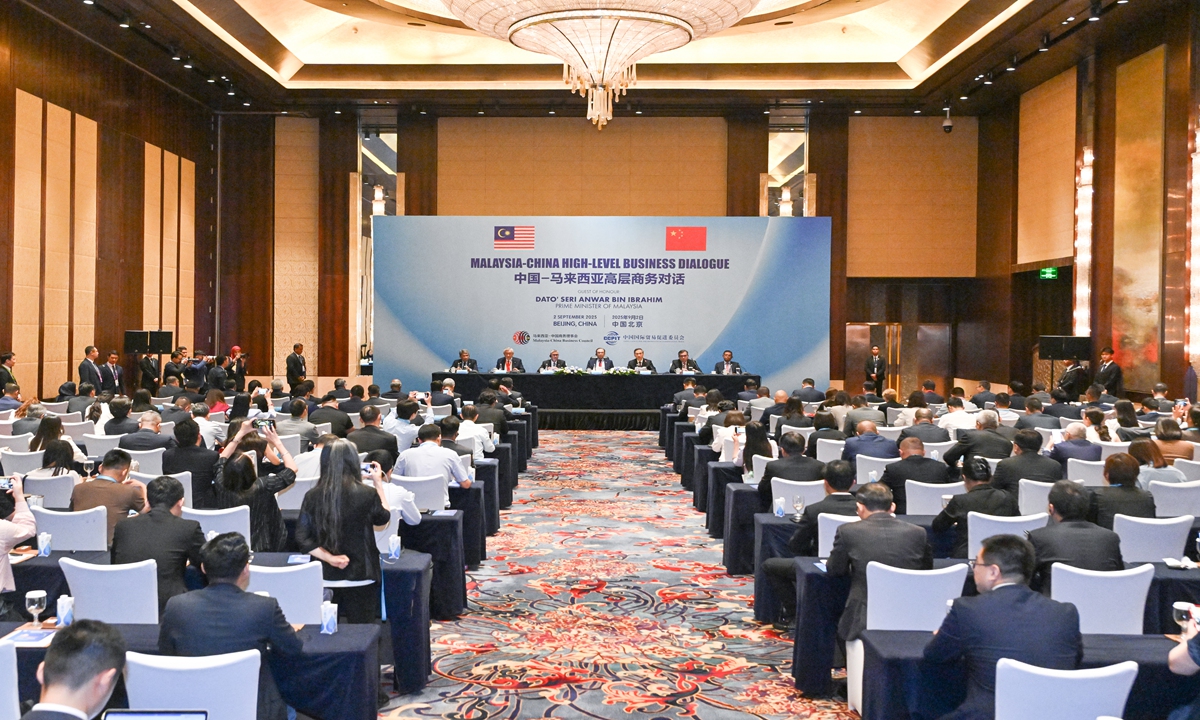
In the Malaysia-China high level business dialogue, Ren Hongbin, chairman of the China Council for the Promotion of International Trade (CCPIT), highlighted China's position as Malaysia's largest trading partner for 16 consecutive years, with bilateral trade reaching $212 billion in 2023, up 11.4 percent year-on-year. "In the first half of this year, trade rose further to $102.1 billion, showing steady growth," he said.
Ren said the two sides should tap greater trade and investment potential by leveraging the dividends of the China-ASEAN Free Trade Area and Regional Comprehensive Economic Partnership (RCEP), with Malaysia's rich agricultural and energy resources complementing China's vast market.
Ren also stressed the need to release investment momentum and strengthen cooperation in emerging sectors. "As China pursues high-quality development, there is broad scope for deeper industrial alignment and innovation with Malaysia," he noted, encouraging more Chinese firms to expand in Malaysia while inviting Malaysian companies to take part in the 4th China International Supply Chain Expo next June. He added that business council mechanisms provide effective platforms to deepen dialogue and promote win-win cooperation.
Xu Jinli, head of the Bilateral Cooperation Department of the China Chamber of International Commerce, told the Global Times that China-Malaysia trade ties have maintained strong momentum in recent years, with the chamber acting as a key bridge for business exchanges.
"Since its launch in 2002, the China-Malaysia Joint Business Council has held 17 annual meetings, becoming an important platform for institutional dialogue. It has helped steer cooperation toward emerging areas such as new energy, the digital economy and green development, enabling more firms to tap into market opportunities on both sides," he said.
He added that the chamber is also deepening regional cooperation. "In 2025 we are serving as co-chair of the East Asia Business Council, sharing market opportunities with Malaysia and other regional partners and advancing RCEP implementation. At the same time, we are working to set up a business council with the Gulf Cooperation Council (GCC) to expand third-party market cooperation," Xu noted. "With strong complementarities and broad potential, China-Malaysia cooperation will continue to lead China-ASEAN economic ties as a model of win-win partnership."
Hu Chunxin, CEO of Shanshiji Holdings Group, told the Global Times that Malaysia offers significant opportunities for Chinese consumer goods and cultural creative companies, citing brands such as Pop Mart and Chicecream, that are well-received by the large local Chinese community. He noted that while infrastructure and construction projects in the past were mainly undertaken by state-owned enterprises, the future will see greater potential for private firms in sectors like consumer products and cultural creativity.
Hu said that the company is focusing on opportunities for Chinese consumer brands, especially food and beverage chains, to expand in Malaysia. He described the day's dialogue with the Malaysian prime minister and ministers as highly productive, noting that their direct engagement and promised follow-ups were far more efficient than bottom-up communication.
China and Kazakh enterprises sign agreements on 18 cooperative projects at the 8th China- Kazakhstan Business Council held in Beijing, on September 2, 2025. Photo: Courtesy of China Council for the Promotion of International Trade
During the 8th China-Kazakhstan Business Council held the same day, enterprises from both countries signed 18 cooperation projects and agreements spanning new energy, finance, robotics, the digital economy, logistics and industrial parks, marking a major step forward in bilateral economic ties.
Prior to the Tuesday business events, Tokayev and Ibrahim attended the SCO Summit 2025 held in North China's Tianjin, according to the Xinhua News Agency.
Li Kangchao, general manager of Beijing Polyking New Horizons Technology Industry Co, highlighted the immense potential for China-Kazakhstan cooperation in e-commerce and logistics, integrating technology with traditional industries.
"The signing of the cooperation agreements was witnessed by President Tokayev. The Kazakh government has consistently assigned dedicated personnel to oversee progress in payment settlements, logistics infrastructure, and e-commerce platform development between Chinese and Kazakh enterprises. This reflects the strong commitment of President Tokayev and Kazakhstan's business communities to actively collaborate with China," said Li.
The Beijing company signed an agreement with Kazpost JSC, the national postal operator of Kazakhstan, on e-commerce platform cooperation during the first China-Kazakhstan Forum on Exchanges and Cooperation in High-Tech Industries held in June, according to Xinhua.
Bilateral trade between China and Kazakhstan reached $43.82 billion in 2024, with China remaining Kazakhstan's largest trading partner, Xinhua reported.
"We are generally open to working with companies from China," Bekezhan Zhakeev, chairman of the board of Kazpost JSC, told the Global Times on the sidelines of the 8th China-Kazakhstan Business Council.
"At a meeting in Beijing on Monday, Yu Weijiao, chairman of YTO Express Group Co and I discussed the development of the KazPost-YTO joint venture, the implementation of YTO Express' strategy to enter Central Asia, and the expansion of international transit routes."
Zhakeev also noted that Kazpost JSC's cooperation with CITIC Poly Fund is based on a strategic vision for the development of the postal and logistics industry in Kazakhstan and Central Asia. "The key areas of cooperation will be the development of a marketplace, logistics infrastructure, digitalization of services and the introduction of innovative solutions in the field of e-commerce."
Malaysia-China high-level business dialogue is held in Beijing on September 2, 2025. Photo: Courtesy of China Council for the Promotion of International Trade
In the Malaysia-China high level business dialogue, Ren Hongbin, chairman of the China Council for the Promotion of International Trade (CCPIT), highlighted China's position as Malaysia's largest trading partner for 16 consecutive years, with bilateral trade reaching $212 billion in 2023, up 11.4 percent year-on-year. "In the first half of this year, trade rose further to $102.1 billion, showing steady growth," he said.
Ren said the two sides should tap greater trade and investment potential by leveraging the dividends of the China-ASEAN Free Trade Area and Regional Comprehensive Economic Partnership (RCEP), with Malaysia's rich agricultural and energy resources complementing China's vast market.
Ren also stressed the need to release investment momentum and strengthen cooperation in emerging sectors. "As China pursues high-quality development, there is broad scope for deeper industrial alignment and innovation with Malaysia," he noted, encouraging more Chinese firms to expand in Malaysia while inviting Malaysian companies to take part in the 4th China International Supply Chain Expo next June. He added that business council mechanisms provide effective platforms to deepen dialogue and promote win-win cooperation.
Xu Jinli, head of the Bilateral Cooperation Department of the China Chamber of International Commerce, told the Global Times that China-Malaysia trade ties have maintained strong momentum in recent years, with the chamber acting as a key bridge for business exchanges.
"Since its launch in 2002, the China-Malaysia Joint Business Council has held 17 annual meetings, becoming an important platform for institutional dialogue. It has helped steer cooperation toward emerging areas such as new energy, the digital economy and green development, enabling more firms to tap into market opportunities on both sides," he said.
He added that the chamber is also deepening regional cooperation. "In 2025 we are serving as co-chair of the East Asia Business Council, sharing market opportunities with Malaysia and other regional partners and advancing RCEP implementation. At the same time, we are working to set up a business council with the Gulf Cooperation Council (GCC) to expand third-party market cooperation," Xu noted. "With strong complementarities and broad potential, China-Malaysia cooperation will continue to lead China-ASEAN economic ties as a model of win-win partnership."
Hu Chunxin, CEO of Shanshiji Holdings Group, told the Global Times that Malaysia offers significant opportunities for Chinese consumer goods and cultural creative companies, citing brands such as Pop Mart and Chicecream, that are well-received by the large local Chinese community. He noted that while infrastructure and construction projects in the past were mainly undertaken by state-owned enterprises, the future will see greater potential for private firms in sectors like consumer products and cultural creativity.
Hu said that the company is focusing on opportunities for Chinese consumer brands, especially food and beverage chains, to expand in Malaysia. He described the day's dialogue with the Malaysian prime minister and ministers as highly productive, noting that their direct engagement and promised follow-ups were far more efficient than bottom-up communication.
RELATED ARTICLES