ARTS / BOOKS
Reading part of urban daily life in food markets
Verses among vegetables
By Published: Sep 03, 2025 11:05 PM

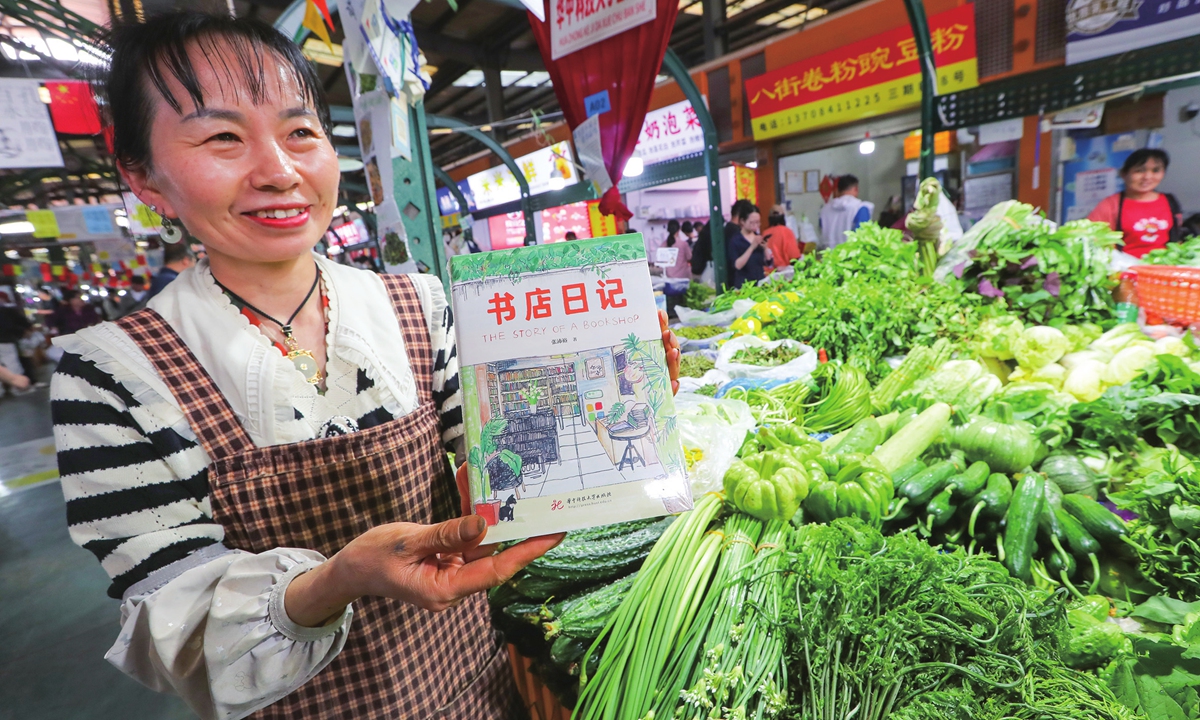
A vendor recommends a book to customers in a food market. Photos: VCG
What is it like to open a bookstore in a bustling food market? Outside, the air is filled with the fragrance of fresh produce; inside, people of all ages gather together, immersed in the scent of books. At first glance, the quiet world of a bookstore and the noisy vibe of a market seem worlds apart, yet they are gradually blending together. Bookstores nestled within markets are springing up across China, winning the hearts of young readers. This unique pairing not only satisfies physical appetites but also nourishes the soul.During the recent summer holiday, in the bustling Shuangjingtou Market of Wenzhou in East China's Zhejiang Province, a new bookstore became an unexpected community hub. Residents passed by, some stopping in after buying their daily groceries with baskets full of fresh vegetables, to pick up a book that had caught their eyes. "Some parents brought their children to the bookstore, and the whole family discussed what to cook for lunch. They found a recipe, checked the ingredients they needed, and then headed back into the market to shop," Pan Xiaoyue, one of the bookstore owners, told the Global Times.
From Wenzhou to Hangzhou in Zhejiang Province, to Chengdu in Southwest China's Sichuan Province, and Kunming in Southwest China's Yunnan Province, these food market bookstores are weaving themselves into the fabric of local life, redefining the boundaries of urban cultural spaces.
The renowned Chinese writer Wang Zengqi once wrote, "When arriving in a new place, some people like to visit department stores, some prefer bookstores. As for me, I'd rather wander through the local market - watching live ducks and chickens, admiring the crisp and fresh vegetables… it all brings a true sense of joy of life." If Wang were living today, he could enjoy the best of both worlds - browsing books and exploring the market, all under one roof.
Having dinner with a book
Pan's bookstore is named "Pan Cai Sheng," a name inspired by a beloved Wenzhou cold dish made from a unique local root vegetable. Most of the books here focus on food, ingredients, gastronomy, and culinary culture. To further embrace the spirit of Wenzhou, the bookstore has curated a special "Wenzhou Cuisine" bookshelf that collects rare books such as treatises on local cuisine and gazetteers, making it a window into the region's rich culinary heritage.
According to Pan, some of the books in the store come from her and her co-founder's personal collections, and they are offered for visitors to read during their stay.
Beyond books, the store hosts events centered around food culture - such as themed exhibitions that explore the roles of different ingredients from unique perspectives, or "open kitchen" gatherings where strangers cook together using fresh produce sourced directly from the market outside.
Meanwhile, in Hangzhou's Wen'er Market, an urban landmark for over 20 years, a new bookstore named "Chengxin" (lit: as one wishes) has quietly opened its doors. Inside, visitors discover a special Fresh Reading Supermarket, where 108 carefully selected new books are available for sampling in the form of short excerpts - be it a thousand-word essay, a two-page comic, or a striking photo series. The selection spans comics, poetry, novels, essays, literary classics, and traditional Chinese studies.
In a playful twist, the bookstore has also launched swap events where books can be exchanged for vegetables, and vice versa.
Posters online detail the rules: Any fresh produce bought at the market can be traded for a book sample, while secondhand books brought from home can be exchanged for fresh vegetables, an initiative that blurs the lines between nourishment for the body and nourishment for the mind.
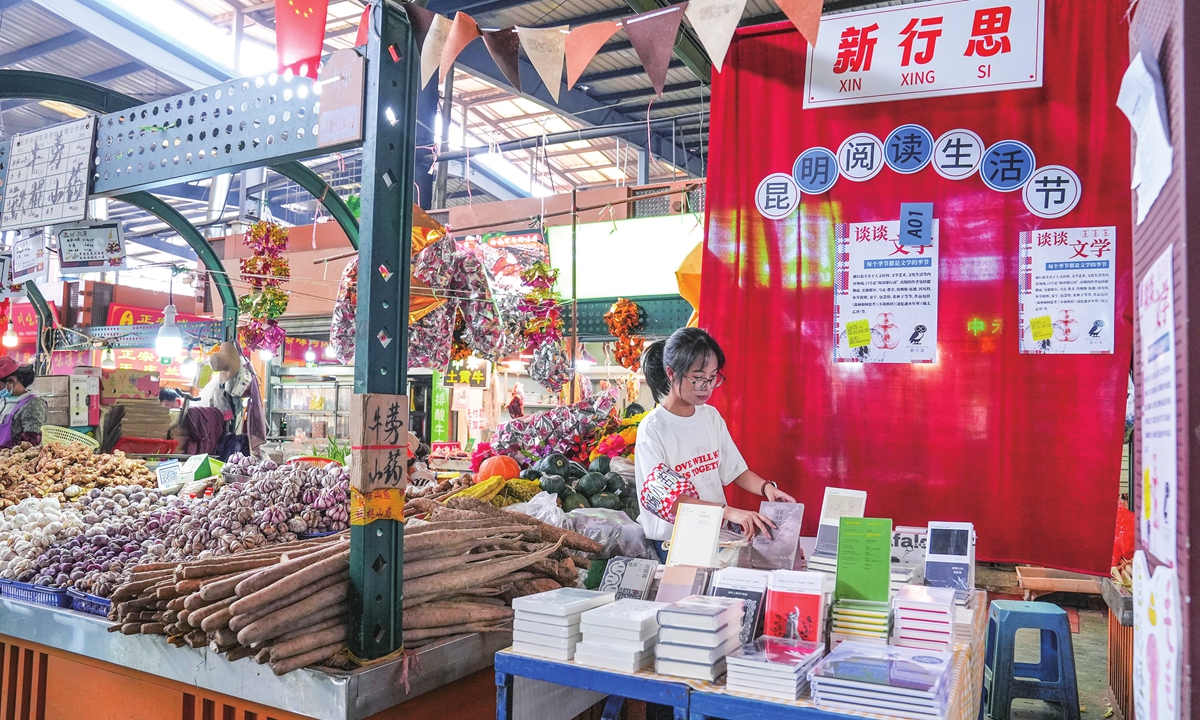
A book corner in the Xinying Donghua Farmers' Market in Kunming, Southwest China's Yunnan Province
Making reading a habitA user of the social media platform Xiaohongshu, or RedNote, whose username is "Daizai Kunming," recently attended a unique market event at Donghua Farmers' Market in Kunming, where the bookstall stood directly opposite the butcher and vegetable vendors. She documented the experience in a video, telling the Global Times, "It was truly a novel sensation."
She observed that the bookstore's stall was seamlessly interwoven with the traditional market booths, with not only books on display but also creative cultural products like postcards. Many people sat in a makeshift reading area fashioned from blue plastic crates, absorbed in their books.
"I found this kind of creativity incredibly interesting. It expands the possibilities of what a bookstore can be, while reshaping the image of the market itself. For regular shoppers, it brings a sense of freshness; for those who rarely think about food and vegetables, it draws them into the vibrant life of the market," she said.
Some netizens believe that establishing bookstores within markets also benefits vendors and their children. Children with a love of reading can find a quiet corner amid the market's hustle, while vendors can use their spare moments to borrow books for reading.
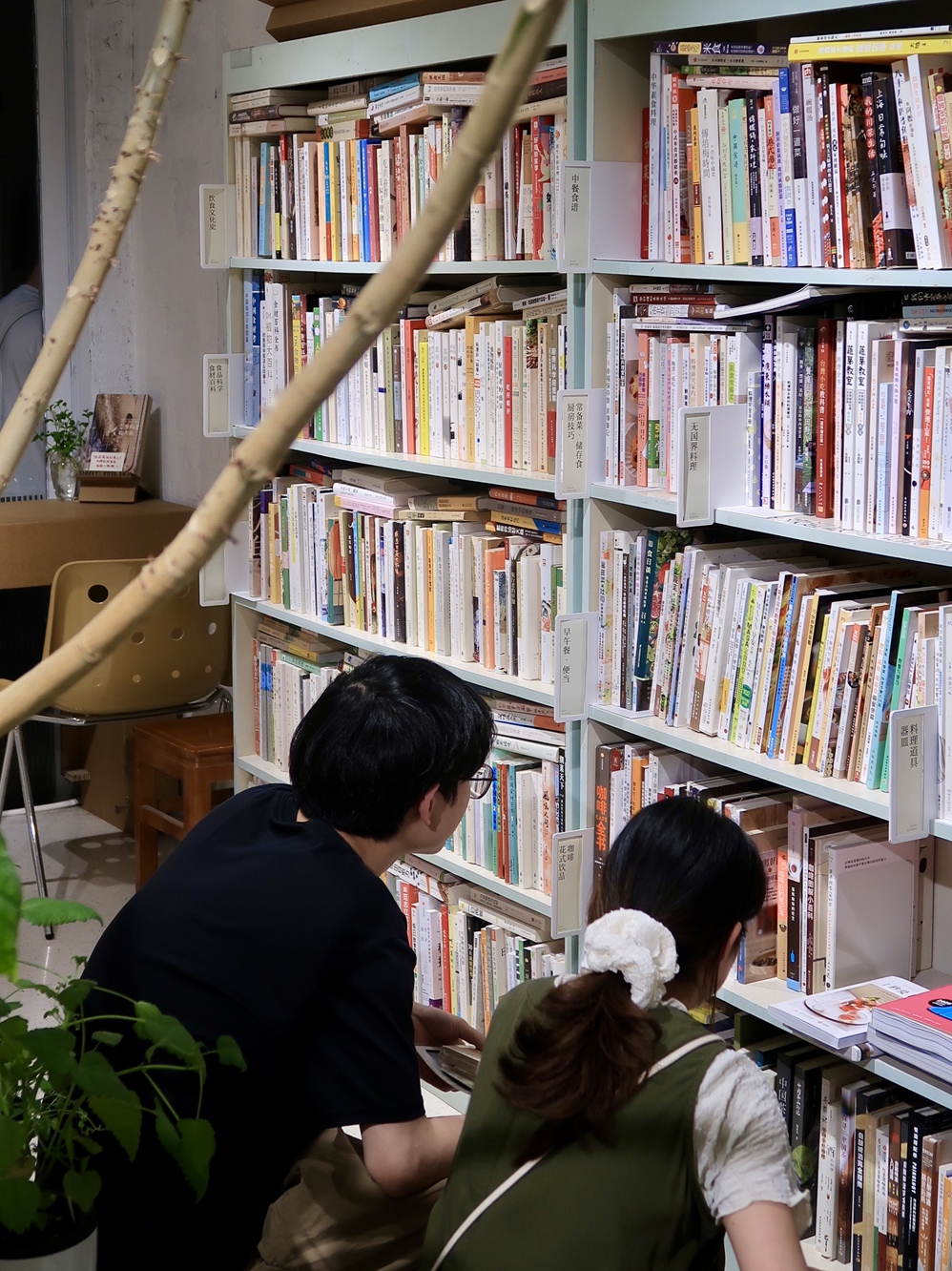
Two readers choose the books at the Pan Cai Sheng (lit. Dish Books). Photo: Courtesy of Pan Xiaoyue
At Shiqiang Market's bookstore in Chengdu, special reading activities for children were held, featuring picture books that are closely tied to everyday life and the unique environment of the market. Thanks to these activities, children learned about vegetables and the value of work through interactive stories, guided by nearby vendors who allowed them to touch tomatoes, observe the details of celery leaves and taught them to distinguish among different kinds of beans, according to Chengdu Economic Daily.In total, 329 farmers' markets across Chengdu now offer reading rooms that blend the warmth of everyday life with the fragrance of books, Chengdu Economic Daily reported.
For pioneers like Pan, who are exploring for new bookstores in markets, books and cabbages can share the same shopping bags, and poetry can mingle with the calls of vendors. Reading becomes both a part of daily life and the ingredients for meals.
RELATED ARTICLES