Memorial hall of Maoshan New Fourth Army: A teacup brings together the strength of the entire nation against Japanese aggression
By Li Tianyang, Zhao Bo and Published: Sep 03, 2025 11:42 PM

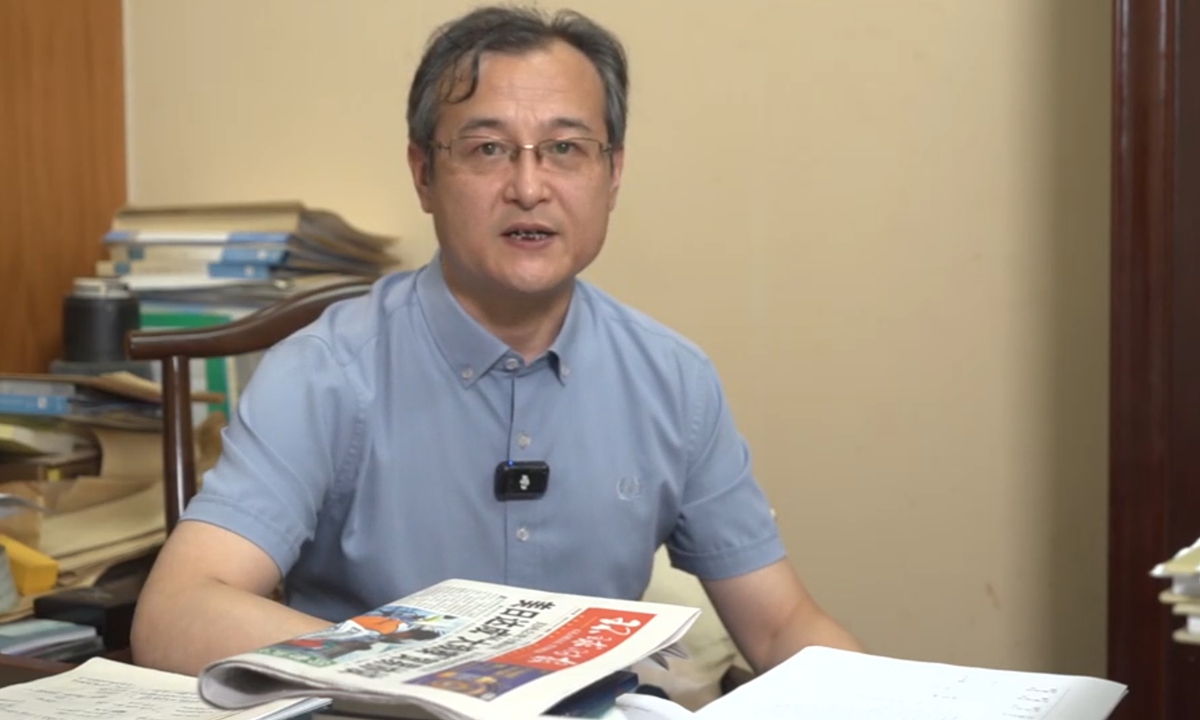
Sun Zhijun, director of the memorial hall of Maoshan New Fourth Army
Exhibited artifact: The teacup used by Ji Zhengang (a national industrialist) to host Chen Yi (Commander of the New Fourth Army)
Narrator: Sun Zhijun, director of the memorial hall of Maoshan New Fourth Army
In the summer of 1938, comrades Chen Yi, Su Yu and others led the New Fourth Army, a major Communist Party of China (CPC)-led military force that played a crucial role in the War of Resistance Against Japanese Aggression, to advance eastward, establishing the southern Jiangsu anti-Japanese aggression base area centered on Maoshan Mountain in Jiangsu Province.
In order to cherish the memory of the great achievements of the older generation's proletarian revolutionaries and educate future generations, the Maoshan Mountain New Fourth Army Memorial Hall was completed in September 1985. Among its many relics, the teacup used by Ji Zhengang to host Chen Yi is one of the most representative items, carrying deep revolutionary significance.
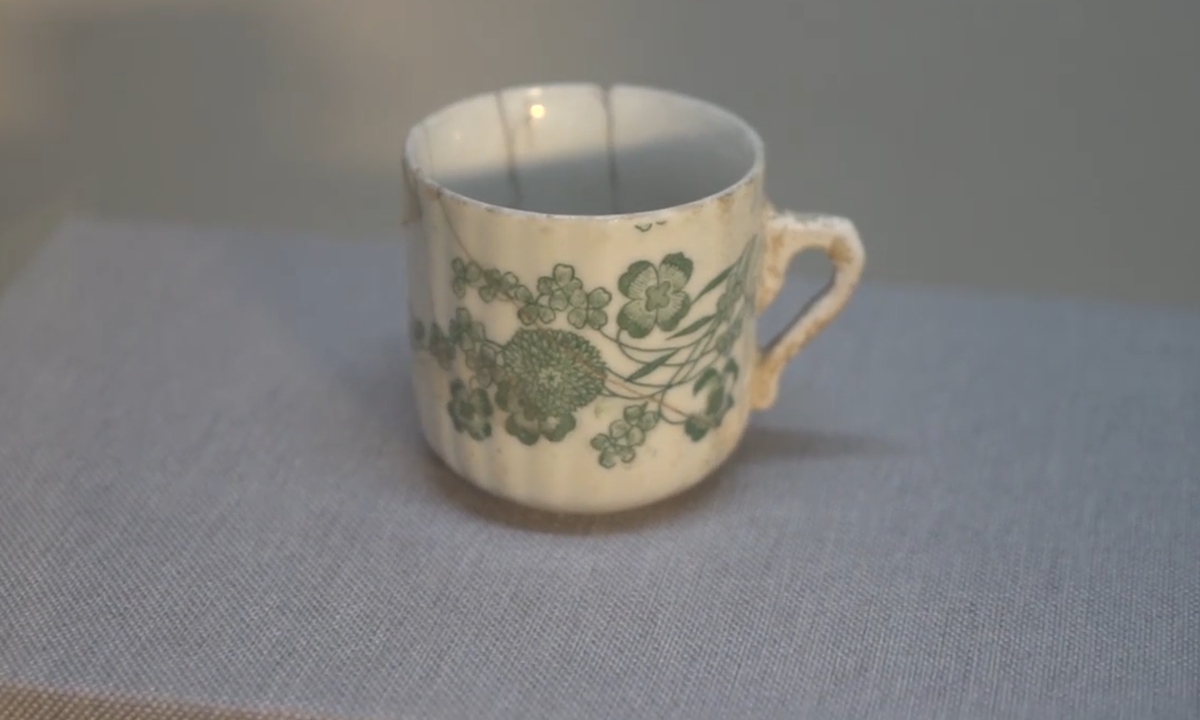
The teacup used by Ji Zhengang (a national industrialist) to host Chen Yi (Commander of the New Fourth Army)
A three-time visit
This teacup is one of the most important exhibits here. It witnessed the historic moment when Commander Chen Yi paid a visit to Ji Zhengang, the manager of Maolu Tea Factory. At that time, Ji used this teacup to make local Maoshan tea produced in his own tea factory and hosted Commander Chen.
The Maoshan area was a region with a relatively developed economy and culture in southern Jiangsu, and it was home to many national industrialists. Ji was one of them. Coming from Yingshan county, Central China's Hubei Province, Ji went to southern Jiangsu Province with the ideal of saving the nation through industry and he founded enterprises there.
After the "August 13th Incident" in 1937, Japanese forces landed in Shanghai and seized Nanjing in just four months. The situation was dire. At that time, the people in southern Jiangsu were deeply anxious about whether China could defeat the Japanese invaders, and this emotion also affected many industrialists.
In May and June 1938, the first and second detachments of the New Fourth Army, along with the advance unit, arrived one after another in the Maoshan area of southern Jiangsu.
Commander Chen came to visit Ji three times: Ji refused once, was absent the second time, and finally met him on the third.
At first, Ji doubted the New Fourth Army could defeat the Japanese in the area. In conversation with Ji, Chen explained the CPC's and New Fourth Army's anti-Japanese aggression strategy and political program, stressing their determination to resolutely expel the Japanese invaders.
This conversation motivated Ji's patriotic zeal as a national capitalist. He realized that in such a critical time, he had to fully support the New Fourth Army led by the CPC.
Three magic weapons
After moving from southern Anhui Province to southern Jiangsu Province, the New Fourth Army not only adhered to the guerrilla war behind enemy lines but also applied the united front policy, rallying a large number of national capitalists, industrialists and the masses with a sense of national righteousness, forming a situation of jointly fighting against the Japanese invasion and creating a united resistance. This was an important contribution made by the New Fourth Army led by Commander Chen in the process of creating the Maoshan base area.
The Maoshan anti-Japanese aggression base was one of the earliest base areas established by the CPC in the Central China region. At the end of April 1938, the first and second detachments of the New Fourth Army, along with the advance unit, entered southern Jiangsu from southern Anhui in accordance with the instructions of the Central Committee of the CPC and implemented the "three-step" policy: first, adhere to the guerrilla war behind enemy lines; second, open up anti-Japanese guerrilla base areas behind enemy lines; third, comprehensively promote the policy of the Chinese united front against Japanese aggression in the base areas.
As Comrade Mao Zedong said, the Chinese united front against Japanese aggression was intended to "make as many friends as possible and as few enemies as possible".
At that time, the CPC-led forces of the Eighth Route Army and the New Fourth Army were relatively weak. If a broad Chinese united front against Japanese aggression had not been formed, or if it had not won the support of local patriotic forces, national capitalists, industrialists and the people of southern Jiangsu, the war of resistance behind enemy lines would have been be extremely difficult.
Ji's experience, and this teacup, underscore a larger truth: the War of Resistance was not only a CPC-led military struggle or a fight behind enemy lines, but a nationwide, broad-based social effort. Victory required uniting the strength of the whole society.
From May 1938 to May 1939, the New Fourth Army fought engagements of various sizes in southern Jiangsu and the Maoshan area. These victories greatly boosted nationwide confidence in the war.
The New Fourth Army was able to gain a foothold in southern Jiangsu for several reasons: first, relying on military victories; second, winning the hearts of the people with strict discipline; third, under the leadership of Commander Chen, the troops and local armed forces carrying out extensive united front work.
The New Fourth Army was not only an army capable of winning battles but also a team good at self-strengthening and resolutely safeguarding the interests of the people. Through the story behind this small teacup, people can understand how the New Fourth Army contributed to the global anti-fascist war.
A spiritual relay
This year is the 80th anniversary of the victory of the war of resistance. We should tell each new generation how the Chinese nation has come from a past of humiliation to the present, established confidence in the socialist path, theory, system and culture, and shown unprecedented development prospects.
This spirit is reflected not only in armed resistance but also in promoting the continuous development of the nation with historical resolve and never stopping.
It requires innovation in culture and in science and technology, and a spirit of innovation across society. This spirit is an important way and method for carrying forward our red cultural lineage.
At this important juncture, a cultural relic carries not only a historical story; it also helps more people to understand our history, identify with our culture, and carry on our bloodline.
RELATED ARTICLES