ARTS / CULTURE & LEISURE
Cyber farming flourishes as young players cultivate crops and connections online
Virtual fields, real rewards
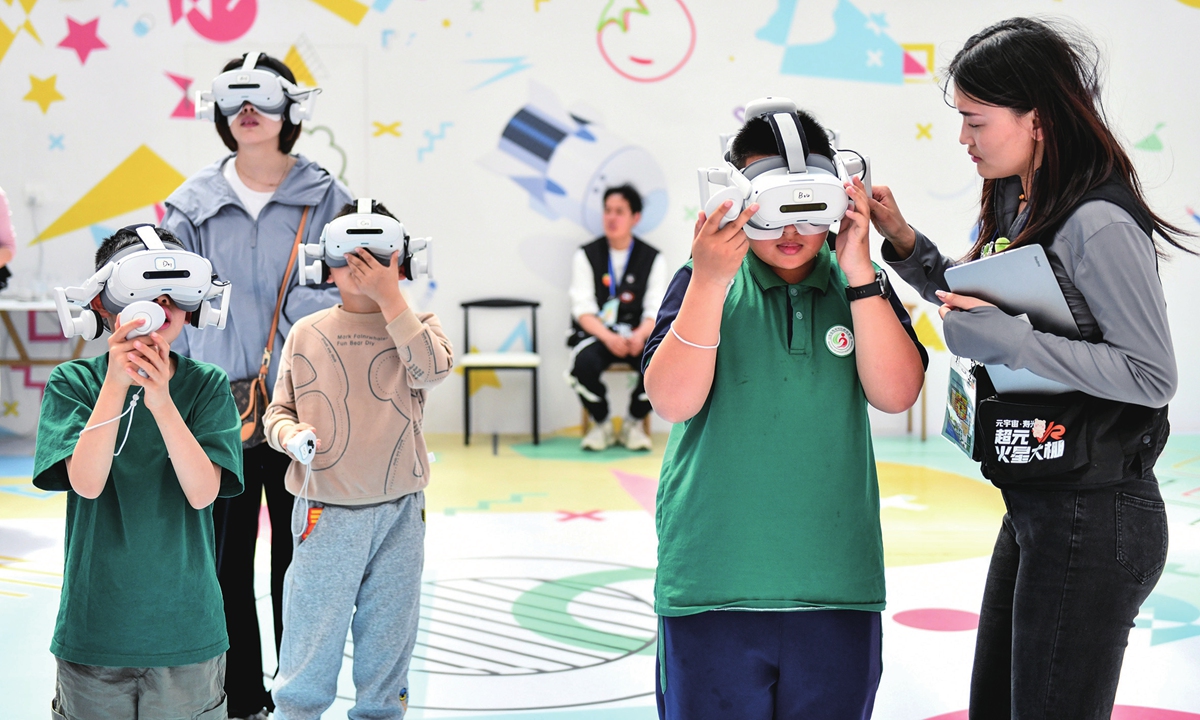
Visitors try on VR headsets at the VR Mars Pavilion, during the 26th China (Shouguang) International Vegetable Sci-Tech Fair in Shouguang, East China's Shandong Province, on April 20, 2025. Photos: VCG
At Beijing Language and Culture University, senior student Li Yutong starts her day not in a lecture hall, but on her laptop. She enters the pixelated world of Stardew Valley, where her own virtual farm awaits. In the game it is autumn: pumpkins and artichokes have ripened, ready for harvest. Nearby, her roommate is immersed in Animal Crossing, crafting a cozy house, fishing by the river, and tending to her crops, a digital escape into a slower, more tranquil life.Stardew Valley, Animal Crossing and other titles are part of a growing genre of farming or life-simulation games, where players plant crops, care for animals, and interact with virtual communities. Participants, often referred to as "digital farmers," experience the satisfaction of seeing their efforts grow and evolve in a controlled, low-pressure environment.
"These games are more than just a pastime," Li told the Global Times. "They teach me to observe, plan, and be patient. They remind me that whether in the virtual world or in real life, effort and time always bring results.
"Here, I can watch my work slowly come to life," she added. "No matter the size of the harvest, it gives me a sense of life's rhythm and order."
Pastoral dreams
The cases reflect the growing popularity of cyber farming games. Some titles have attracted over one billion topic views within two years of release, while others sold more than 10 million copies in 2024 alone. According to Xinhua News Agency, a leading domestic game company executive revealed that at least three new farming-simulation games are expected to launch in China this year.
"Rising early to clear the weeds, returning home with a hoe under the moonlight." The pastoral imagery in Tao Qian, a famous Eastern Jin Dynasty (317-420) poet better known by his other name, Tao Yuanming, finds new life today in the virtual worlds of young players like Li, offering a form of leisure and tranquility beyond the pressures of real life.
Xu Youjiangyu, a PhD candidate at the University of Chinese Academy of Social Sciences, told the Global Times that these games allow young people to enjoy the conveniences of city life while mentally escaping the stress of urban routines.
"Virtual farming games present an alternative way of living through gamification," Xu said, noting that they give players a rare sense of control and visible progress that is often missing in modern urban life.
For many players, this sense of order and reward resonates deeply. Among the community, one comment by a user known as "Early Riser King" struck a chord:
"Mom, I wish life were like Stardew Valley. I could walk along the beach whenever I want, receive messages from villagers, send gifts and make friends, and see my efforts bear fruit. Even when I fail, it's never final, there's always a chance to try again. In the game, I have control over my life and can pursue many quests, almost endlessly."
Such experiences reveal why virtual farming resonates with young people so strongly: it provides players with tangible rewards, a sense of agency, and a safe space to explore life's possibilities.
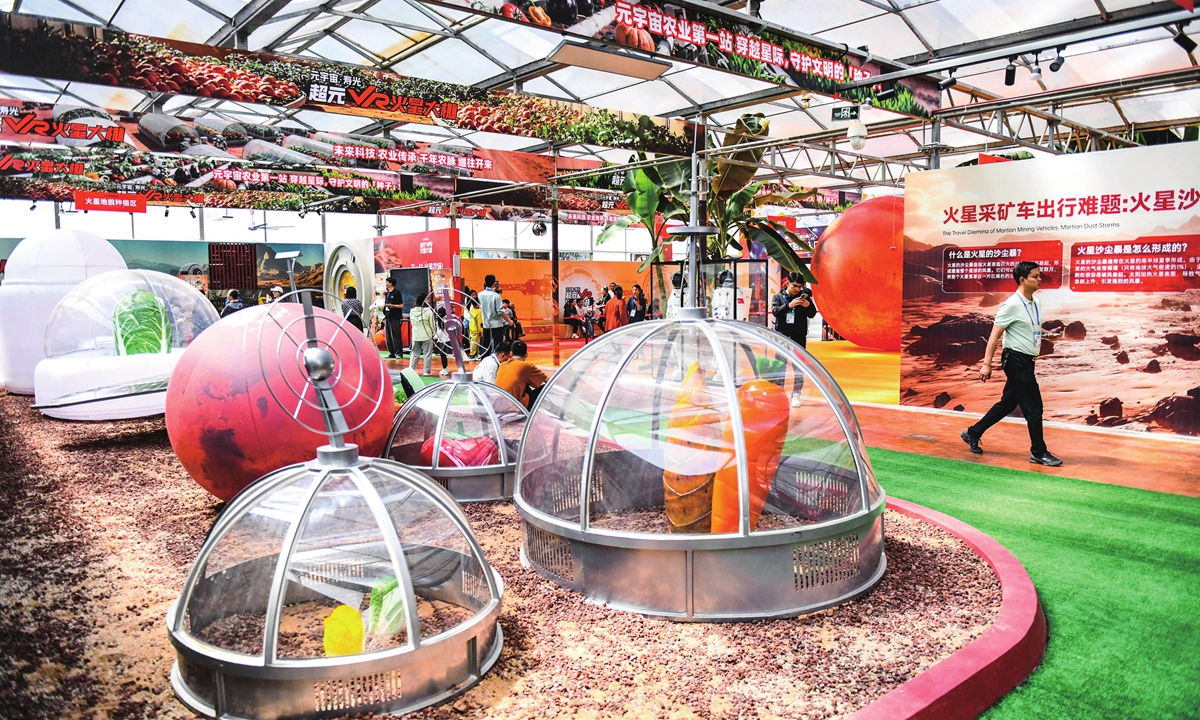
A view of the 26th China (Shouguang) International Vegetable Sci-Tech Fair in Shouguang, East China's Shandong Province, on April 20, 2025. Shouguang is dubbed the "vegetable-capital" in China.
Sense of controlFrom planting a seed to harvesting a crop, farming is a process of creation, turning nothing into something, and it gives people a strong sense of achievement and control. According to the Beijing Daily, sowing seeds and tending crops online produces rewards that feel real, meaningful, and satisfying for the players.
"Farming games don't rely on dramatic storylines to attract players," Sun Jiashan, a researcher at the Central Academy of Culture and Tourism Administration, told the Global Times. "Instead, they unfold at a slow pace, with small, continuous progress, catering to players' psychological needs for relaxation and companionship."
The rise of "cyber farming" demonstrates that pastoral imagery, rooted in ancient agrarian civilization, still holds a strong appeal for today's youth. For enthusiastic players, farming is no longer seen as outdated, backward, or provincial, but as a way to imagine a simpler, calmer, and more manageable life, according to Xinhua News Agency.
"Young people are drawn to cyber farming as a form of psychological self-regulation. In real life, it is not always easy to receive immediate feedback or see tangible results," Li Tuo, a Beijing-based psychologist, told the Global Times.
"In games, however, the cycle from planting to harvest is greatly compressed, allowing players to experience the satisfaction of effort paying off quickly. This sense of immediate certainty is often missing in everyday life."
According to Li Tuo, virtual farming offers a "low-risk experimental space" where players can try different lifestyles and social interactions, and failures carry little consequence. This safe space for trial and error helps reduce anxiety and rebuild a sense of control.
"These games reconnect young people to an imagined relationship with nature. Even though they rarely farm in real life, they can experience the rhythms of the seasons and the growth of crops in the virtual world," Li Tuo noted. "It is a psychological return to pastoral life, a way to relieve urban stress."
In this sense, cyber farming is not simply an escape from reality, but rather a means for young people to engage with the world differently. Perhaps this is the true value of pastoral imagery in the digital age: it reminds us that even far from the land, humans still crave a stable, gentle connection with nature and with life itself.
RELATED ARTICLES