Editor's Note:
The Shanghai Cooperation Organization (SCO) Summit concluded on Monday. Leaders of the member states of the SCO signed and issued the Tianjin Declaration. The document noted that the SCO will strengthen international cooperation in sports, culture, and tourism. Global Times reporter Dong Feng recently interviewed foreign envoys and experts to share their understanding of the Shanghai Spirit and their perspectives on people-to-people exchanges under the SCO framework.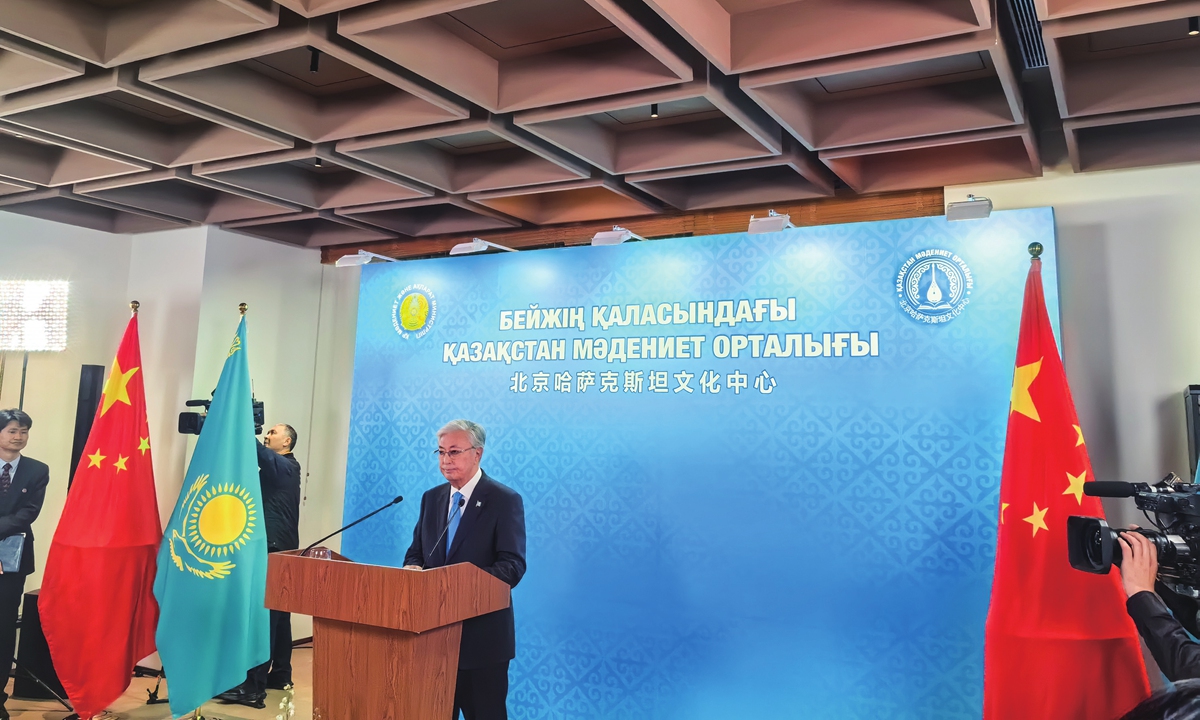
President of Kazakhstan Kassym-Jomart Tokayev gives his speech at the opening ceremony of the Kazakh Cultural Center in Beijing, on September 2, 2025. Photo: Dong Feng/GT
The Embassy of the Republic of Kazakhstan in China hosted the opening ceremony of the Kazakh Cultural Center in Beijing on September 2. President of Kazakhstan Kassym-Jomart Tokayev, who visited China for the Shanghai Cooperation Organization Summit 2025, said that Kazakh-Chinese ties continue to develop progressively.
In his keynote speech, President Tokayev said, "We have entered the second 'golden 30th anniversary' of bilateral cooperation."
He noted that the ceremony is "a historical event reflecting the true respect of the Kazakh people for the Chinese people. This is also a sign of China's friendly attitude toward Kazakhstan."
The Kazakh President described both China and Kazakhstan's position on international issues as largely coinciding. He added, "This once again proves that Kazakhstan and China are eternal strategic partners. This meets the national interests of our nations."
President Tokayev attended the opening ceremony of the Kazakh Cultural Center held in Beijing on Tuesday. He also participated in the commemoration of the 80th anniversary of the victory in the Chinese People's War of Resistance Against Japanese Aggression and the World Anti-Fascist War on Wednesday.
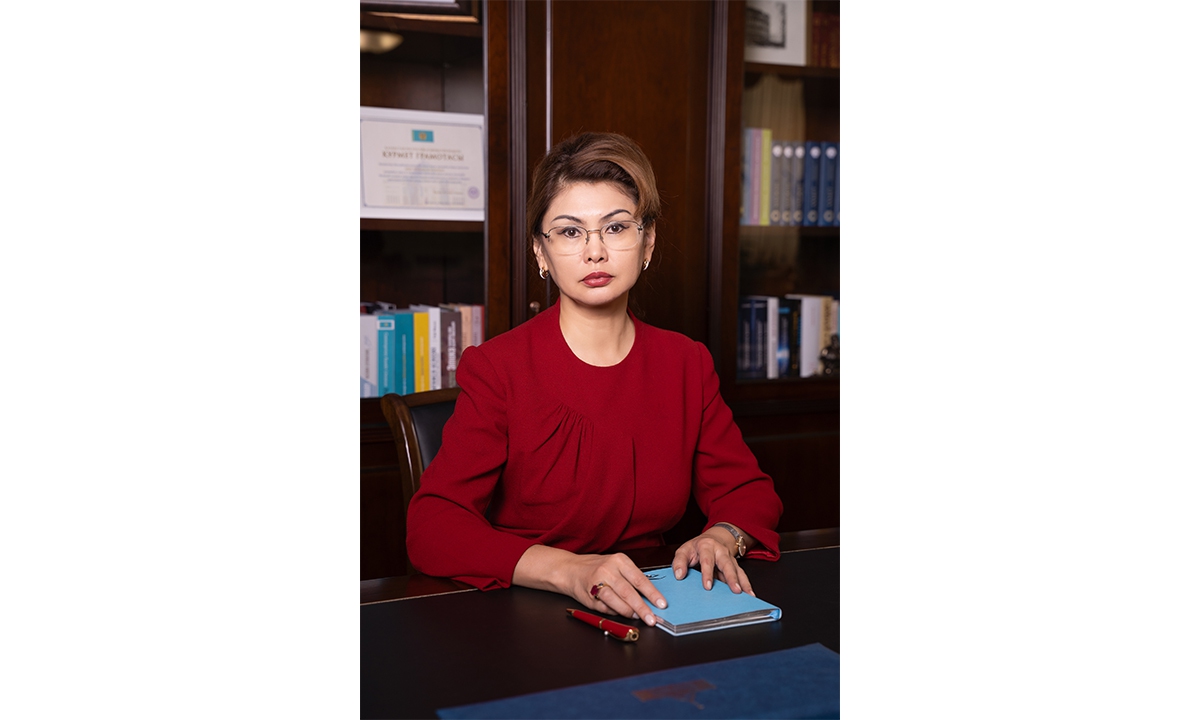
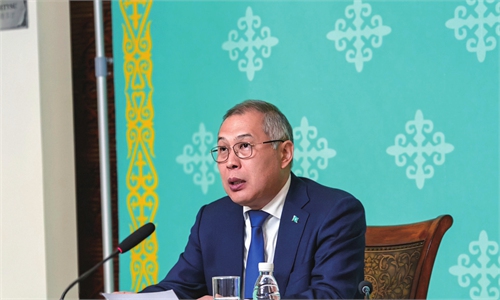
Aida Balayeva, minister of Culture and Information of the Republic of Kazakhstan Photo: Courtesy of the Embassy of the Republic of Kazakhstan in China
Aida Balayeva, minister of Culture and Information of the Republic of Kazakhstan, told the Global Times during an exclusive interview that establishing cultural centers in each other's countries is a joint decision made by the two heads of state.
In 2022, the two heads of state reached a consensus on establishing cultural centers in each other's countries. This is Kazakhstan's first national cultural center established overseas.
"In accordance with the decree order, we are opening the center. We believe the center will expand our cultural exchange and the people's connections between our two countries," Minister Balayeva said.
The main work of the cultural center includes organizing cultural activities, teaching languages, and boosting creativity, as well as facilitating scientific research and exchanges.
The Chinese Cultural Center in Astana was opened in July 2024.
"These two centers - the Kazakh Cultural Center in Beijing and the Chinese Cultural Center in Astana - are expected to deepen cultural, historical, linguistic, and other ties between [our two] countries, and they will expand the understanding of our cultures," said Minister Balayeva.
Talking about the timing of the Kazakh Cultural Center's inauguration in Beijing, the minister told the Global Times that the newly opened cultural center is to promote the principles of the Shanghai Spirit, which include mutual trust, mutual benefit, equality, consultation, respect for diversity of civilizations, and pursuit of common development. "The foundation of this center is the part of expanding Shanghai Spirit because it's built on trust. You can't build this kind of center and cultural exchange without trust. The SCO was built on security issues, but now we see that it's going beyond security and it's expanding to cultural areas."
From her point of view, this is the reason why every event and activity held between the two countries is very important, and they have helped promote the Shanghai Spirit in both societies.
Sun Yeli, China's Minister of Culture and Tourism who also attended the opening ceremony, said: It is expected that the cultural centers in the two countries will become an important channel for China and Kazakhstan to deepen the institutionalization of cultural exchanges and cooperation.
"We're not only colleagues but friends. The mutual help, support, and encouragement has forged deep cultural ties between our countries," Minister Balayeva said, adding that this kind of friendship is in the fabric of the Shanghai Spirit.
"It will function as an important platform for the cultural and art institutions of the two countries to carry out joint work and cooperation, and an important innovation in the history and development of the two countries," Sun said in his remarks.
"The library provides the latest publications including books, journals, magazines, and newspapers. The exhibition area displays the cultural and historical heritage of Kazakhstan," Balayeva introduced.
In a written note sent to the Global Times, Gulnar Shaimergenova, director of China Studies Center based in Astana, Kazakhstan, said that "the opening of the Kazakhstan Cultural Center in Beijing is not just a new address on the map; it is a qualitative step toward deepening trust and mutual understanding between our peoples."
The center will serve as a permanent venue for the "golden bridge" of cultural exchange. Such an institutional "home for culture" makes people-to-people ties regular and predictable - and therefore stronger than one-off projects.
Recent years have also witnessed a branch of the Beijing Language and Culture University opened in Astana in 2024, and Luban Workshops launched. "Together, the initiatives create a resilient ecosystem of education, skills, and culture around Kazakh-Chinese partnership," she said.
From a diplomatic perspective, Shaimergenova finds that the Kazakh Cultural Center in Beijing "creates more touch points for youths, universities, and creative communities. It is a contribution to the very atmosphere of good-neighborliness and mutual respect on which the 'permanent strategic partnership' between Kazakhstan and China is built," Director Shaimergenova said.