Chinese FM opposes externally coerced curbs on China as Mexico mulls tariffs
Mexican president reportedly says 'considering imposing tariffs' on countries including China; expert lambasts US coercion undermining intl trade rules
By Published: Sep 05, 2025 10:37 AM

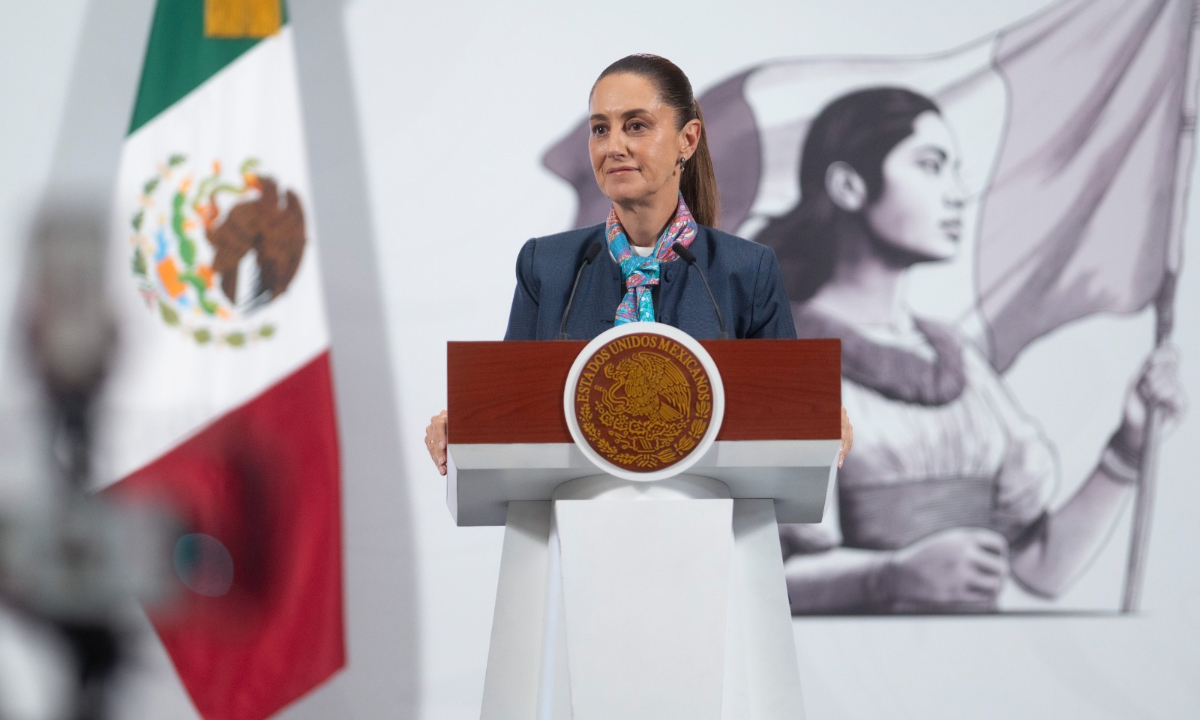
Mexican President Claudia Sheinbaum at a press conference on September 4, 2025 Photo: web
Chinese Foreign Ministry spokesperson Guo Jiakun said on Friday that "China-Mexico economic and trade cooperation is mutually beneficial and its fruits benefit the two peoples," in response to a media inquiry on the statement by Mexican president on considering raising tariffs on China.
While noting that he is not familiar with the specifics, Guo stressed that "China advocates a universally beneficial and inclusive economic globalization, and opposes unilateralism and protectionism in any form and discriminatory and exclusive measures."
Guo said that China firmly opposes setting restrictions on China and undermining China's legitimate rights and interests with all kinds of excuses under the coercion of others and "we believe the relevant countries will uphold independence and properly handle relevant matters."
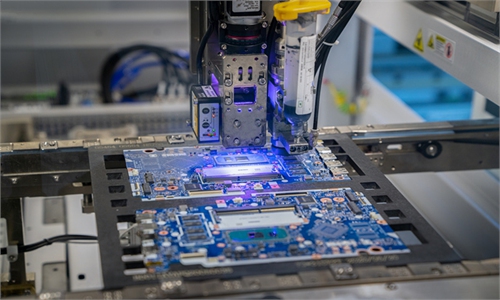
Mexican President Claudia Sheinbaum said on Thursday (local time) that her government is considering imposing tariffs on imports from countries that do not have trade agreements with Mexico, including China, Reuters reported.
A Chinese expert said the move is under pressure from the US, which is coercing other countries to abandon the fundamental principles of international trade cooperation.
The Mexican tariff plan is an initiative aimed at boosting domestic industry amid tariffs imposed by US President Donald Trump on some imports from Mexico, per Reuters.
Mexico is part of the United States-Mexico-Canada trade agreement (USMCA), which replaced the North American Free Trade Agreement in 2020 and was negotiated during US President Donald Trump's first term. The agreement requires the three countries to hold a joint review after six years.
"Yes, we are considering imposing — as part of the Plan Mexico we proposed since we took office — some tariffs on countries with which we don't have a trade agreement, including China, but it's not the only country," Sheinbaum told reporters on Thursday, per a post on the government website.
As for any specific Chinese imports would be impacted, the president said "we would announce it in due time. But it's part of what we've been doing; it's not new."
"US' unilateral tariffs have already undermined multilateral rules, and coercing other countries into breaking trade norms is a self-serving move that harms others and runs counter to the norms and fundamental principles of international economic cooperation," Zhou Mi, a senior researcher at the Chinese Academy of International Trade and Economic Cooperation, told the Global Times on Friday.
"Violating multilateral commitments is nothing more than a temporary solution, a short-sighted act that disregards long-term development interests," Zhou added.
On July 31 local time, the US decided to extend its tariff agreement with Mexico for 90 days, maintaining a 25 percent tariff on Mexican goods outside the USMCA. In addition, Mexican products face a 25 percent tariff on cars made in Mexico and a 50 percent rate on aluminum, copper and steel, according to the New York Post.
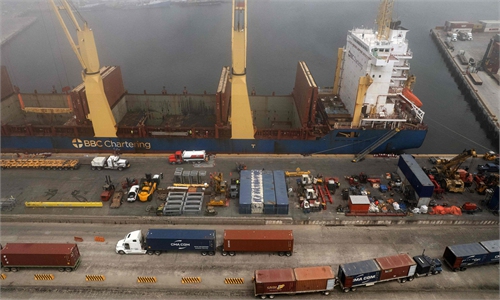
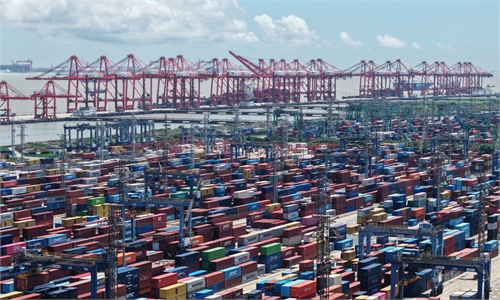
Mexico is China's second largest trading partner in Latin America, and China is Mexico's third largest export destination.
According to China's General Administration of Customs, bilateral trade between China and Mexico reached $109.426 billion in 2024, with Chinese exports totaling $90.232 billion and imports standing at $19.195 billion.
RELATED ARTICLES