China opposes so-called ‘economic pressure,’ FM says as Trump reportedly pushes Europe to increase economic pressure on China over Russia-Ukraine conflict
By and Zhang Wanshi Published: Sep 05, 2025 03:31 PM

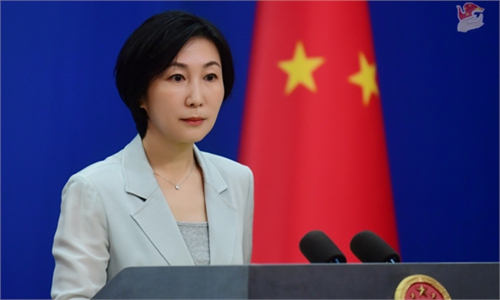
When asked to comment on claims by US President Donald Trump on a call with the "Coalition of the Willing" countries that "European leaders must place economic pressure on China for funding Russia's war efforts," citing a White House official, Chinese Foreign Ministry spokesperson Guo Jiakun said on Friday that China upholds an objective and fair position on the Ukraine crisis.
China did not start the Ukraine crisis, nor is China a party to it. We firmly oppose directing the issue at China and imposing so-called "economic pressure" on China, the spokesperson added.
Trump on Thursday claimed that Europe must stop purchasing Russian oil and put economic pressure on China to try to bring about an end to the war in Ukraine, CNN reported by citing a White House official.
Trump made the comments in a Thursday call with Ukrainian President Volodymyr Zelensky and other European leaders in a meeting of the "Coalition of the Willing," a group of Ukrainian allies trying to end the war and provide security for Ukraine from future attacks, according to the CNN report.
The report cited a White House official as saying that French President Emmanuel Macron and European leaders called Trump into the coalition meeting, and Trump "emphasized that Europe must stop purchasing Russian oil that is funding the war — as Russia received €1.1 billion in fuel sales from the EU in one year." The official also claimed that "The President also emphasized that European leaders must place economic pressure on China for funding Russia's war efforts."
On Thursday, during the 79th UN General Assembly deliberations on the Ukraine issue, Geng Shuang, China's deputy permanent representative to the United Nations, said that China's position on Ukraine has always been objective, fair, and consistent: to promote peace talks and seek a political solution, according to the Xinhua News Agency.
He also noted that the Ukraine crisis is essentially an outburst of Europe's underlying security contradictions. As different parties put forward proposals for security guarantees to Ukraine, China calls on all sides to uphold the vision of common, comprehensive, cooperative, and sustainable security, abide by the principle of indivisible security, and address each other's legitimate concerns. Efforts should be made to forge a balanced, effective, and sustainable security framework that can deliver lasting peace and stability in Europe.
Trump's remarks may reflect his anxiety over the Ukraine-Russia conflict. The conflict has not been halted as quickly as he expected. Despite trying both diplomatic overtures and tough measures — including a meeting with Russian President Putin in Alaska — the situation has not unfolded according to his design, Lü Xiang, research fellow at the Chinese Academy of Social Sciences, told the Global Times.
Trump's latest remarks were likely spurred by the recent China-Russia-India interactions in China. On Ukraine, the Trump administration has long tried to pit sides against each other to advance its agenda. After imposing tariffs on India over Russian energy imports, the administration is now hinting at new measures to prepare future policy moves, Cui Hongjian, director of the Department of European Studies in China Institute of International Studies, told the Global Times.
Frustrated by limited progress, the Trump administration blames Russia and may even target Chinese firms with secondary sanctions. US' recent pressure on Europe follows a familiar pattern of shifting responsibility, exploiting EU divisions and energy loopholes, said the expert, noting that the US may also set the stage to blame others if current push fails to deliver results.
In response to Trump's criticism of Europe's oil purchases, Brussels is likely to emphasize its ongoing efforts to tighten sanctions while leveraging the issue to pressure members with different views. On China, the EU has already taken steps in recent years — including the recent sanctioning of certain Chinese companies — but such measures remain limited in impact and lack broad consensus within the bloc, said Cui.
On July 18, 2025, the EU added two Chinese financial institutions to the sanctions list in its 18th round of sanctions against Russia. In response, China's Ministry of Commerce (MOFCOM) announced to include two EU banks - UAB Urbo Bankas and AB Mano Bankas in the countermeasures list,according to a MOFCOM statement released on its website.
Lü said that Europe has also imposed varying restrictions on Chinese goods, yet dialogue and consultation — especially between China and major European countries — remain ongoing. In the face of Washington's tariff policies, if Europe further undermines its ties with China, it will only end up hurting itself, said the expert.
A Reuters report on Friday said that Trump has been frustrated at his inability to bring a halt to the fighting in Ukraine after he initially predicted he would be able to end the war swiftly when he took office last January.
"The 'Coalition of the Willing' meeting was on security guarantees for Ukraine. President Trump questioned their seriousness while they continue to fuel Russia's economy and war. The president made clear that this is not his war, and the Europeans must step up as well," the official said, according to Reuters.
The official gave no details on the discussion around security guarantees, but Trump has previously expressed support for Ukraine without making a specific pledge. Macron said on Thursday that 26 nations have pledged to provide Ukraine the postwar support of an international force on land, sea, and in the air, said Reuters.
The current divergence between US and EU on security guarantee is not surprising The US and Europe struggle to achieve genuine coordination on many fronts. Even when their policies appear aligned, implementation often reveals underlying friction. With mutual trust eroding, consensus on shared goals has weakened — outward agreement masks deep differences over the details, said Cui.
China did not start the Ukraine crisis, nor is China a party to it. We firmly oppose directing the issue at China and imposing so-called "economic pressure" on China, the spokesperson added.
Trump on Thursday claimed that Europe must stop purchasing Russian oil and put economic pressure on China to try to bring about an end to the war in Ukraine, CNN reported by citing a White House official.
Trump made the comments in a Thursday call with Ukrainian President Volodymyr Zelensky and other European leaders in a meeting of the "Coalition of the Willing," a group of Ukrainian allies trying to end the war and provide security for Ukraine from future attacks, according to the CNN report.
The report cited a White House official as saying that French President Emmanuel Macron and European leaders called Trump into the coalition meeting, and Trump "emphasized that Europe must stop purchasing Russian oil that is funding the war — as Russia received €1.1 billion in fuel sales from the EU in one year." The official also claimed that "The President also emphasized that European leaders must place economic pressure on China for funding Russia's war efforts."
On Thursday, during the 79th UN General Assembly deliberations on the Ukraine issue, Geng Shuang, China's deputy permanent representative to the United Nations, said that China's position on Ukraine has always been objective, fair, and consistent: to promote peace talks and seek a political solution, according to the Xinhua News Agency.
He also noted that the Ukraine crisis is essentially an outburst of Europe's underlying security contradictions. As different parties put forward proposals for security guarantees to Ukraine, China calls on all sides to uphold the vision of common, comprehensive, cooperative, and sustainable security, abide by the principle of indivisible security, and address each other's legitimate concerns. Efforts should be made to forge a balanced, effective, and sustainable security framework that can deliver lasting peace and stability in Europe.
Trump's remarks may reflect his anxiety over the Ukraine-Russia conflict. The conflict has not been halted as quickly as he expected. Despite trying both diplomatic overtures and tough measures — including a meeting with Russian President Putin in Alaska — the situation has not unfolded according to his design, Lü Xiang, research fellow at the Chinese Academy of Social Sciences, told the Global Times.
Trump's latest remarks were likely spurred by the recent China-Russia-India interactions in China. On Ukraine, the Trump administration has long tried to pit sides against each other to advance its agenda. After imposing tariffs on India over Russian energy imports, the administration is now hinting at new measures to prepare future policy moves, Cui Hongjian, director of the Department of European Studies in China Institute of International Studies, told the Global Times.
Frustrated by limited progress, the Trump administration blames Russia and may even target Chinese firms with secondary sanctions. US' recent pressure on Europe follows a familiar pattern of shifting responsibility, exploiting EU divisions and energy loopholes, said the expert, noting that the US may also set the stage to blame others if current push fails to deliver results.
In response to Trump's criticism of Europe's oil purchases, Brussels is likely to emphasize its ongoing efforts to tighten sanctions while leveraging the issue to pressure members with different views. On China, the EU has already taken steps in recent years — including the recent sanctioning of certain Chinese companies — but such measures remain limited in impact and lack broad consensus within the bloc, said Cui.
On July 18, 2025, the EU added two Chinese financial institutions to the sanctions list in its 18th round of sanctions against Russia. In response, China's Ministry of Commerce (MOFCOM) announced to include two EU banks - UAB Urbo Bankas and AB Mano Bankas in the countermeasures list,according to a MOFCOM statement released on its website.
Lü said that Europe has also imposed varying restrictions on Chinese goods, yet dialogue and consultation — especially between China and major European countries — remain ongoing. In the face of Washington's tariff policies, if Europe further undermines its ties with China, it will only end up hurting itself, said the expert.
A Reuters report on Friday said that Trump has been frustrated at his inability to bring a halt to the fighting in Ukraine after he initially predicted he would be able to end the war swiftly when he took office last January.
"The 'Coalition of the Willing' meeting was on security guarantees for Ukraine. President Trump questioned their seriousness while they continue to fuel Russia's economy and war. The president made clear that this is not his war, and the Europeans must step up as well," the official said, according to Reuters.
The official gave no details on the discussion around security guarantees, but Trump has previously expressed support for Ukraine without making a specific pledge. Macron said on Thursday that 26 nations have pledged to provide Ukraine the postwar support of an international force on land, sea, and in the air, said Reuters.
The current divergence between US and EU on security guarantee is not surprising The US and Europe struggle to achieve genuine coordination on many fronts. Even when their policies appear aligned, implementation often reveals underlying friction. With mutual trust eroding, consensus on shared goals has weakened — outward agreement masks deep differences over the details, said Cui.
RELATED ARTICLES