China’s atomic energy law draft submitted for third reading, adds measures against illegal exports of nuclear and dual-use items
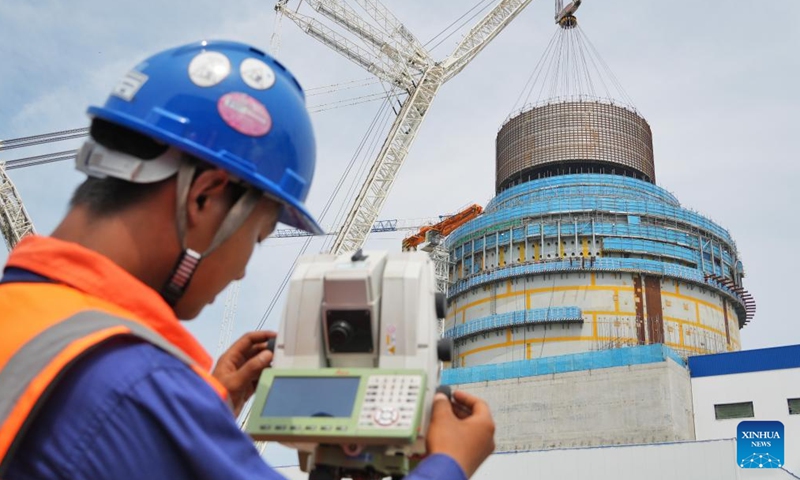
A staff member monitors a crane lifting the CB20 module of the nuclear island for the 3rd unit of the Haiyang Nuclear Power Plant in Haiyang, east China's Shandong Province, Aug. 4, 2025. The CB20 module was successfully lifted and positioned on Monday, marking the completion of all major module installations for the 3rd unit of the Haiyang Nuclear Power Plant and the start of equipment installation and commissioning phase. (Photo by Tang Ke/Xinhua)
China has submitted the draft atomic energy law for a third reading, adding new regulations in five areas. Among them, enterprises that export nuclear or dual-use items violating the atomic energy law will be held legally accountable under relevant laws and regulations, according to a press conference on Friday.
Huang Haihua, a spokesperson for the Legislative Affairs Commission of the Standing Committee of the National People's Congress (NPC), told the press conference that the atomic energy law has been scheduled for its third reading by the session of the Standing Committee of the NPC, CCTV News reported.
Based on feedback from various parties, the third draft also stipulates that China supports the peaceful use of atomic energy, promotes sharing of achievements in the peaceful use of atomic energy, and works to prevent and respond to the threat of nuclear terrorism while advancing the establishment of a fair, cooperative and win-win international nuclear security system.
The draft also states that China will strengthen the development of standards in the atomic energy sector and promote participation in international standardization. It requires that the site selection, design, construction, commissioning, operation and management of nuclear reactors must comply with relevant laws and administrative regulations.
The draft mandates that nuclear facility operators take necessary measures to prevent cyberattacks, intrusions, interference and sabotage, respond to cybersecurity incidents, and ensure the safe and stable operations of the facilities.
Chinese lawmakers on April 22, 2025, started deliberating a draft atomic energy law, with an aim to promote the sound and sustainable development of the atomic energy industry, Xinhua News Agency reported on April 23, noting that the draft was submitted to an on-going session of the Standing Committee of the NPC for a first reading.
Global Times
RELATED ARTICLES