Chinese smart home appliances shine at IFA in Berlin
Firms navigate challenges, emerge as innovation leaders: expert
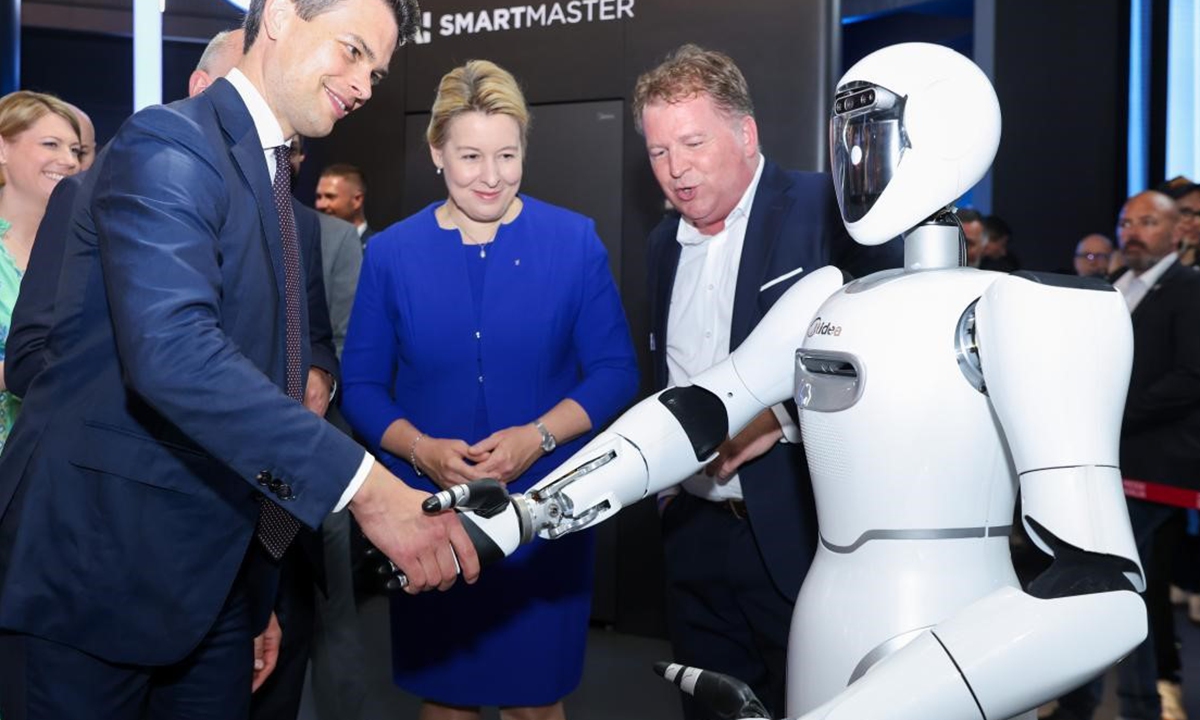
Midea's humanoid robot assistant "MIRA" drew crowds with lifelike gestures at the IFA Berlin 2025 in Berlin, Germany, on September 7, 2025. Photo: Courtesy of Midea
At the ongoing IFA Berlin 2025, a consumer electronics exhibition in Germany, Chinese home appliance makers are winning the favor of European consumers with cutting-edge technology and outstanding cost performance.
IFA, known as the "global barometer of consumer electronics," is being held from September 5 to 9 at the Messe Berlin exhibition center. This year's exhibition has drawn more than 1,900 exhibitors from around the world, data from the organizers showed.
Notably, in many areas of consumer electronics at this year's show, Chinese home appliance firms are emerging as trendsetters - particularly in robotic vacuum cleaners, where Chinese companies stand out almost exclusively, the Global Times noticed at the show.
China-based smart appliance manufacturer Dreame's debut of its bionic quadruped track-climbing vacuum robot Cyber X drew particular attention. It can climb upward by up to 25 centimeters using its bionic track mechanism and automatically return to its base after completing its work. Spectators at the demonstration exclaimed: "Amazing!"
Another Chinese company, Ecovacs, which specializes in service robots, launched its new Deebot X11 at the show, featuring a globally pioneering PowerBoost charging technology that can recharge the battery by up to 6 percent in just three minutes of mopping, with a single cleaning area of up to 1,000 square meters.
Chinese experts said that in the face of rising global trade uncertainty, Chinese firms' continued push to expand overseas demonstrates a proactive attitude in addressing risks and challenges, while also reflecting their efforts to build new globalization advantages with Chinese characteristics.
The domestic market serves as a strong "rear base" for Chinese firms going abroad and is also the testing ground for cutting-edge applications, Chen Jing, vice-president of the Technology and Strategy Research Institute, told the Global Times on Sunday.
"IFA 2025 is not just about product showcases but also demonstrates systematic breakthroughs in advanced Chinese technologies. 'Made in China' has moved from catching up and running alongside others to taking the lead, becoming a core driver and trend-setter in global technological innovation," Chen said.
Chinese consumer tech products are no longer just competing on tracks set by Western developers — they are increasingly defining the tracks themselves. From standards and supply chains to cost structures, many products are now effectively led by Chinese firms. In areas ranging from displays and augmented reality glasses to robots and drones, the trend is shifting from isolated breakthroughs to broad, system-wide coverage.
At the IFA, the Global Times also learned that artificial intelligence (AI) is the dominant theme at this year's exhibition, with nearly all home appliance categories incorporating AI.
Among the exhibitors, Chinese industry leader Midea showcased its range of smart appliances powered by AI real-time data learning technology. From voice-controlled air conditioners to intelligent recipe recommendations for ovens, the appliances are designed to anticipate user needs and respond intuitively, the company said in a statement to the Global Times.
At the exhibition, its humanoid robot assistant MIRA drew crowds with lifelike gestures such as greeting, shaking hands and dancing, showcasing the company's exploration of AI-driven daily interactions between robots and users in home settings.
Meanwhile, another leading Chinese firm, Haier, presented its smart refrigerator with AI Smart Eye technology, which can automatically identify food types, adjust the preservation environment, and record details such as storage time and location.
In Europe, Haier has achieved the largest market share in white goods among Chinese brands, with growing sales of refrigerators, washing machines and dishwashers. Haier's smart home platform in Europe has surpassed 10 million registered users, a company representative told the Global Times.
Chinese consumers generate the world's largest volume of industrial application data across areas such as mobile payments, short videos and express delivery. This extensive data accumulation, Chen noted, coupled with the government's strong emphasis on promoting technology adoption, has made the integration of advanced technologies into consumer products a prevailing trend among Chinese companies.
Meanwhile, the resilience of China's consumer demand offers rich opportunities for investment and trial-and-error, the complexity of market scenarios supports comprehensive technological development, a robust supply chain ensures rapid iteration, abundant data resources fuel algorithm development, and supportive policies help minimize development costs, Chen said.
RELATED ARTICLES