EU reportedly weighs sanctions on China, other countries over purchasing Russian energy; a move amid US pressure ‘hypocritical’ and risks backfiring: expert
By Published: Sep 09, 2025 02:52 PM

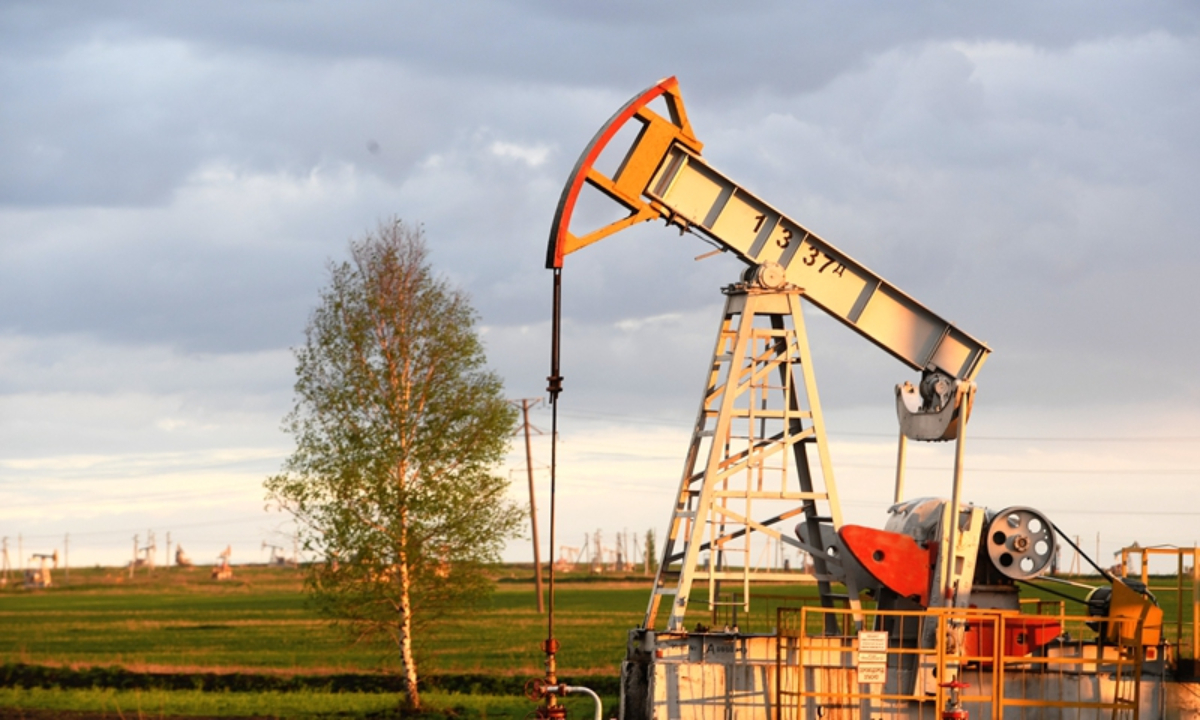
An oil pump is seen in Almetyevsky District, Republic of Tatarstan, Russia. File Photo: CFP
Under pressure from the US, the European Union is reportedly discussing "secondary sanctions" against China and other countries for buying Russian energy, a move that some experts call "hypocritical and double-standard," noting that some Europe countries continue to buy Russian oil themselves and that sanctioning China may also backfire on the EU.
According to a Financial Times report on Monday, EU officials are weighing possible sanctions on China and other countries over purchases of Russian oil and gas, amid US attempt to put more pressure on Russia to end Russia-Ukraine conflict.
The report claimed that EU officials and diplomats began negotiations on Sunday regarding what could feature in a new sanctions package, with potential secondary sanctions against China raised in many of the discussions, according to three people briefed on the preliminary talks. It also stated that the EU secondary sanctions proposals are in a "very early stage," one of the people said, and are unlikely to be adopted "unless the US also targets China's energy imports."
While the EU continues — and even still plans — to buy Russian oil in the coming years, it is hypocritical and a double-standard to consider sanctioning others for doing the same. Despite loudly proclaiming its goal of ending reliance on Russian energy, the EU still depends on Russian oil. Within the bloc, views diverge, as the burden of higher energy costs ultimately falls on member states and their citizens, Cui Heng, a scholar from the Shanghai-based China National Institute for SCO International Exchange and Judicial Cooperation, told the Global Times.
The European Union is sticking to its plans to phase out Russian oil by 2028, the bloc's energy chief told Reuters in a report on September 5. EU purchases of Russian gas remain far bigger. Europe is expected to purchase around 13 percent of its gas from Russia this year, according to media report.
Chris Wright, US energy secretary, told the Financial Times in a report on Monday that European countries should stop buying Russian oil and gas if they want Washington to tighten sanctions on Moscow. He also said that European countries should instead buy American liquefied natural gas, gasoline and other fossil fuel products to meet the terms of the US-EU trade deal, which calls on the bloc's countries to buy $750 billions of US energy by the end of 2028.
The potential move may also reflect EU's response to US pressure and an attempt to test China's reaction to gain bargaining leverage, said another Chinese expert, noting that internal divisions over sanctioning China persist within the EU and that secondary sanctions could backfire on Europe itself.
The report may reflect a mix of the EU's response to US pressure and internal coordination to push for a new round of sanctions, Sun Xiuwen, an associate professor at the Institute for Central Asian Studies at Lanzhou University, told the Global Times on Tuesday.
The Trump administration has urged Europe to take a harder line on Russia and increase pressure on China over Russian oil, with the EU delegation's trip to Washington signaling alignment, said the expert. However, Brussels is wary of the risks of secondary sanctions on China, with the proposal seen less as imminent action than as a way to test Beijing's reaction and gain leverage for future talks, said Sun.
Trump on Thursday claimed that Europe must stop purchasing Russian oil and put economic pressure on China to try to bring about an end to Russia-Ukraine conflict, according to a CNN report citing a White House official.
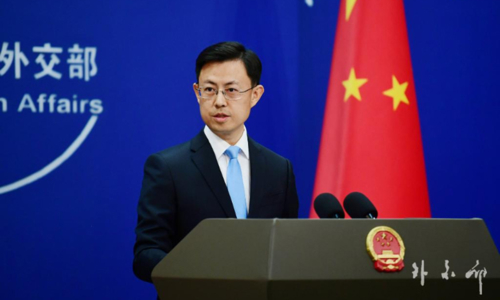
In response, Chinese Foreign Ministry spokesperson Guo Jiakun said on Friday that "We firmly oppose directing the issue at China and imposing so-called 'economic pressure' on China." Guo also noted that China upholds an objective and fair position on the Ukraine crisis. China did not start the Ukraine crisis, nor is China a party to it.
Deep divisions persist within the EU over secondary sanctions regarding purchases of Russian energy, particularly those targeting China, said Sun, noting that it is unlikely all members — especially those with strong economic ties to China — would support measures that clearly harm their own interests.
Many Western outlets, including Reuters, reported Trump's remarks on Sunday that he "is ready" to move to a second phase of sanctioning Russia. The Reuters report also noted that the EU's top sanctions official was in Washington on Monday with a team of experts to discuss what could become the first coordinated transatlantic measures against Russia since Trump returned to office.
The report also noted that the EU gave few details about the mission by its sanctions envoy David O'Sullivan to the US. But should he succeed in coordinating a package with the Americans, it would be the first time that has happened since Trump returned to office.
Sun noted that while some media outlets highlight US and European priorities diverge — Europe seeks immediate security and a ceasefire, while Washington views the conflict through a great-power competition lens.
Cui said that the EU has long been divided between advocates of strategic autonomy and those aligned with the US. Weakness on the autonomy side has left the bloc retreating on key issues and unable to uphold an independent stance toward Washington, said the expert, noting that in the Russia-Ukraine conflict, Europe's abandonment of independence cost it real influence, while leaving it to shoulder the bitter consequences.
RELATED ARTICLES