ARTS / BOOKS
Algorithms, AI bring quiet changes to Chinese classrooms
Counseling goes virtual, smart
By and Sun Langchen Published: Sep 09, 2025 11:19 PM
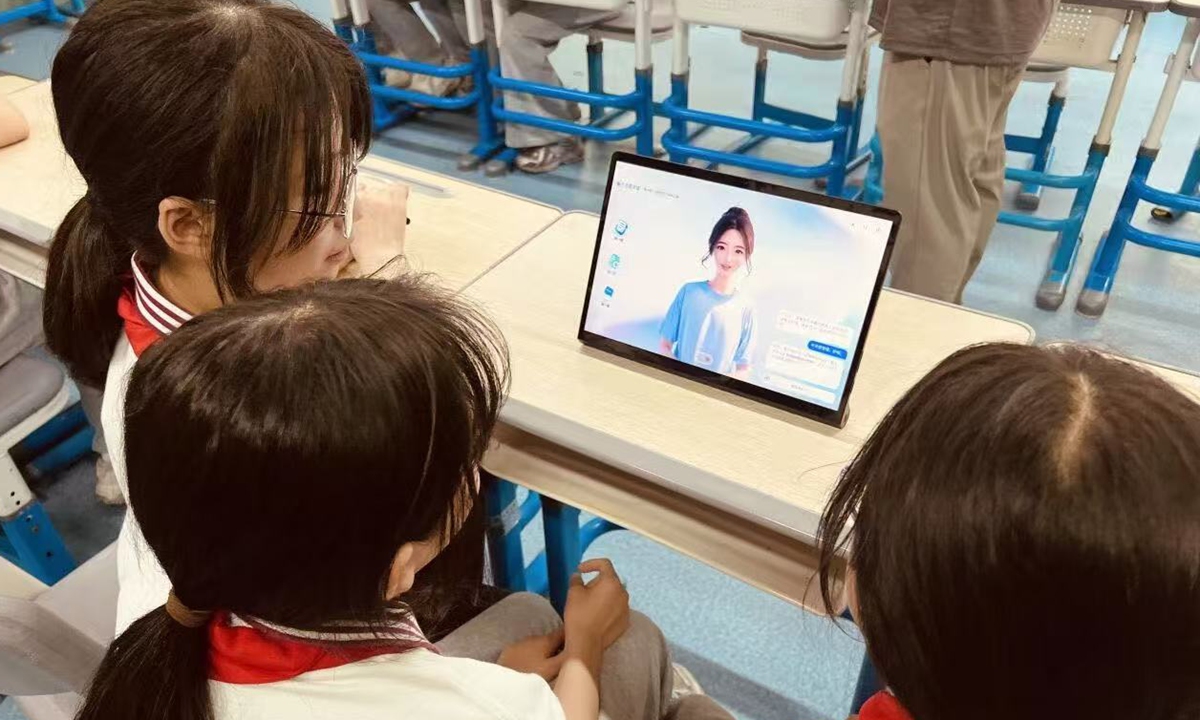
Students from Shijia Primary School experience the AI counseling system. Photos on this page: Courtesy of system developers
In a quiet corner at the Xiamen Experimental Primary School, a third grader sits inside a futuristic pod. The small, capsule-like room is hushed, the kind of space designed to make worries feel lighter. The pod's occupant engages in a conversation. However, his mentor is not a human counselor, but a cartoon AI character.The AI character's eye movements are lifelike, accompanied by her warm voice, responding with unwavering patience. For the young student, it is a rare space in which he can unburden himself without fear of gazing into human eyes.
The concerns voiced inside this "AI space capsule" are often simple yet universal. The third grader, surnamed Li, told Global Times that he once confided to the AI character Sunny Duoduo about his fear of "not making it into high school." The AI counselor guided him step by step by offering helpful yet introspective prompts: Why did this fear arise? Had he asked anyone for help? How long had it troubled him? Only after the conversation did the virtual counselor offer a tailored suggestion.
"I really like this special counselor," Li said. "It feels like a private space where I can talk without pressure. Whether it's something small, like who gets the popsicles in class, or big, like exams, I always feel better after chatting with her."
September 9 mark's China's 41st Teachers' Day. Not long ago, the Ministry of Education unveiled the second batch of initiatives supporting teachers, including the nationwide launch of the "AI Teacher Companion" application designed to provide educators with dedicated psychological support.
'Psychological detective'
As one of the leading AI Teacher Companion applications, "Sunny Duoduo" first launched as a laboratory project in 2016, and the system has expanded far beyond a single school. It now serves more than 1.5 million students across 11 provinces, spanning kindergartens to universities. Increasingly, it has been extended to teachers and parents - two groups whose individual need for mental health support has often gone unnoticed.
Indeed, teachers themselves, often seen only as providers of care, face mounting pressures in their daily work.
"People used to overlook the fact that teachers need counseling too," Lin Xia, principal of Nanxiaofu Primary School in Xiamen, which has also integrated the system, told Global Times. She admitted that at first she was hesitant about building an AI counseling pod on campus, but her doubts faded as she watched both teachers and students voluntarily enter the pod during breaks and after class, and leave with visible relief.
For counselors like Yan Zhiyu, who helps facilitate the integration of the system into schools, the AI functions as more than just a listener.
"I would call it a kind of 'psychological detective,'" he said.
"When apps like Doubao went viral, people realized AI could provide emotional value," Yan explained. "But this is different. It embeds positive psychology, actively nudges users toward constructive thinking, and interprets subtle cues in ways even people may miss."
That design rests on two core components, said Wang Minghao, a research fellow at Tsinghua University's School of Social Sciences and one of the system's developers. First, it is rooted in positive psychology principles designed to help teachers and students cultivate positive emotions; second, it is powered by a multimodal affective computing model capable of processing text, voice, and visual cues.
"Beyond filling the gap that no human can, it provides 24/7 empathetic interaction to reduce extreme incidents," Wang told Global Times.
In Chengdu's Qingyang district, schools that introduced the system reported that not only did the campus climate improve, but student performance also rose by 18 percent.
Beyond 'mind massage'
Indeed, at a time when the path of AI in education remains a matter of public debate, its tangible effects can be seen extending far beyond counseling. In biology lessons, teachers now simulate tropical rainforests at the touch of a button. In literature classes, Confucius "travels through time" to engage students in dialogue. In some schools, robots and 3D printers have become increasingly commonplace.
But the use of AI in schools and classrooms raises more profound questions. Can algorithms responsibly manage human emotions? Will reliance on machine empathy make students less willing to think critically or seek real human support?
According to Zheng Shuliang, CEO of Lingxin Intelligence, whose company has developed AI counseling model Emohaa, safety and professionalism remain paramount. Emohaa, he noted, is not built on an open-source base but trained on Zhipu AI's foundation model, ensuring higher standards of reliability and security.
"Realistically, today's AI counseling systems give out assessment results based on back-end format information and are designed to assist human counselors, not replace them," Wang said. "Independently dominating classrooms still presents technical and ethical challenges. The future is about collaboration between human and AI."
A pilot program at Beijing's Chen Jinglun Middle School illustrates this partnership. There, an AI assistant tracks students' attentiveness in math classes. Teachers still do pre-class preparations, and when student engagement drops, the system relays feedback to teachers, who then adjust lesson plans with their colleagues.
"It's a feedback loop," said Xu Lin, executive principal of the school's senior division. "AI helps us spot things we might miss, but the decision-making remains firmly in teachers' hands."
This principle is echoed in the 2025 newly issued guidelines for AI use by primary and secondary school students, which emphasize human oversight and critical judgment, urging schools to avoid treating AI answers as final evaluations.
As Zheng concluded, "AI can provide a digital portrait, but deep human conversations remain essential. AI can help plan lessons, but teachers must still prepare carefully. The real promise lies in partnership."
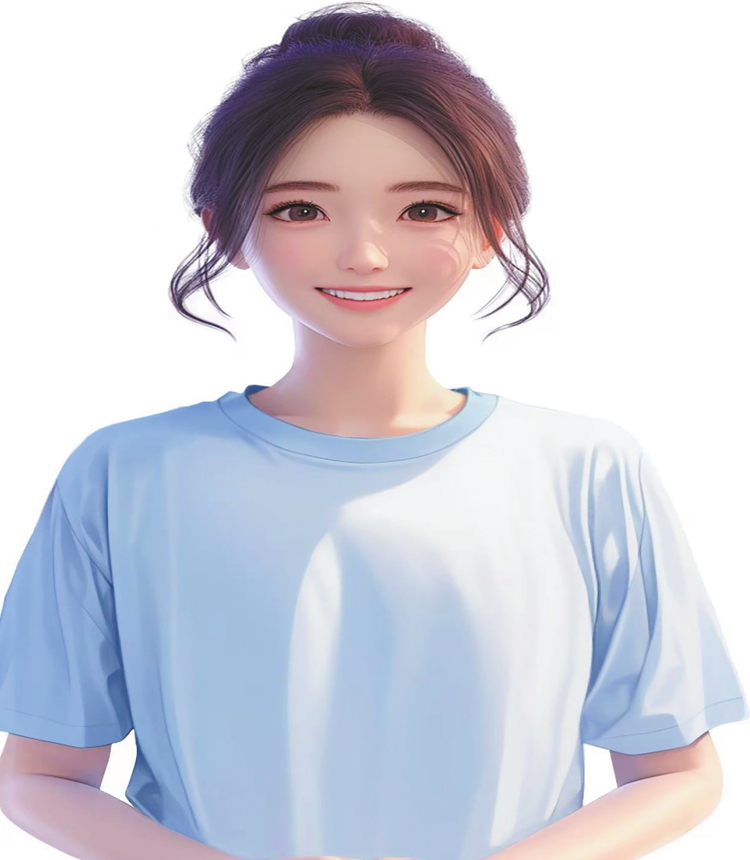
AI character Sunny Duoduo
RELATED ARTICLES