China’s first offshore carbon storage project exceeds 100m cubic meters, marking new breakthrough in technology
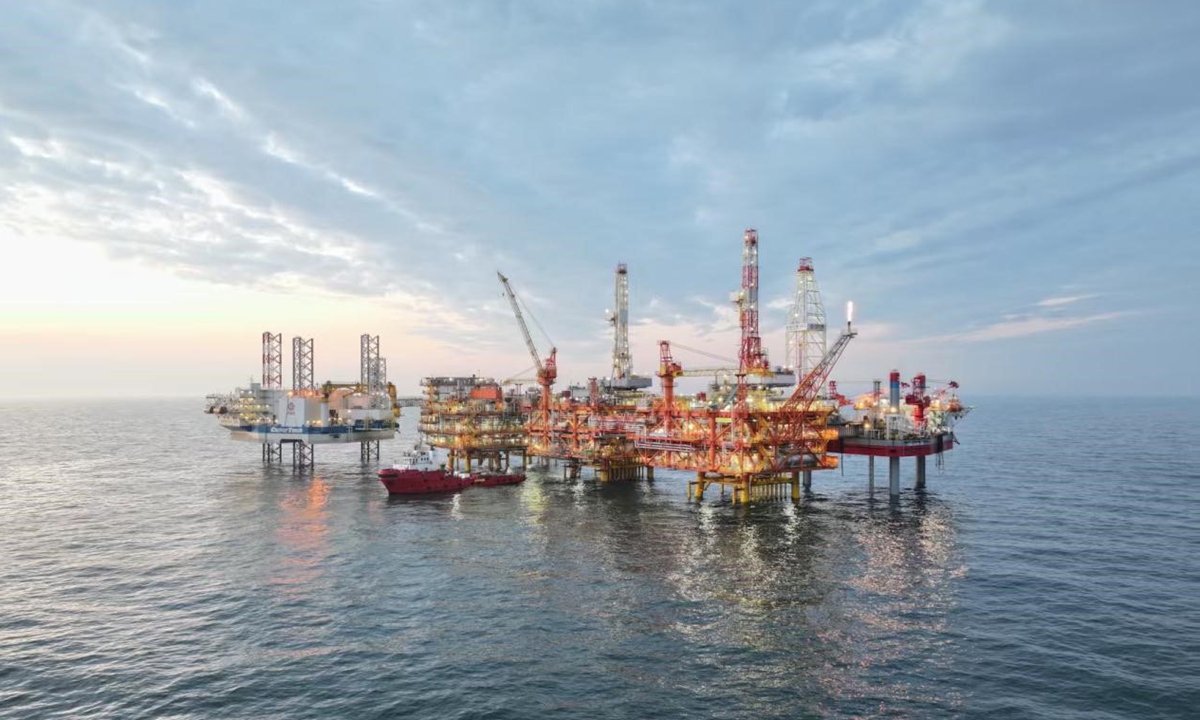
A CNOOC offshore oil platform in the Bohai Sea. File photo: Courtesy of CNOOC
China's first offshore carbon dioxide storage demonstration project has achieved a cumulative carbon storage volume of over 100 million cubic meters, a milestone hailed as significant for accelerating the country's "dual carbon" goals and promoting the green and low-carbon transformation, according to China Central Television (CCTV).
CCTV learned from China National Offshore Oil Corporation (CNOOC) on Wednesday that China's first offshore carbon dioxide storage demonstration project, located in the Pearl River Estuary basin, South China's Guangdong Province, has achieved a cumulative carbon storage volume of over 100 million cubic meters.
The achievement marks that China's offshore carbon dioxide storage technology, equipment, and engineering capability have reached maturity. This is of great significance for accelerating the realization of the national "dual carbon" goals and promoting the green and low-carbon transformation of the economy and society, according to CCTV report.
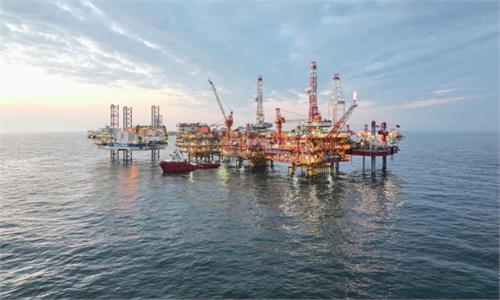
The Enping 15-1 Oilfield, where China's first offshore carbon dioxide storage demonstration project is located, is the first high-carbon-dioxide-content oilfield in the Pearl River Estuary basin. Through carrying out key research on reservoir geology, drilling and completion, and engineering integration, CNOOC took the lead in June 2023 in putting into operation China's first offshore carbon dioxide capture and storage project, said the report.
The project separates carbon dioxide from the produced oil and gas stream, followed by dehydration and drying, compression, and then reinjection through injection wells into shallow saline formations in the oilfield under high pressure, achieving an annual carbon dioxide storage capacity of more than 40 million cubic meters, according to CCTV.
In May this year, a new carbon dioxide utilization project was put into operation, which is able to boost crude oil production of 200,000 tons. This has realized a full-chain upgrade of offshore carbon dioxide capture, storage, and utilization equipment, technology, and engineering, and pioneered a new model of marine energy recycling that "uses carbon to enhance oil recovery and uses oil to secure carbon," according to CCTV.
Looking ahead, over the next decade the oilfield is expected to reinject more than 550 million cubic meters of carbon dioxide, driving an increase of 200,000 tons in crude oil production, according to CCTV.
Global Times
RELATED ARTICLES