ARTS / CULTURE & LEISURE
Over 500 cultural relics returned to China during 14th Five-Year Plan period
Longest case took 25 years to resolve: SCIO
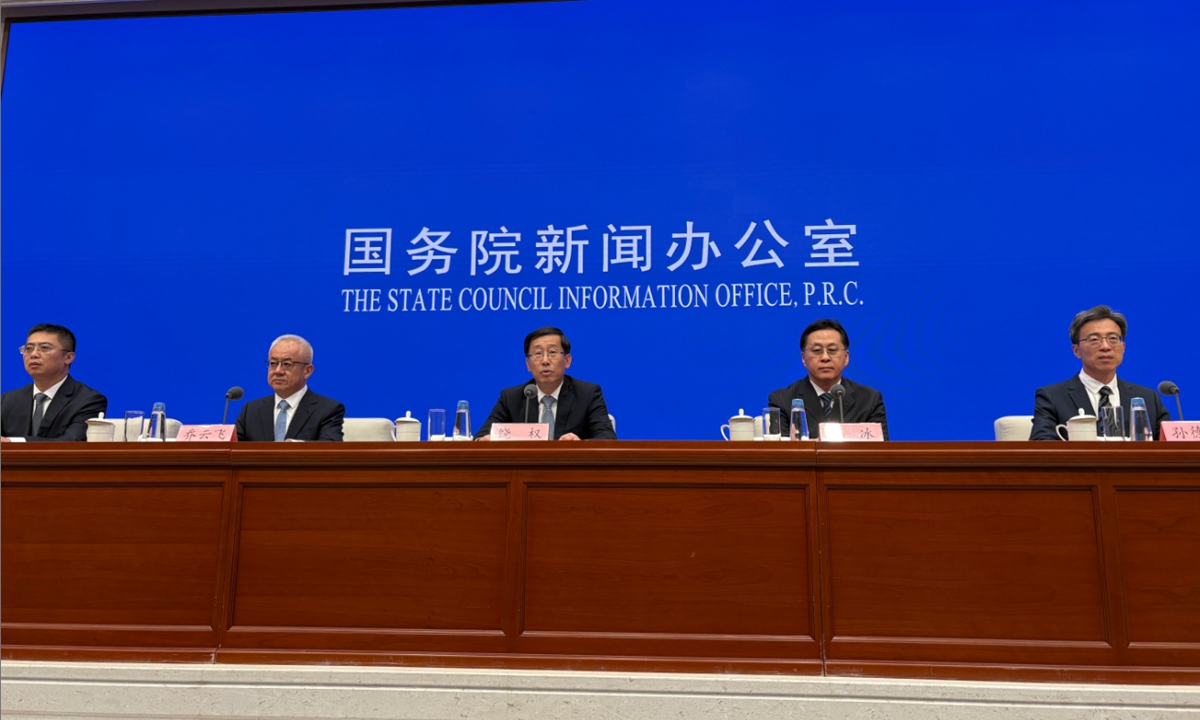
Photo: Wu Jie/GT
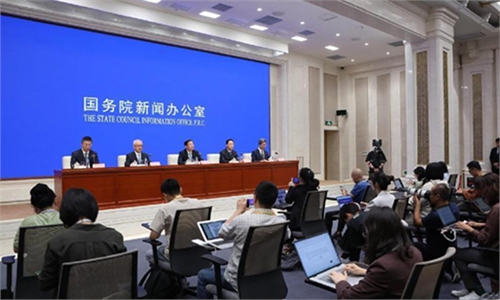
A total of 35 batches of 537 lost cultural relics and artworks have been repatriated to China during the 14th Five-Year Plan period (2021-25) as authorities have been advancing efforts for the recovery and return of displaced cultural relics, an official told the Global Times at a press conference held by the State Council Information Office (SCIO ) on Wednesday.China has actively participated in global governance in recent years, signing intergovernmental agreements with 27 countries to prevent the illicit import and export of cultural relics and jointly issuing with 18 countries the "Qingdao Proposal on the Protection and Return of Cultural Property Displaced under Colonial Contexts or Acquired through Other Unjust or Unethical Means," Xie Bing, deputy head of the National Cultural Heritage Administration (NCHA), told the Global Times.
The stone columns of the Old Summer Palace, a Western Zhou (1046BC-771BC) bronze vessel known as Feng Xingshu Gui, and the Zidanku Silk Manuscript, the oldest silk manuscript discovered to date, were among the lost cultural relics that had recently been repatriated to China, Xie noted.
The Smithsonian's National Museum of Asian Art in the US officially returned the Zidanku Silk Manuscript volumes II and III: Wuxing Ling and Gongshou Zhan from the Warring States Period (475BC-221BC) to the NCHA in May.
The silk manuscript was unearthed in 1942 from the Zidanku site in Changsha, Central China's Hunan Province, and was illegally taken to the US in 1946. The silk manuscript is currently the only known silk manuscript from the Warring States Period, according to the Xinhua News Agency.
After it was lost in the US 79 years ago, the return of this artifact serves as a successful example in which China, drawing on research into provenance and circulation history, secured the recovery of a modern-era cultural relic displaced from the country in a situation in which international conventions could not be applied, Xie said.
Among the recovery efforts completed so far, the longest case took 25 years to resolve. This is because the recovery and return of lost cultural relics involves multiple factors, including international politics, law, history, culture, and national sentiment.
"Work is carried out within an international order whose rules remain incomplete, and depends on consensus and cooperation among different countries," Xie said.
The newly revised national law on the protection of cultural relics for the first time includes provisions related to the recovery and return of lost cultural relics, strengthening cross-departmental coordination for these efforts. It also promotes provenance and circulation history research into displaced cultural relics, laying a solid foundation for their recovery, he added.
In 2025, China was also elected for the first time as the chair of the Conference of the Parties to the 1970 UNESCO Convention, securing broader international space for the search and repatriation of displaced cultural property, according to the press conference.
Regarding international cooperation, China carried out conservation and restoration work for six cultural relics and historic sites in four countries, and conducted 49 joint archaeological projects with foreign partners covering 28 countries and regions during the 14th Five-Year Plan period, Rao Quan, an administrator with the NCHA, said at the press conference.
Rao also briefed media on the latest developments in China's archaeological research and cultural heritage undertakings.
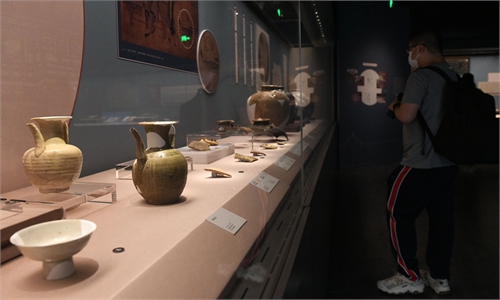
The number of registered museums nationwide has reached 7,046, with one museum for every 200,000 people on average. Of these, 6,444 are open to the public free of charge, accounting for more than 91 percent, and they receive nearly 1.5 billion visits annually. The number of national archaeological site parks has increased to 65, Rao noted.
A total of 1,284 archaeological excavation projects have been carried out during the period, providing empirical evidence of China's million-year human history, 10-thousand-year cultural history, and over 5,000 years of civilization. Archaeological discoveries in border regions such as Gucheng Village in Jilin, the Mo'er Temple site in Xinjiang, and Mabucuo in Xizang demonstrate the pluralistic yet unified nature of Chinese civilization and its capacity for inclusiveness, Rao said.
The successful full-scale salvage and excavation of the No.2 ancient ship in the Yangtze River estuary in Shanghai has advanced interdisciplinary archaeological research and established a new model for the protection of fragile cultural relics recovered from underwater, he added.
RELATED ARTICLES