ARTS / BOOKS
At Temple of Earth book fair, old books find new readers
Echoes through ink
By Li Hang and Published: Sep 11, 2025 10:47 PM

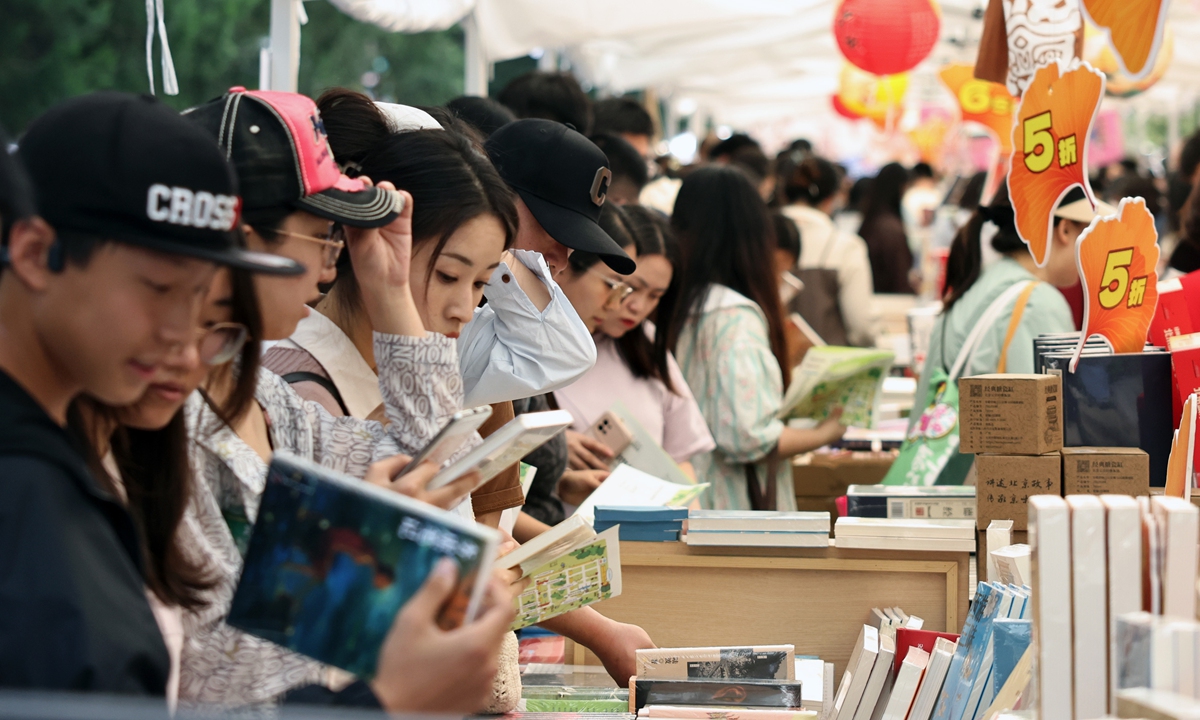
Book fair-goers at the Temple of Earth book fair in Beijing Photo: VCG
Renowned Chinese painter and writer Feng Jicai once said, "Old and new books hold different meanings. New books take you into unknown worlds, while old books often leave you humbled by the limits of your knowledge. Suddenly you realize: What we revere today as wisdom was already spoken long, long ago."That sentiment is resonating with China's younger readers, who are increasingly drawn to the charm of old books. At this year's "The Temple of Earth and Me" Beijing Book Fair, the trend is expected to be evident.
The fair, which kicks off on Friday, is a fixture in Beijing's literary calendar, and has carved out 13 themed sections for 2025.
Among them, the "Old Books, New Knowledge" pavilion has emerged as a focal point.
With the motto "Let old books find new friends, let readers find new knowledge," the section blends exhibitions, sales, events, and publishing initiatives to create what organizers call "an interactive reading space with cultural depth."
On Thursday afternoon, when the Global Times visited the Temple of Earth Park, vendors were seen busy setting up their stalls.
Staff from the Tianjin Ancient Books Store stacked boxes of titles ranging in genres from history and literature to novels and local chronicles documenting life in Tianjin, preparing for Friday's opening.
"This is our second time coming here," said Sun Chun, a manager at the shop.
"Old books carry knowledge from years past. Today, by reusing them, we also embrace sustainable consumption, which reduces waste."
For many book fair-goers, old books stand out as a unique presence among the thousands of new titles on sale each year.
This year, more than 100,000 selections from rare classics to secondhand volumes are being offered by bookstores from the municipalities of Beijing and Tianjin, and the neighboring provinces of Hebei, Shandong, and Shanxi.
Whether visitors hope to collect an edition with historical character, hunt for scarce archival materials, or simply stumble upon a copy marked with a former reader's notes, the fair invites them to browse slowly and choose carefully, savoring the sense of time captured in old pages.
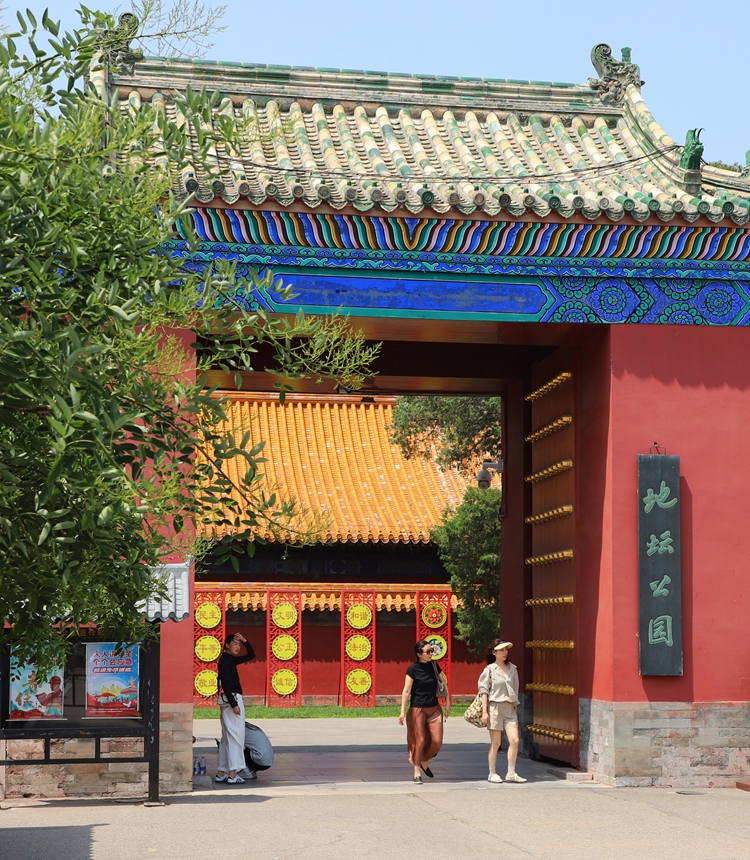
The entrance of the Temple of Earth Park in Beijing Photo: IC
Wisdom in pagesAt the park, the Global Times observed Liu Yichen, deputy general manager of China Bookstore, arranging volumes for the display of a special highlight: the Exhibition of Ancient Chinese Scientific and Technological Texts.
The showcase brings together 50 works that trace the achievements of Chinese science over the centuries. From mathematics and agriculture to medicine and engineering, the exhibition spans nearly every field of pre-modern science.
Inside the glass cases are some of the country's most influential texts, including the Jiuzhang Suanshu, or the Nine Chapters on Mathematical Art - considered the foundation of classical Chinese mathematics; Tian Gong Kai Wu, a pioneering encyclopedia of crafts and technology, and Ben Cao Gang Mu, the definitive text of traditional Chinese medicine.
According to Liu, to curate the exhibition, organizers invited scholars to select works that highlight both domestic innovation and global exchange.
The showcase also features lesser-known works which reflect early encounters between Chinese and Western science.
"These books embody the originality and pursuit of scientific inquiry in Chinese civilization," Liu told the Global Times.
"At the same time, they demonstrate how China's science was constantly interacting with the world - both contributing to and learning from others."
Beyond the exhibition, the joint sale area for old books brought together various bookstores. Stalls offered not only rare and secondhand volumes but also local cultural products.
The fair also features a lineup of activities aimed at different audiences, including the launch of late Chinese bibliophile Jiang Deming's new publication on old books and a program that encourages teenagers to swap secondhand titles.
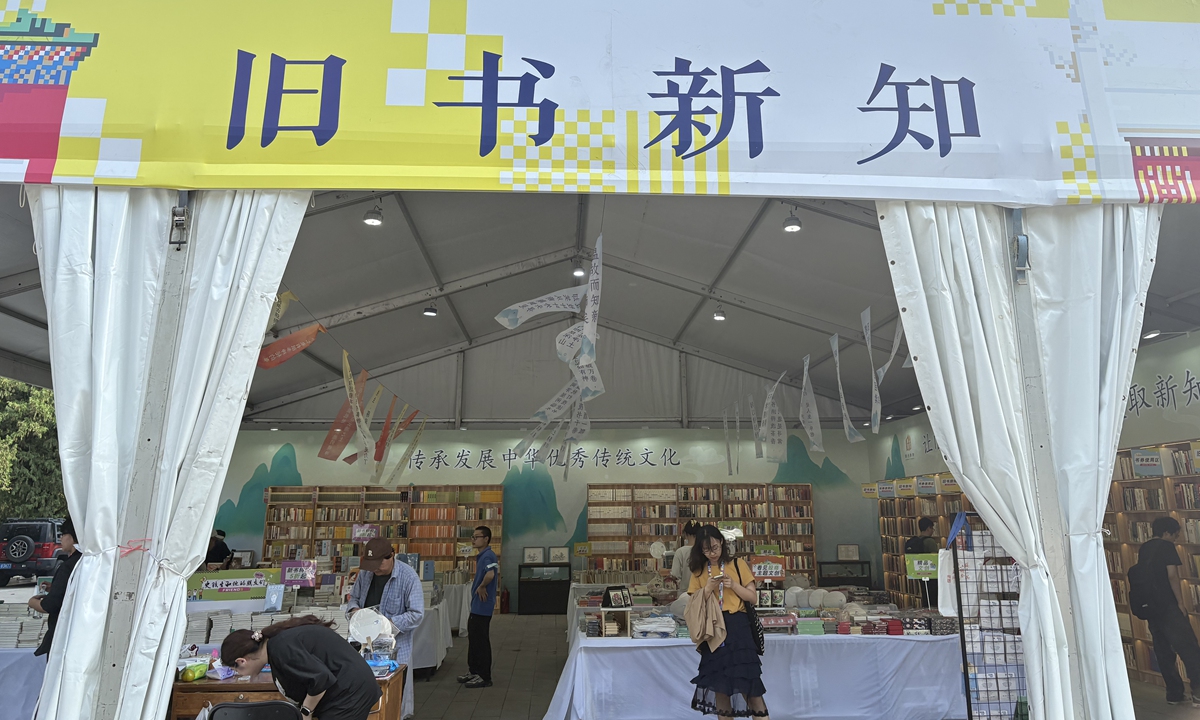
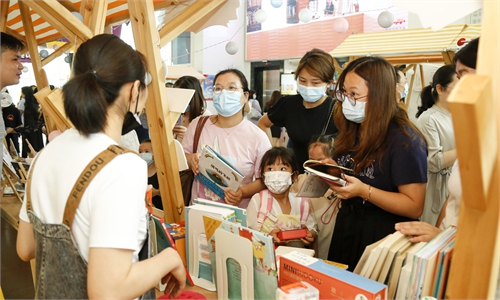
Book fair-goers at the Temple of Earth book fair in Beijing on September 11, 2025 Photo: Li Hang/GT
Traces of timeLu Wei, deputy editor-in-chief of the Zhejiang Ancient Books Press, said the thrill of seeking out old books comes from their unpredictability and the joy of serendipitous discovery.
"Reading old books is an essential part of nationwide reading," Lu told the Global Times.
In Beijing alone, 434 physical bookstores have set up dedicated sections for old books, and 194 offer old book recycling services by the end of 2024, according to Guangming Daily.
The "Old Books, New Knowledge" initiative has expanded beyond Beijing to cities across the country, reflecting a love of secondhand books that is shared well beyond the capital.
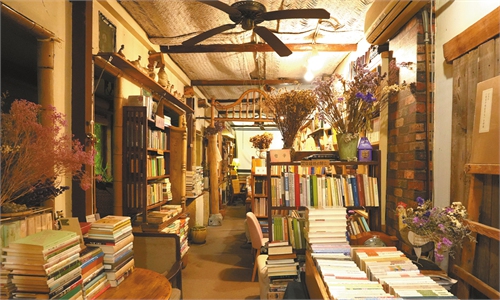
Wan Fang, a young reader living in Wuhan, Central China's Hubei Province, stumbled upon a tiny secondhand bookshop tucked away in an alley. Inside, she found books spanning half a century.
She said that she spent an entire afternoon there, wandering among the densely packed shelves, and found three cherished volumes, one of which was a Xu Zhimo poetry collection from the 1980s.
She still remembers the scent of ink and paper, and the rare tranquility she felt, which marked the beginning of her bond with old books.
The value of old books lies in their historical evidence through editions and annotations, their cultural memory reflected in traces of past lives and times, and their aesthetic ritual through binding and tactile experience, Zhang Peng, an associate professor at Nanjing Normal University, told the Global Times.
Young readers are drawn to the sense of history and passage of time, relish conversing with strangers through marginalia and inscriptions, and savor the slow, empathetic connection this brings, added Zhang.
RELATED ARTICLES