ARTS / CULTURE & LEISURE
Ritual aesthetic practices of space, emotion, and consensus
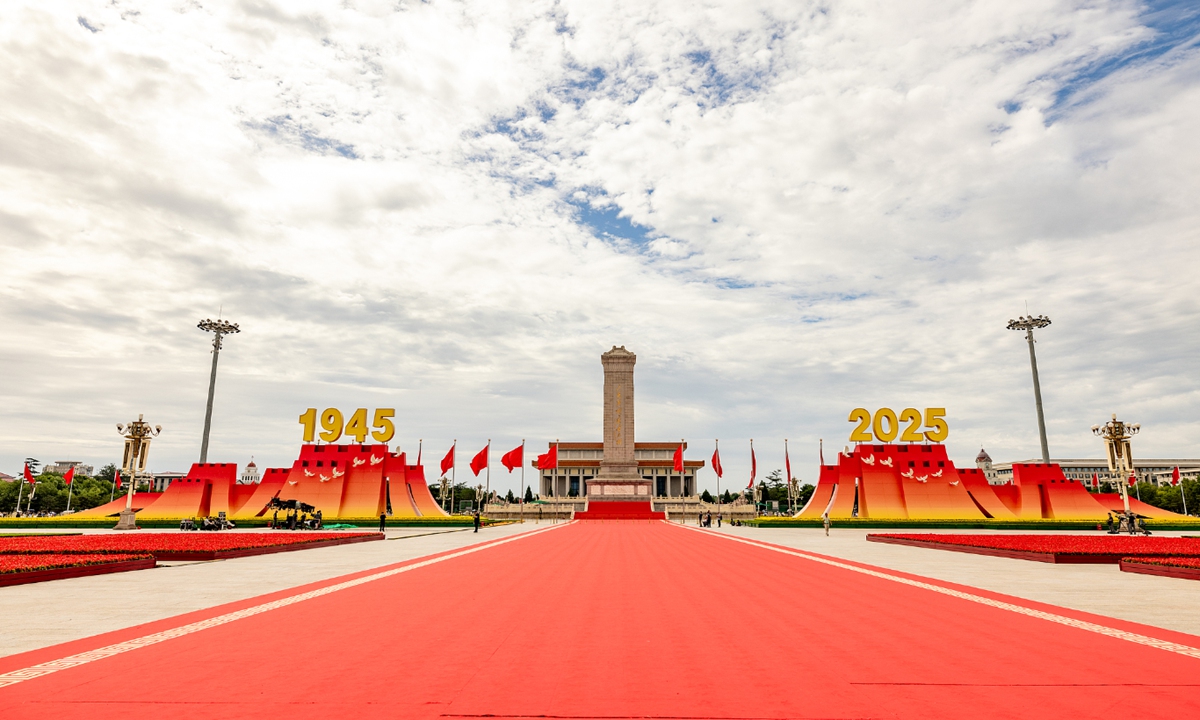
The year-sign platform at the Tian'anmen Square for the commemorative activities marking the 80th anniversary of the victory in the Chinese People's War of Resistance against Japanese Aggression and the World Anti-Fascist War Photo: VCG
Editor's Note:
A grand commemorative gathering was held in Beijing's Tian'anmen Square on September 3 to mark the 80th anniversary of the victory in the Chinese People's War of Resistance against Japanese Aggression (1931-45) and the World Anti-Fascist War. This event not only paid tribute to the history of the Chinese nation but also served as a global commemoration of humanity's triumph over fascism. As deputy head of the team in charge of the commemorative activities at the Tian'anmen Square and vice president of the Beijing Dance Academy, the author of the following article, Xiao Xiangrong, consistently adhered to guiding principles throughout both the overall planning and on-site execution: "On the premise of respecting historical facts and textual authenticity, we avoided the mechanical inertia of ritual repetition. Adopting 're-creation of classics' as our methodology, we placed history and canonical works into new stage contexts. By employing three approaches - re-contextualization, re-mediation, and re-enactment - we enabled familiar melodies to attain contemporary perceptual intensity and interpretive power, transforming them into collective memories that facilitate cross-cultural communication."
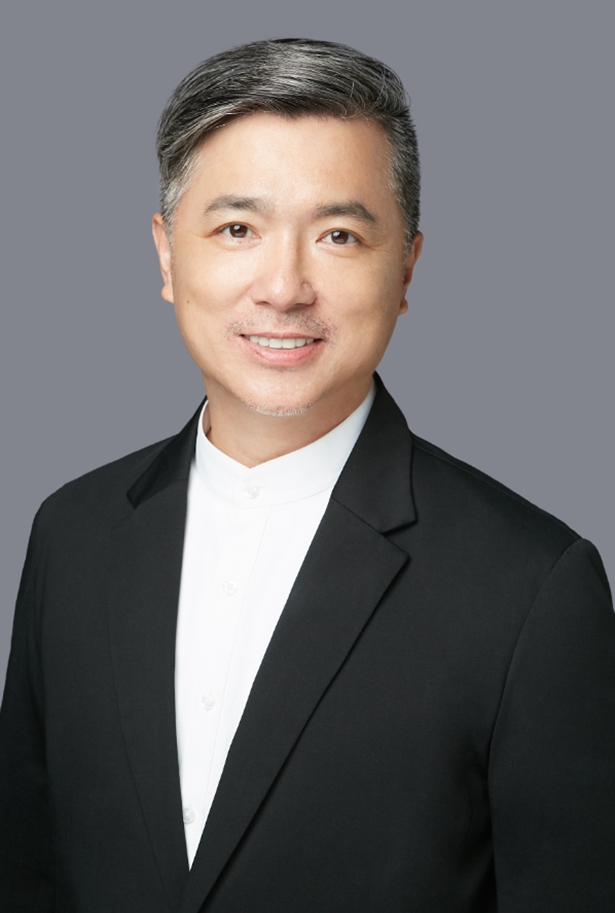
Xiao Xiangrong
For the commemorative ceremony, Tian'anmen Square was elevated through meticulous symbolic arrangement and spatial reconstruction from a physical site to a "ritual field" bearing the nation's collective memory. This transformation relied on the systematic use of visual and spatial languages, guided by the methodology of "re-creation of classics" to facilitate the contemporary translation of historical narratives and emotional mobilization. The year-sign platform, for instance, employed 14 watchtowers symbolizing the 14-year War against Japanese Aggression and 14 doves of peace signifying the contemporary value of victory and peace. The color system, transitioning from "abundant gold" to "dawn red," metaphorically traced the nation's historical journey from adversity to light. The viewing stand, structured like the Chinese character "众" (symbolizing "multitude") and aligned with the Central Axis, formed a spatial structure that integrated individuals into the co-existent order of a "community." These symbols enhanced the perceptibility of the narrative of the War of Resistance, translating historical memory into an aesthetically resonant and publicly communicable form through highly encoded artistic language.
The design of the commemorative ritual turned the static historical landmark, Tian'anmen Square, into a dynamic ritual stage through the superposition, recombination, and behavioral choreography of symbols, endowing each ritual element with cultural meanings transcending daily life.
At Tian'anmen Square, the family stories of War of Resistance veterans were systematically compiled and interwoven with four songs: "Along the Songhua River," "On the Taihang Mountains," "Defend the Yellow River," and "Without the Communist Party, There Would Be No New China." This transformed concrete, evocative lyrics into tangible life experiences.
When the 3,000-member chorus led the entire 50,000-strong audience in singing "Without the Communist Party, There Would Be No New China," the heartbeats of individuals, sound waves, and historical narratives resonated within the ritual.
At the commemorating reception, a 30-minute cultural performance constructed a "transnational memory space" perceivable and understandable to a diverse range of audiences. This space connected individual audience into a community with a shared future.
The children's choral performance of "The Great Wall Ballad" opened the show. By invoking the Great Wall - a national spiritual image of "guardianship-resistance" - it achieved cross-cultural semiotic recognizability.
The program "The Yellow River" integrated piano, guzheng and ballet duet into a cross-media "body-sound" narrative system, presenting an aesthetic vision of "all humanity living on the same planet, bound by solidarity and harmony."
Following it was "For Victory," which built a historical memory space of the international anti-fascist war with four classic Chinese-foreign songs: "The Guerrillas' Song," "Playing My Beloved Pipa," "Katyusha," and "Bella Ciao." This transcended the limitations of single-nation narratives, forming a transnational memory map spanning China, Russia, and the European Allied fronts.
The closing chorus "My Motherland" propelled the performance to its climax: a solo child's clear singing outlined an image of simple rural life; a female chorus extended the lyrical dimension of family and nation; and a mixed chorus, with its sonically encompassing resonance, symbolized the condensation and elevation of national spirit.
As the essence of "artistic connection" dictates: art moves hearts not through direct preaching but through emotionally saturated images, thereby "connecting hearts and unifying the masses." In this way, the personal inspirations of the creators transformed into the shared emotions of all spectators, and China's stance on this history became the consensus of all guests.
The fundamental goal of commemoration lies in consolidating value consensus through the contemporary interpretation of history. In this event, within a ritual field infused with propriety and music, structured by a rhythm that balances solemnity and uplifting resolve, the victory of the War of Resistance against Japanese Aggression was established as a pivotal turning point in national rejuvenation, and the great spirit of War of Resistance was explicitly recognized as a precious spiritual resource driving contemporary development.
Transnational memory here is not an abstract concept but is made concrete through actual ritual organization and artistic choreography: It both inherits the uniqueness of national history and achieves dialogue and sharing through universally recognizable aesthetic symbols, elevating commemoration from a national political narrative to a cultural force that fosters global understanding and cooperation.
Throughout this series of commemorative events, the core methodology of "re-creation of classics" was applied. Through "re-contextualization, re-mediation, and re-enactment," classic works and historical symbols were translated into transnational memories within a global context, successfully realizing the contemporary transformation of historical memory and the generation of international consensus. By grounding efforts in historical facts and using classics as a medium, the event clearly conveyed the historical truth that China was a key participant and major contributor to the World Anti-Fascist War, elevating China's battlefield - which began the earliest, lasted the longest, incurred the greatest sacrifices -from a national narrative to a consensus in the historiography of World War II.
The author is deputy head of the team in charge of commemorative activities at the Tian'anmen Square and vice president of the Beijing Dance Academy. The Chinese version of the article was published on China Art News.
RELATED ARTICLES