China's government debt ratio within reasonable range, risks under control: finance minister
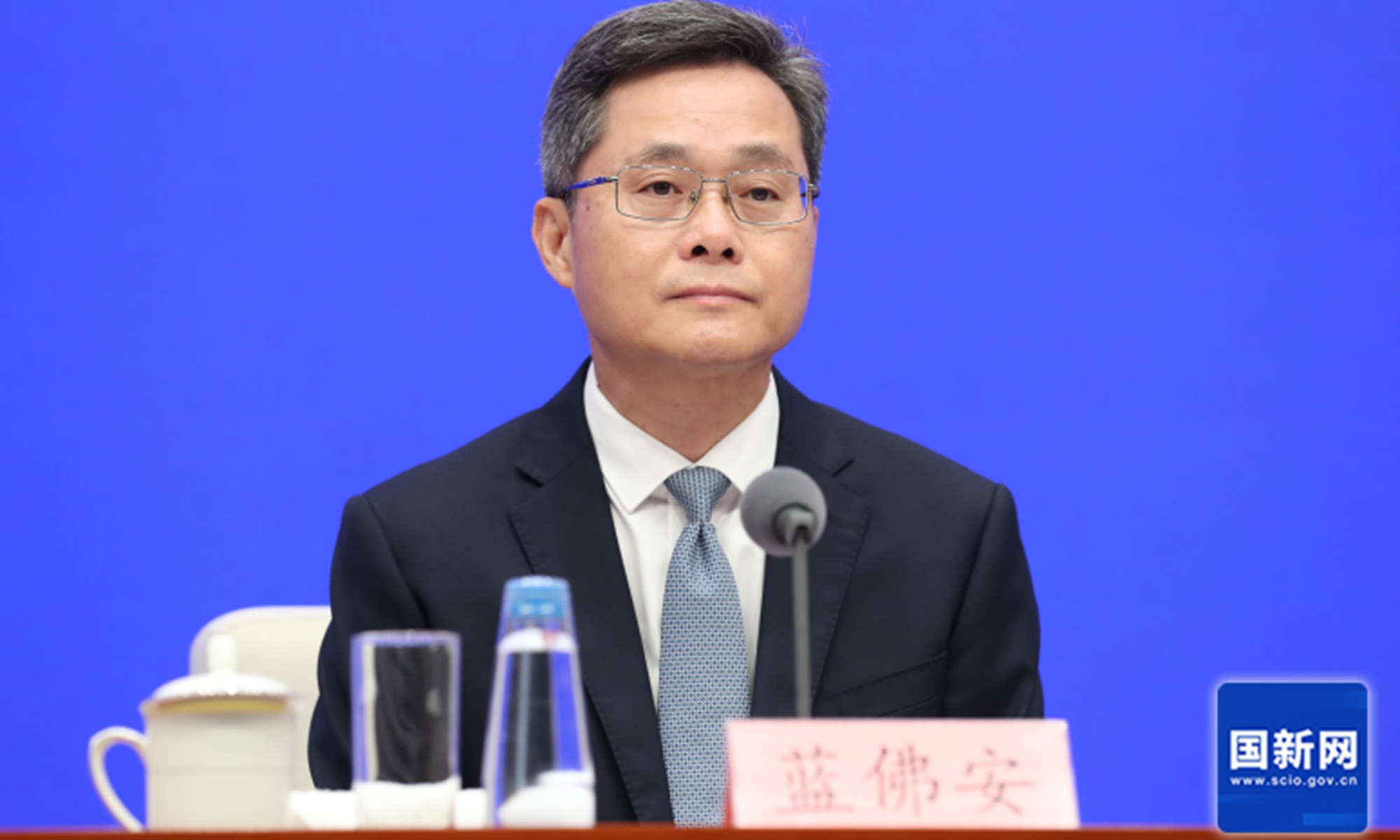
Chinese Finance Minister Lan Fo'an Photo: State Council Information Office website
China's government debt ratio is within the reasonable range and the risks are manageable and under control, Chinese Finance Minister Lan Fo'an said on Friday.
At the end of 2024, the government debt ratio stood at 68.7 percent, Lan said at a press conference to discuss the country's fiscal reform during the 14th Five-Year Plan period (2021-25).
The nation's government debts totaled 92.6 trillion yuan ($13.04 trillion) at the end of last year, including 34.6 trillion yuan in central government debts, 47.5 trillion yuan in statutory local government debts, and 10.5 trillion yuan in hidden local government debts, the minister said.
In the fourth quarter of 2024, China announced a 10-trillion-yuan package to tackle local government debts. "Overall, these measures have been implemented as scheduled and continue to yield tangible results," Lan said.
By the end of August this year, 4 trillion yuan of the increased quota for local special bonds were issued. After local debt swaps, the average interest cost dropped by more than 2.5 percentage points, saving more than 450 billion yuan ($63.2 billion) in interest payments.
This year, a total of 2.78 trillion yuan in local government special-purpose bonds has been issued, of which 800 billion yuan was allocated to supplement government fund revenues, specifically used for replacing local government hidden debts, according to the minister.
Looking ahead, there will be enhanced efforts to implement the package of debt relief measures, including frontloading part of the newly added local government bond quota for 2026, prioritizing the utilization of existing debt replacement quotas, and adopting other measures to resolve existing hidden debts, Lan noted.
"The package of measures to replace local government hidden debts effectively lowers the debt repayment pressure on local governments and strengthens local growth momentum," Xi Junyang, a professor at the Shanghai University of Finance and Economics, told the Global Times on Friday.
The move will free up more financing resource for local governments to resolve their fiscal bottlenecks in economic development, the professor noted, adding that more benign fiscal conditions are expected in the coming years.
During the 14th Five-Year Plan (2021-25) period, China's fiscal policy has become more proactive and tactically more precise, emerging as a critical force for stabilizing the country's economic development, Lan said.
Thanks to those effective policies, China's economy has maintained an average annual growth rate of around 5.5 percent, contributing around 30 percent to global economic growth in the past four years.
China's fiscal policy comprehensively balances risk prevention and promotion of development, maintaining ample policy flexibility to ensure sustained momentum in addressing any future challenges, Lan said, stressing that the country has sufficient fiscal policy room to maneuver.
First, the long-term upward trajectory of China's economic development remains unchanged, which ensures the fundamental stability of fiscal operations. Second, the authorities have accumulated more and more macro-adjustment experience and the policy toolkit is increasingly rich, which has significantly enhanced the country's countercyclical and cross-cycle regulatory capabilities. Third, with the continuous improvement of institutional mechanisms for risk prevention in key areas and the gradual resolution of existing risks, there is greater confidence in addressing any future challenges, Lan said.
RELATED ARTICLES