High-level opening-up during 14th Five-Year Plan advances China’s position in global value chain

Nanjing's uban skyline morning view in East China's Jiangsu Province File photo: VCG
In the past five years, China consolidated the following trends: long-term opening-up policies that were increasingly strategic and calibrated, value-added production upgrading that made it the world's main high-tech exporter, and increasing integration in Asia and in the world.
From 2021-25, China combined tactical trade facilitation, experimentation in free trade zones (FTZs) and sectoral liberalization with an explicit push to move up the value chain. Official data confirm these achievements.
The outcome is a larger trade landscape, geographically diversified and richer in high-tech content. For global firms and observers, the key takeaway is that China remains open for business, but on terms that increasingly prioritize technological upgrading and strategic resilience at home. This strategy, known as dual circulation, was formalized precisely within the framework of the 14th Five-Year Plan (2021-25), which, among other things, was centered on scientific and technological self-reliance, new urbanization, and ecological development.
Before looking at these achievements, it is important to recall that Chinese planning is sui generis compared with other planning processes elsewhere. On the one hand, the plans represent an important programming guarantee for managing the medium- and long-term development process. On the other hand, they are constantly monitored and adjusted during implementation, depending on how effective policies prove to be in reaching various objectives. To sum it up: the Chinese planning process has been crucial for recent decades' successes in the country, and it is always unique.
The planning of China's socialist market economy is therefore flexible, and is carried out through processes of experimentation, which, if successful, are gradually extended nationwide. This approach to planning is thus not only flexible and experimental, but also gradual and highly practical. These features have ensured economic and social development without parallel in history. The current Five-Year Plan, which will conclude this year, is not an exception.
During the 14th Five-Year Plan (2021-25) period, China consolidated its role as a leading trade partner worldwide, signing hundreds of cooperation documents with foreign customs authorities to smooth cross-border flows. At the macro-regional level, China leveraged the Regional Comprehensive Economic Partnership (RCEP) and bilateral frameworks to deepen ties across Asia and with major trading partners. Trade with RCEP members accounts for over 30 percent of China's total trade in recent years, supporting exporters and reinforcing regional supply-chain hubs centered on ASEAN, Japan, South Korea and Australia. This regional focus helped Chinese firms diversify routes to market and mitigate reliance on single-country demand shocks.
Therefore, between 2021 and 2025 the result has been a stabilization and recovery of trade flows after the COVID-19 shock, an acceleration of pilot reforms inside FTZs and a clearer push to convert manufacturing scale into higher-value, technology-led exports.
Since 2013, 22 pilot FTZs have been established, including the free trade port in the southern island province of Hainan.
The pilot FTZs are intended to test a series of innovations in regulations, procedures, and digitalization in order to facilitate trade and investment. It should also be noted that, from the very first experience with Chinese planning, local authorities succeeded in expanding regional connectivity to support national development, while simultaneously broadening trade and financial exchanges with the rest of the world. Hainan's Free Trade Port remained the headline project, with staged policy rollouts to simplify customs, tax and market-access rules that point to progressively higher levels of openness.
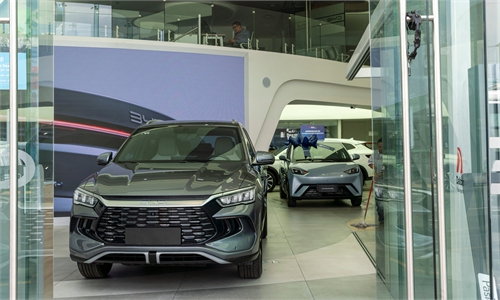
We can assert that the most tangible achievement of the current Five-Year Plan has been the steady rise in high-tech goods in China's export basket. Semiconductors, integrated circuits, telecommunications equipment, and data-processing machines accounted for a growing share of exports through recent years, reaching 18.2 percent in 2024, reflecting both domestic investments in advanced manufacturing and strong global demand for Chinese electronics and electric vehicles - evidence that the country is closing gaps in higher-value segments even as it faces external technology constraints.
Finally, we have to notice policy packaging around the negative list for foreign investment: sectoral restrictions were reduced in successive updates, enabling greater foreign ownership from manufacturing to services, while still carving out strategic exceptions. Parallel steps - incremental liberalization of the financial sector -- have widened foreign investors' access to China's capital markets, making yuan assets more integrated with global portfolios. These moves underpin a narrative that opening is continuous: reforms are tested in FTZs and financial channels before broader application. With these precedents in mind, we can surely start to welcome the 15th Five-Year Plan (2026-30).
The author is a scholar of international studies at the Italian International Institute Lorenzo de' Medici. bizopinion@globaltimes.com.cn
RELATED ARTICLES