ARTS / CULTURE & LEISURE
From university halls to international awards, how ‘Chengdu-made’ screen productions are going global
Action!
By in Chengdu Published: Sep 14, 2025 09:45 PM
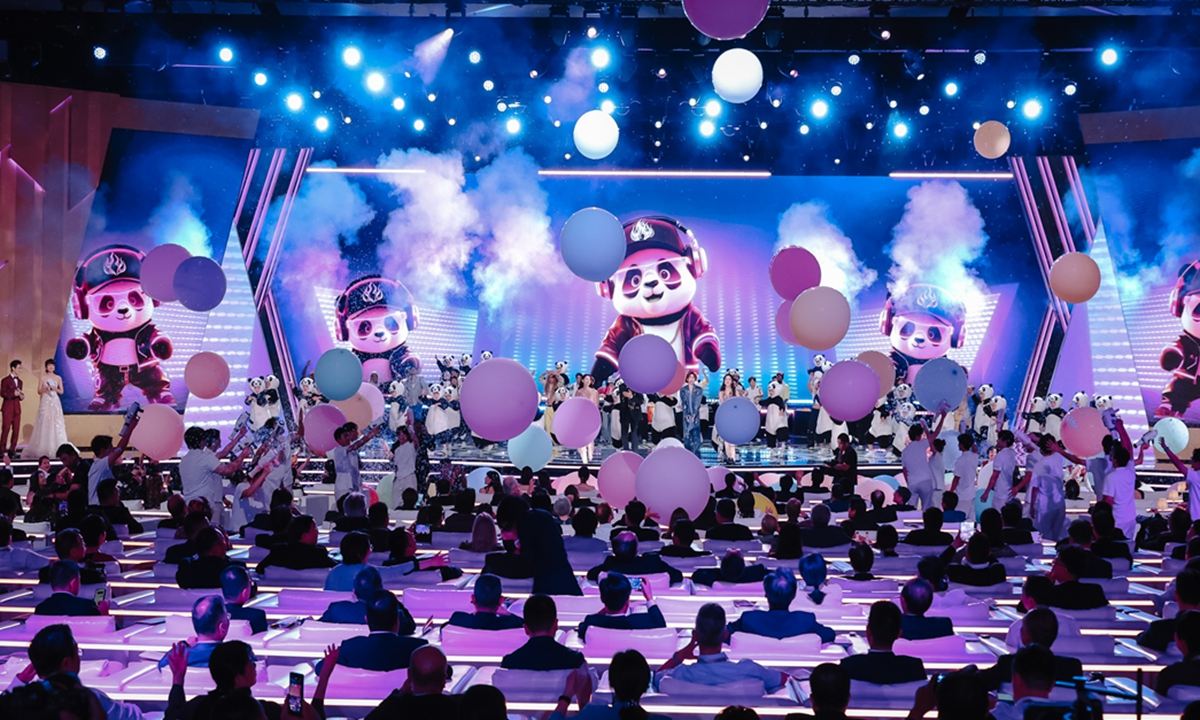
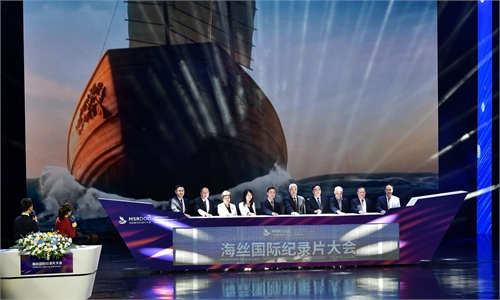
The scene of the 2nd Golden Panda Awards Ceremony Photo: Courtesy of the organizing committee of the awards
On Saturday, the winners of 27 categories at the second Golden Panda Awards were announced in Chengdu, Southwest China's Sichuan Province. Among the global honorees, Chinese animated blockbuster Nezha 2 lived up to expectations, winning the Best Animation. As the highest-grossing animated film worldwide, the Nezha film series is deeply connected to Chengdu. Tracing the journey of Nezha and other Chengdu-made works going global, one can understand how Chengdu-made production's growing global appeal is taking shape.From classroom to studio
When Nezha 2 was declared as the Best Animation at the awards ceremony, Xu Hui, director of the career service center at the Chengdu World Studios, could not hide her excitement. She told the Global Times that more than 50 students, alumni, and teachers from the Sichuan University of Media and Communications had been involved in nearly every aspect of the film's production, from 3D modeling and animation to production management and post-rendering. This intensive collaboration took place at a practical training base jointly established by the base and the university.
Working alongside various studios in Chengdu, these young talents helped propel the Nezha film series from just a concept to a global phenomenon. For Xu, witnessing the film's international success was a source of great pride, as it represented the world-class potential of "Chengdu-made" content.
The partnership between Chengdu World Studios and the university has become a model of integrated development. Just steps beyond the university's gates lies the ultra HD innovation application industrial base, a dynamic hub where students transition seamlessly from classroom learning to hands-on practice. Over the past few years, more than 1,000 students have participated in real-world projects at the base, contributing to over 200 completed works. Many of these films and series have gone on to receive accolades at domestic and international festivals.
A prime example of this collaboration is the main creative studio behind the Nezha film series, which established a satellite office within the film city to work closely with student interns. Here, students gain early exposure to industrialized workflows and advanced production pipelines. "This not only reinforces their theoretical learning, but also sparks creativity that they can bring to their own future projects," Xu said.
The hands-on experience and industry mentorship have become a signature feature of Chengdu's talent pipeline. Strolling through the Sichuan University of Media and Communications, it is common to turn a corner and see groups of professionals or students carrying cameras and lighting panels, all immersed in a vibrant atmosphere of creativity.
Cutting-edge technology supports these filming activities. In one corner of the Chengdu World Studios stands a large, striking white building - the largest soundstage in Asia that covers more than 16,000 square meters, and other advanced kinds such as an underwater soundstage are being built.
It is not just blockbuster films that benefit from Chengdu's resources - short dramas and micro-films also enjoy convenient production conditions. "On the busiest days, up to four or five production teams can be found shooting simultaneously in this district," said Zhou Nanxi, staff member of the "New York Street" filming area. The diverse sets can recreate everything from sci-fi and urban tales to period and detective stories.
Since opening in April, the district has hosted hundreds of short film crews. Many have also taken on overseas TV commercial projects. Yale, a member of a team that produces overseas ads, told the Global Times that the highly authentic European-style sets have made their shoots more efficient and appealing when working with international actors.
A platform for exchange and inspiration
High-quality production requires more than just advanced technology; it thrives in an environment of openness, dialogue, and mutual learning. This spirit was clearly embodied at the Golden Panda Awards. As jury president Chen Kaige emphasized, the awards - now permanently based in Sichuan - set no boundaries or genre restrictions, letting the works themselves shine. The Golden Panda Awards have become a gravitational field, attracting filmmakers from around the world and inviting them to find their audience in China.
This year, in addition to Nezha 2's success, productions and talents from Norway, Italy, China, and other countries, including the Italian film There's Still Tomorrow and Chinese TV series She and Her Girls, won major awards. The four main categories of film, TV drama, animation, and documentary drew entries from 5,343 works spanning 126 countries and regions, with international submissions accounting for an impressive 73.2 percent. This breadth and diversity reflect Chengdu's growing status as an international cultural hub.
Industry insiders such as renowned screenwriter Lu Wei and actress Tong Liya underscored the importance of cross-cultural dialogue. Tong observed that films from various countries brought a wealth of perspectives and storytelling approaches. "What matters most is inviting our international peers - filmmakers, jurors, and audiences alike - to China, so they can witness the true creative spirit and inner strength of the Chinese people. That, I believe, is the most valuable," she told the Global Times.
Joel Hynek, the celebrated American visual effects artist and jury member - known for his work on The Matrix - also highlighted the awards' role as a platform for sharing and learning. He noted that the Golden Panda Awards not only allow creators to exchange ideas and showcase their work, but also foster cultural integration across borders.
At the ceremony, many jurors and award-winning creators such as actress Yuan Quan and actor Zhu Yilong remarked on the vibrant creative environment and the constant inspiration they found in Chengdu. From the studios within the city's sprawling film bases, local productions have steadily advanced onto the grand stage of the Golden Panda Awards, standing shoulder-to-shoulder with outstanding works from around the world.
The "Chengdu model" - anchored in collaboration, innovation, and openness - not only elevates Chinese film and television at home, but is now empowering them to make their mark on the global stage.
RELATED ARTICLES