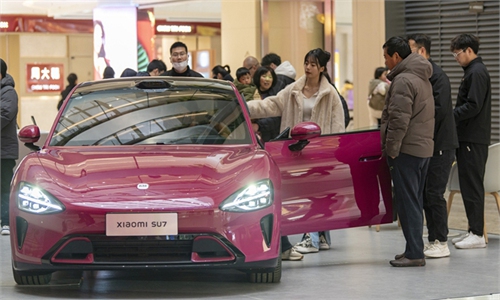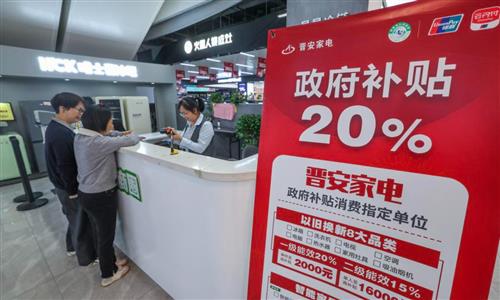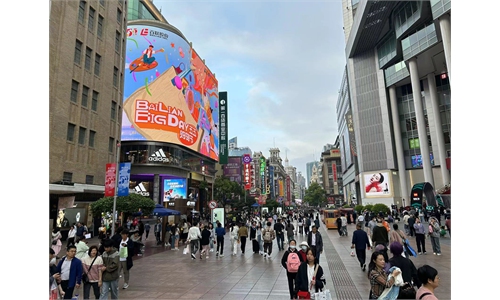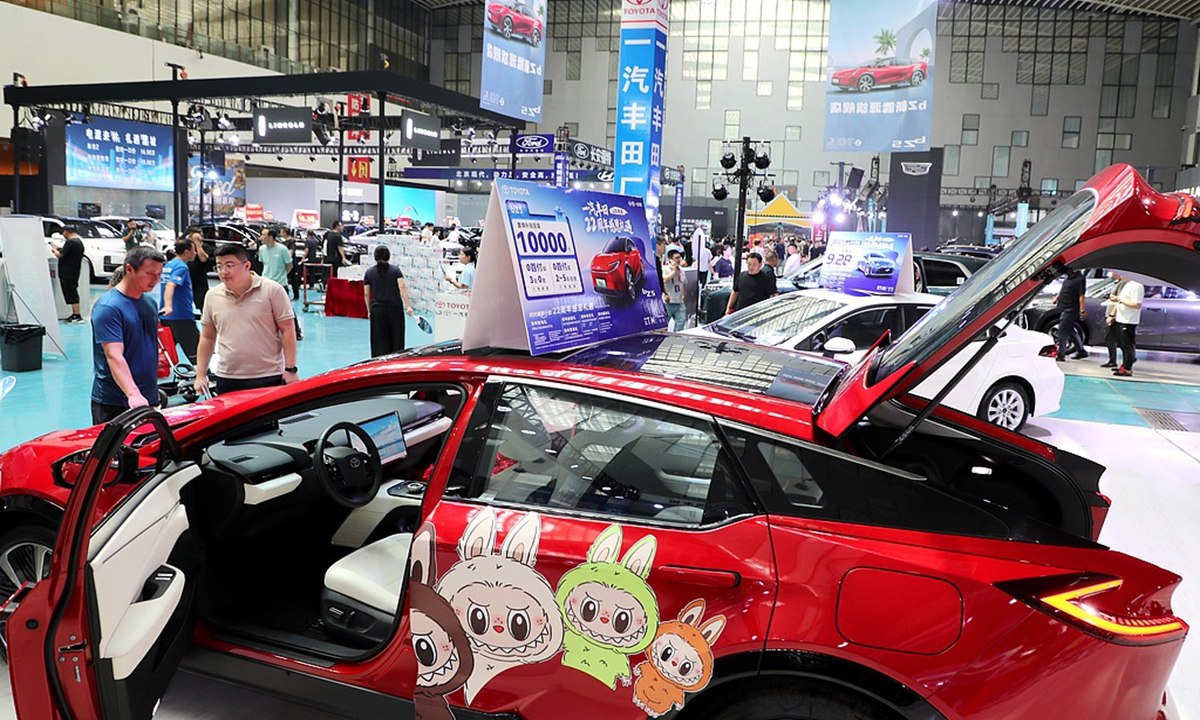
Consumers inquire about electric vehicles and car trade-in subsidy policies at the 32nd Dongying (autumn) auto expo held in Dongying, East China's Shandong Province, on September 4, 2025. The expo is one of the key events to boost auto consumption this year, featuring multiple incentives, including national, provincial, municipal and manufacturer subsidies. Photo: VCG
Multiple Chinese ministries unveiled series of policy measures on Tuesday to expand service consumption, including exploring spring and autumn holidays for primary and secondary schools to increase time for services consumption, such as travel and increasing support for consumer credit.
The measures were announced by the Ministry of Commerce (MOFCOM) and eight other ministries, pledging to boost consumption, expand domestic demand and actively cultivate new growth points for service consumption.
The plan includes measures to strengthen policy support, building platforms, expanding opening-up, strengthening standard guidance and optimizing the consumption environment.
Local governments are encouraged to adjust school calendars based on factors such as climate conditions, production scheduling and paid leave system for employees, provided the total vacation days and teaching hours remain unchanged, according to the MOFCOM.
A key proposal is to explore spring and autumn breaks for primary and secondary schools, offset by shorter summer and winter holidays. This restructuring is meant to create more opportunities for service consumption, such as tourism and travel, the MOFCOM said.
The plan calls for stronger consumer credit support, such as local risk-sharing funds, interest subsidies for consumer loans in key areas, and guide financial institutions and businesses to cooperate in developing products tailored to service consumption.
Services consumption is regarded as a key pillar for improving livelihoods and main focus of consumption upgrading. It plays an essential role in driving high-quality economic development, according MOFCOM.
The plan pledges wider opening of the service sector, with orderly liberalization of internet and culture sectors and pilot expansions in telecommunications, healthcare and education.
The plan also aims to attract more overseas visitors, including through expanded eligibility for five-year multiple-entry visas.
These new measures show China's resolve to improve consumption quality, promote consumption transformation and upgrading, and achieve high-quality economic development, Su Jian, a professor at Peking University's School of Economics and director of its National Center for Economic Research.
He noted that upgrades in traditional consumer sectors, such as the trade-in program, have largely been completed, leaving relatively limited room for improvement. As a result, service consumption is seen as the next major driver of domestic demand.
"This aligns with the broader trend of consumption upgrading and meets new needs as material living standards improve," he said.
Data from the National Bureau of Statistics (NBS) on Monday showed retail sales of consumer goods rose 4.6 percent year on year to 32.39 trillion yuan ($4.56 trillion).
In August, retail sales grew3.4 percent from a year earlier to nearly 3.97 trillion yuan, the NBS said.
NBS spokesperson Fu Linghui policies such as special consumption-boosting actions, the optimization of trade-in programs for consumer goods, and the rollout of childcare subsidies and free preschool education will help strengthen households' capacity and willingness to spend.
According to a joint report by Eternal Beauty, China's leading fragrance distributor, and Deloitte Consulting, the country's fragrance market is experiencing rapid growth fueled by the beauty boom. It is projected to expand at an annual rate of 8 percent and reach nearly 36 billion yuan by 2028.
Notably, service and emotional consumption have shown resilience against the market downturn, becoming a key driver of domestic demand growth. This reflects the shift in Chinese consumers from transactional purchases to value-driven consumption. Within this trend, perfume and fragrance, as highly emotionally driven consumer products, are poised to become a key vehicle for this shift in consumer psychology, thanks to their unique value in emotional resonance and identity expression, the report said.
Global Times
RELATED ARTICLES