Insights from the Madrid talks on China-US economic and trade cooperation: Global Times editorial
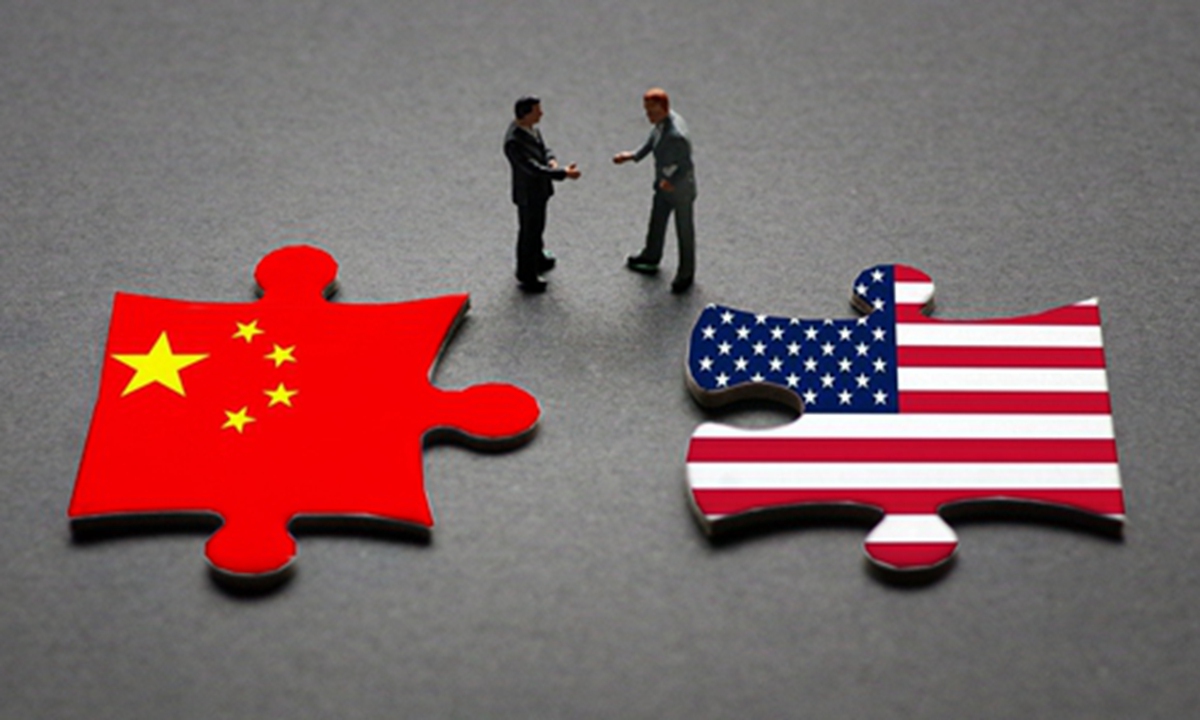
Photo: IC
From Sunday to Monday, Chinese and US delegations held talks on economic and trade issues in Madrid, Spain. The two sides reached a basic framework consensus on resolving issues related to TikTok through cooperation, reducing investment barriers and promoting relevant economic and trade cooperation. Both sides will continue to maintain close communication, discuss the details of the relevant outcome documents, and each will go through the domestic approval procedures. Improving the atmosphere of China-US economic and trade interactions is a long-term task, but the Madrid talks undoubtedly sent some positive signals.It is noteworthy that the Madrid talks concluded two days earlier than originally scheduled.
Although the consultations were relatively short, the outcomes were substantial, to some extent reflecting the two sides' shared willingness to seek common ground while reserving differences as well as to resolve key concerns through meeting each other halfway.
This also indicates that the economic and trade consultation mechanism, guided by head-of-state diplomacy, is becoming increasingly mature. The important consensus repeatedly emphasized by the two leaders - that "both countries stand to gain from cooperation and lose from confrontation" - is being actively implemented, and both sides had made detailed and thorough preparations and communications ahead of the talks.
From Geneva, London, and Stockholm to Madrid, China and the US have conducted four rounds of high-level economic and trade consultations in just about four months. This in itself is a positive signal, demonstrating that the consultation mechanism between China and the US is functioning effectively and providing a stable and reliable communication channel for addressing complex economic and trade issues. On the other hand, European countries have successively provided four city platforms to facilitate China-US economic and trade consultations, which truly reflects the international community's urgent expectations for China-US cooperation in stabilizing global trade and market confidence.
The Madrid talks added stability and predictability to China-US bilateral economic and trade relations. The decision to properly resolve the TikTok issue through cooperation demonstrates that direct dialogue and communication between regulators can significantly reduce compliance risks for enterprises, and also offers valuable practical references for establishing a sound relationship between governments and markets in the digital economy era. In addition, the talks focused on "reducing investment barriers" and "promoting relevant economic and trade cooperation," directly addressing the core concerns of businesses in both countries.
Following the Madrid talks, the general international reaction was one of "relief." Reuters called it "a rare breakthrough," recognizing the efforts of the two major economies to ease trade conflicts and stabilize international markets. Given the size of their economies and the complexity of their supply chain and industrial linkages, reaching consensus is no easy task. At a time when the global economy faces multiple challenges, enhanced cooperation rather than confrontation between China and the US is crucial for global economic recovery, smooth supply chains, and tackling inflation.
It should be noted that there is still a long way to go from "framework consensus" to "final agreement." As the China international trade representative with the Ministry of Commerce pointed out after the talks in Madrid, after engaging in a series of economic and trade negotiations with China, the US has "continuously expanded the list of sanctions against Chinese entities, with its long arm of jurisdiction reaching ever farther." The US side cannot, on the one hand, ask China to take care of US concerns, and on the other hand, continuously suppress Chinese enterprises, he said.
The US should approach the China-US economic and trade talks with a long-term perspective rather than a short-term mind-set.
China has always insisted that multilateral economic and trade rules serve as the fundamental principles for social development and market management. It continues to expand opening-up, reduce tariffs, and decrease non-tariff barriers in order to create a fairer and more equitable development environment for all parties, including US businesses. Therefore, the US should also honor its commitments and provide an open, fair, just, and non-discriminatory business environment for global enterprises, including Chinese companies, to continue operating in the US. Moreover, the relatively fast growth of the US economy is inseparable from the development benefits it has long enjoyed through economic globalization.
The stability of China-US economic and trade relations is the foundation and an important condition for countries around the world to anchor their development links. The principles and models that the two countries adopt in handling international economic and trade relations also have significant demonstration effects and wide-ranging impacts.
Markets in both countries and across the globe are eager for China and the US to reach an economic and trade agreement as soon as possible. Hopefully, the US side can work with China to uphold the principles of equality and mutual respect, comply with World Trade Organization rules, and resolve economic and trade differences through market-oriented and commercial means, thereby responding to this expectation and jointly maintaining the stability of global industrial and supply chains.
RELATED ARTICLES