China’s National Religious Affairs Administration explains new rules regulating online acts of religious personnel
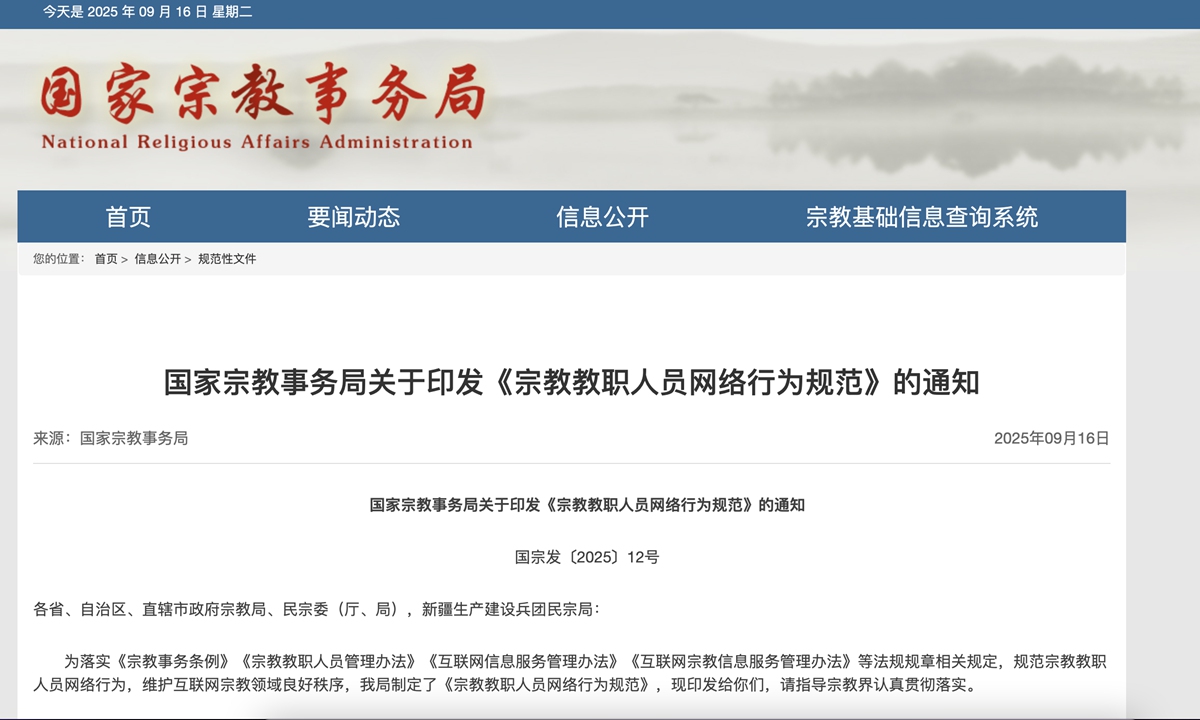
Photo: Screenshot from the website of the National Religious Affairs Administration
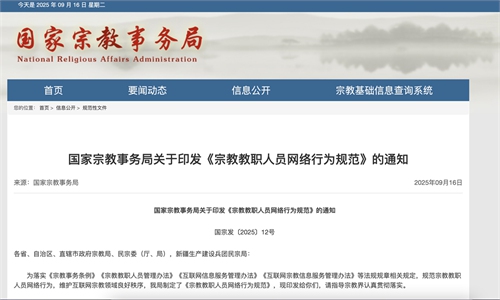
China's National Religious Affairs Administration issued new rules regulating the online behavior for clerical personnel on Tuesday. An official from the administration provided clarifications on the formulation and issuance of the rules, according to the information published on the official WeChat account of the United Front Work Department of CPC Central Committee on Wednesday.The official said issuing rules on the online behavior of religious personnel is urgently needed to maintain harmony and stability in the online religious sphere and to protect their legitimate rights and interests. Previously, certain behaviors, including illegal or non-compliant online scripture preaching and unauthorized fundraising, have corrupted social morals and tarnished the image of religious communities. In response, religious figures, believers, and other social groups have called for further regulation of religious personnel's online activities, according to the official's clarification.
The new rules are intended to implement existing laws on religious affairs, such as the revised 2017 Regulations on Religious Affairs and the Measures for the Management of Internet Religious Information Services released in 2021, to refine relevant systems, clarify specific requirements, and guiding clerical personnel to conduct their online activities within the framework of laws and regulations, according to the official.
The National Religious Affairs Administration finalized the document,after developing the initial draft through extensive consultations with religious representatives and relevant departments, and refining the draft by incorporating feedback from central and regional authorities and religious organizations, the official said.
The official explained that this 18-article document sets out provisions for the online conduct of religious personnel, requiring them to comply with national laws and relevant regulations.
Citing the regulations, the official said that religious personnel registering or operating public social media accounts in their clerical capacity must submit their clergy credentials to internet service providers for verification.
Religious personnel's online scripture preaching and religious education or training may only be conducted through legally established websites, apps, forums, or other online platforms operated by religious groups, religious institutions, temples, or churches that have obtained the license to provide online religious information services issued by official departments, said the official.
The official, citing the regulations, stated that clerical personnel are prohibited from engaging in online self-promotion, spreading extremist ideologies, promoting cults or heresies, or profiting from religion. They are also banned from conducting online acts that undermine harmony between different religions or within the same religion, discriminate against believers or non-believers, or misuse artificial intelligence to produce or spread illegal information.
Global Times
RELATED ARTICLES