ARTS / FILM
‘Evil Unbound’ opens to solemn crowds on symbolic Sep 18, spotlights Japan’s WWII atrocities
By Published: Sep 18, 2025 12:00 PM

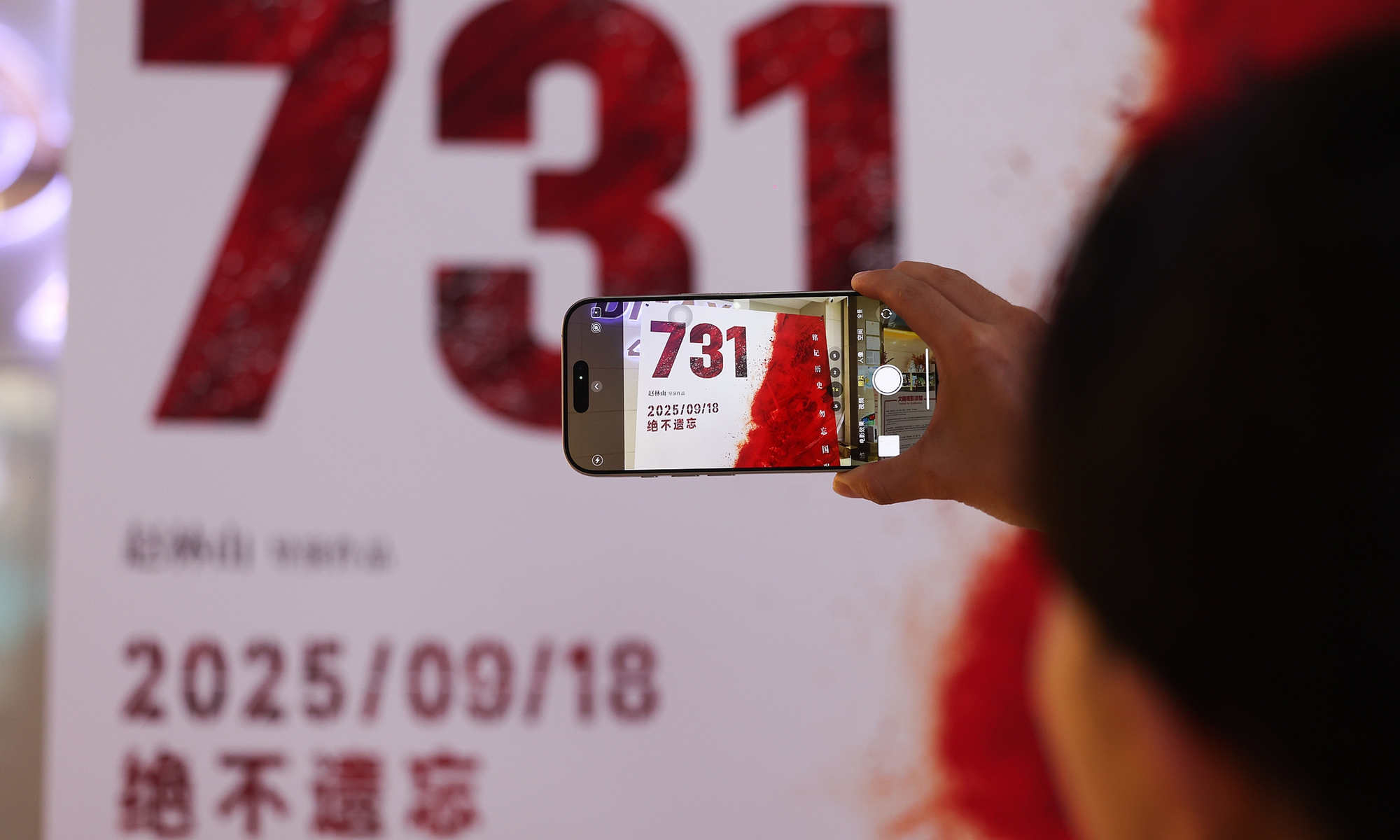
Photo: VCG
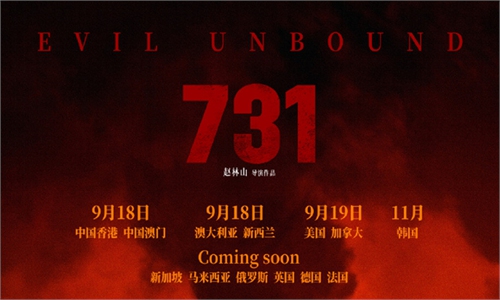
The highly anticipated film Evil Unbound, which exposes the atrocities of notorious Japanese germ-warfare unit created during World War II (WWII), opened across Chinese cinemas at 9:18 am on Thursday with screenings timed to coincide with a painful national memory - the September 18 Incident that marks the start of Japanese military's invasion of China in 1931.
Directed by Zhao Linsha, the 125-minute movie highlights the atrocities suffered by the "Maruta" (as the human experimentation subjects were called by the Japanese army) from the perspective of civilians. The shocking scenes put on full display the crimes against humanity committed by the Unit 731.
The production team on Thursday issued a statement condemning some unauthorized use of the film's content.
The producers demanded all infringing parties to immediately remove related content and cease its dissemination. They stated that evidence has been preserved and legal action will be taken against violators, with serious cases referred to administrative or criminal authorities.
"As a significant historical work, any unauthorized manipulation or commercial use of Evil Unbound is strictly prohibited," the statement noted.
At 11:23 am, the first screening concluded. Attendees were seen leaving the theater one after another, and Global Times reporter observed grave expressions on every face and noticeably red and swollen eyes from crying.
Sang Hailin, a 27-year-old young man holding a national flag, told the Global Times in a hoarse voice, "As a former police academy student, I have long anticipated this film with a heavy heart. I came to the first screening and was impressed by the words featured in the movie 'if you remember, I am fulfilled.' History should not be forgotten; it should be commemorated by everyone."
In fact, at a Beijing cinema as early as 8:40 am, Chinese moviegoers of different ages, from elderly retirees to young professionals, gathered ahead of the first showings. Many said they were there not just as viewers, but as witnesses to history.
Retiree Wang Yulong was among those attending an organized screening with his former work unit.
"Every Chinese person should be familiar with the number 731," he told the Global Times. "We may know something about it, but not systematically enough. This history must be remembered by every generation."
He added, "We have witnessed the strength of our motherland during the recent military parade on September 3. Only a strong China can prevent something like Unit 731's [Japanese germ-warfare] from ever happening again… We must remember the shameful acts committed against China and the world."
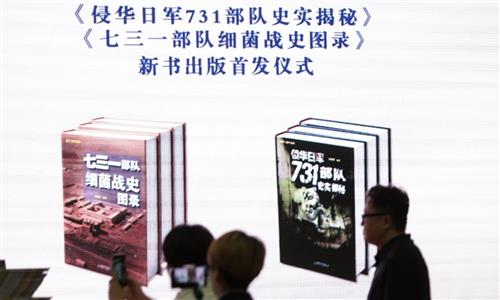
Unit 731 was the codename for a covert Japanese military medical unit active from 1932 to 1945, responsible for bacterial warfare and human experiments that killed over 3,000 Chinese, Korean, Soviet, and Western prisoners of war in brutal tests. The Japanese militarists secretly designated an area of 6.1 square kilometers in the Pingfang district of Harbin, in Northeast China's Heilongjiang, in 1936, establishing the world's largest biological warfare base, according to the Xinhua News Agency.
For many in the crowd, the film was more than a historical recount; it was a connection to family memories.
Bi Shufang, another retiree, recalled her grandfather, a member of the Communist Party of China (CPC) from North China's Hebei Province.
"My mother told me he once fought Japanese soldiers in the village, and he still carries a scar on his head from that time," she said, her eyes welling up. "I'm here to honor him, and to make sure his story isn't forgotten."
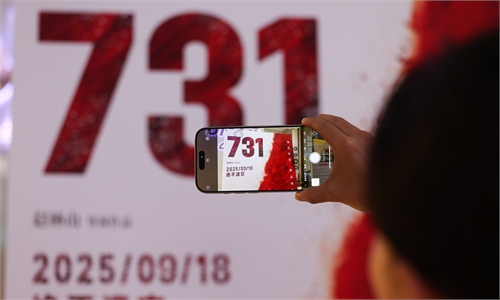
The timing of the release on multiple ticketing platforms, on the anniversary of the September 18 Incident, carried deep significance. Screenings were scheduled for 9:18 am, with participating theaters labeling them "Eternal Reminder," or "Treasuring Peace" special sessions.
As one cinema staff member told the Global Times that: "We could have started screenings at 9 am, but 9:18 is different. It's a warning, an eternal reminder."
Lulu, a staff member from Chinese ticketing platform Maoyan, told the Global Times that these special screenings may feature decorations, small merchandise giveaways, or specially designed ticket stubs, all emphasizing "a sense of ceremony and experience."
Even on a weekday morning, young viewers made time to be there. For example, Zhang Zhihui, in his twenties, came straight from a night shift.
"I rushed here right after work… I've watched many films like this, including the Dead to Rights and others. On a day like today, it's all about remembering history and staying true to our roots."
"We've known this history since we were children. It's painful and profound…We must not forget the history," said Dai Bomin, 32, who was ready to watch the movie with family after his brother-in-law, a former soldier, had been discharged from service just a day earlier.
According to Maoyan, Evil Unbound had already grossed over 151 million yuan ($21.26 million) as of 10:40 am on Thursday morning including its presale revenue, with over 4 million people expressing interest in watching it. The film is set to hold a Beijing premiere on Thursday.
RELATED ARTICLES