China to safeguard sustainability of global marine resources, says Commerce Ministry
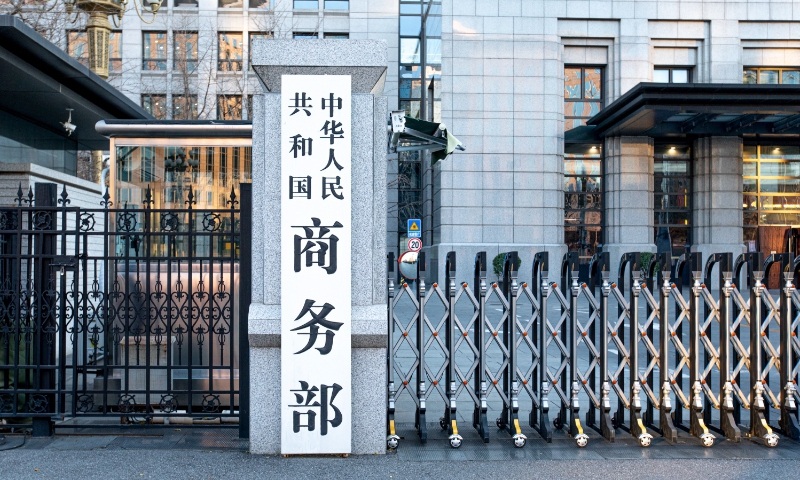
The Ministry of Commerce of China File photo: VCG
Responding to the significance of the WTO Agreement on Fisheries Subsidies, which entered into force on Monday, and China's international responsibilities in its implementation, a spokesperson from the Ministry of Commerce (MOFCOM) said on Thursday that China will diligently fulfill obligations, working with other WTO members to safeguard the sustainable development of global marine resources, and support the UN 2030 Sustainable Development Goals.
"Global fisheries governance is a pressing concern for the international community. The agreement, the WTO's first multilateral agreement aimed at environmental sustainability, officially took effect on September 15. This marks a significant milestone for both the multilateral trading system and global fisheries governance," He Yadong, the spokesperson, said at a regular press briefing on Thursday.
Adopted at the WTO's 12th Ministerial Conference in June 2022 after prolonged and complex negotiations, the agreement's entry into force in just over three years, amidst challenges from unilateralism, reflects the collective commitment of most WTO members, including China, to uphold the WTO and multilateral promises. This strengthens the WTO's relevance and authority, boosts global confidence in the organization, and injects new momentum into its work, He sia.d
Negotiated over 21 years, the WTO Agreement on Fisheries Subsidies represents the longest-spanning negotiation in WTO history. It is the second entirely new multilateral agreement concluded in the WTO's 30-year history and the first aimed at achieving environmental sustainability goals. The agreement will effectively contribute to the UN's 2030 Sustainable Development Goals, according to an announcement released by the MOFCOM on Monday regarding the formal entry into force of the agreement.
The spokesperson explained that the agreement establishes binding multilateral disciplines on subsidies, requiring members to enhance transparency in fisheries subsidies and management policies, strengthen fisheries enforcement, and improve capabilities for sustainable fisheries resource assessment. Its implementation will promote the sustainable development of global fisheries and enhance members' capacities for long-term scientific conservation and sustainable resource management.
The spokesperson noted that China, a major global marine fisheries nation and an active advocate for sustainable fisheries development, ratified the agreement on June 27, 2023, becoming one of the first major WTO members to complete the ratification process. Through the WTO platform, China actively promotes global governance initiatives and engages deeply in multilateral fisheries governance.
"Following the agreement's entry into force, China will diligently fulfill its obligations, working with other WTO members to safeguard the sustainable development of global marine resources, contribute to building a shared future for the oceans, and support the UN's 2030 Sustainable Development Goals," the spokesperson said.
At a special WTO General Council meeting on Monday, members celebrated the formal entry into force of the WTO Agreement on Fisheries Subsidies. As the WTO's first multilateral agreement with environmental sustainability at its core, commits members to curbing billions of dollars in annual spending on the most harmful subsidies that contribute to the depletion of marine fish stocks.
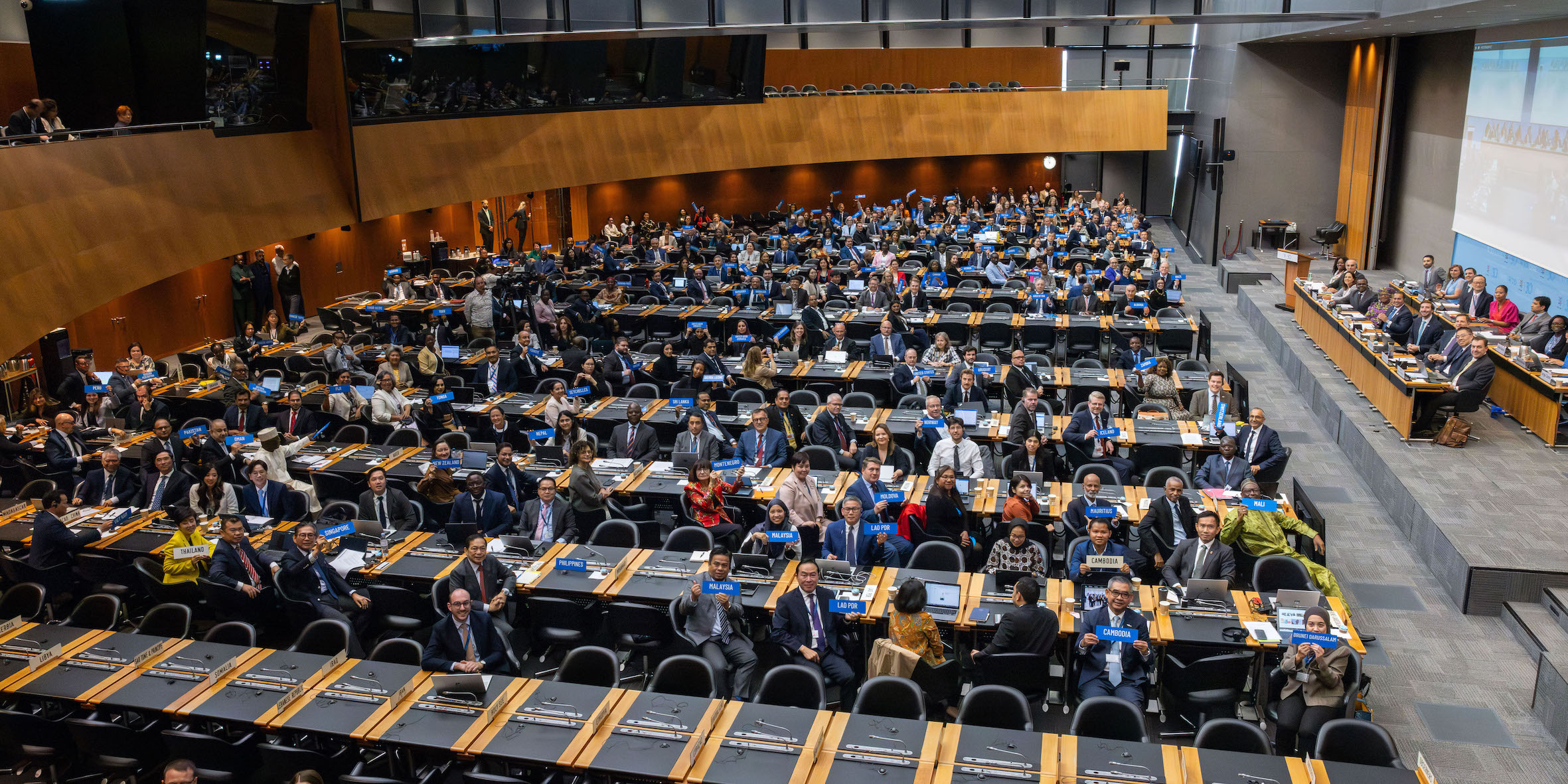
World Trade Organization Agreement on Fisheries Subsidies enters into force on September 15, 2025, in Geneva, Switzerland. Photo: WTO
On Monday, in her address to the WTO members, Director-General Ngozi Okonjo-Iweala said: "At a time when the international trading system faces profound challenges, the Agreement on Fisheries Subsidies sends a powerful signal that WTO members can work together in a spirit of cooperation and shared responsibility to deliver solutions to global challenges.
"The entry into force of this Agreement stands as a reminder that many of the biggest challenges we face are more effectively addressed at the multilateral level. People and nations need multilateralism that delivers - which is why today is so reassuring," she said, according to a release by WTO.
Data showed that in 2021, 35.5 percent of global fish stocks were classified as overfished, compared to just 10 percent in 1974. Currently, global subsidies for marine fishing activities are estimated at approximately $35 billion annually, with about $22 billion classified as harmful subsidies, according to a release published on the UN's website on Monday.
Global Times
RELATED ARTICLES