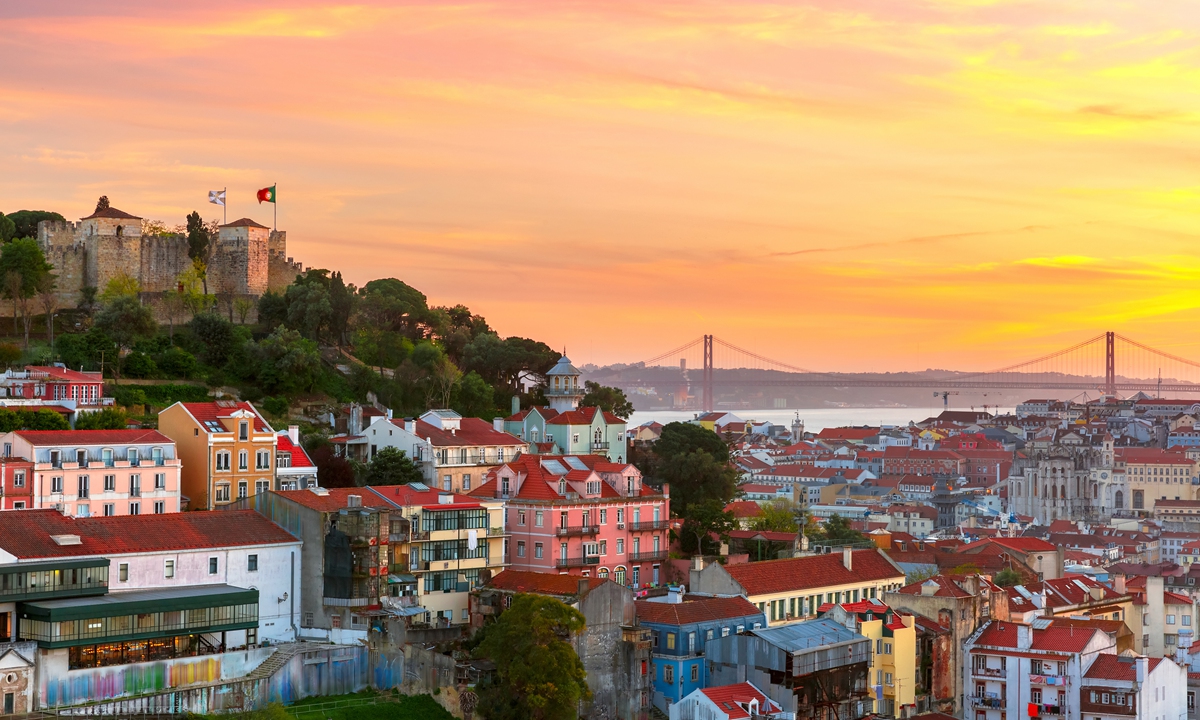
Lisbon, Portugal Photo: VCG
Bernardo Mendia, Secretary General of the Portugal-China Chamber of Commerce and Industry, council member of World Green Design Organization (WGDO), called for closer ties between China and the EU, in an exclusive interview with the Global Times on Friday.
"A cooperative EU-China relationship is essential for addressing the defining challenges of our time, from climate change to global economic stability. The message should be clear: we must build bridges, not barriers," he said.
Mendia called on the EU to resolve frictions with China "through intensive and respectful dialogue within the existing bilateral framework," adding that the EU-China Comprehensive Agreement on Investment (CAI) could be useful in this regard.
The remarks come after an official visit to China by Portuguese Prime Minister Luis Montenegro from September 8 to 10, at the invitation of Premier Li Qiang. It was Montenegro's first visit to China, according to Xinhua News Agency.
The visit has been widely seen as a milestone in bilateral relations for the two sides, reinforcing political trust and creating momentum for the business community, according to Mendia.
Montenegro's visit was not just diplomatic symbolism but a catalyst for business. "It provides the political umbrella under which concrete business - especially in the high-value, sustainable sectors we excel in - can flourish," Mendia noted.
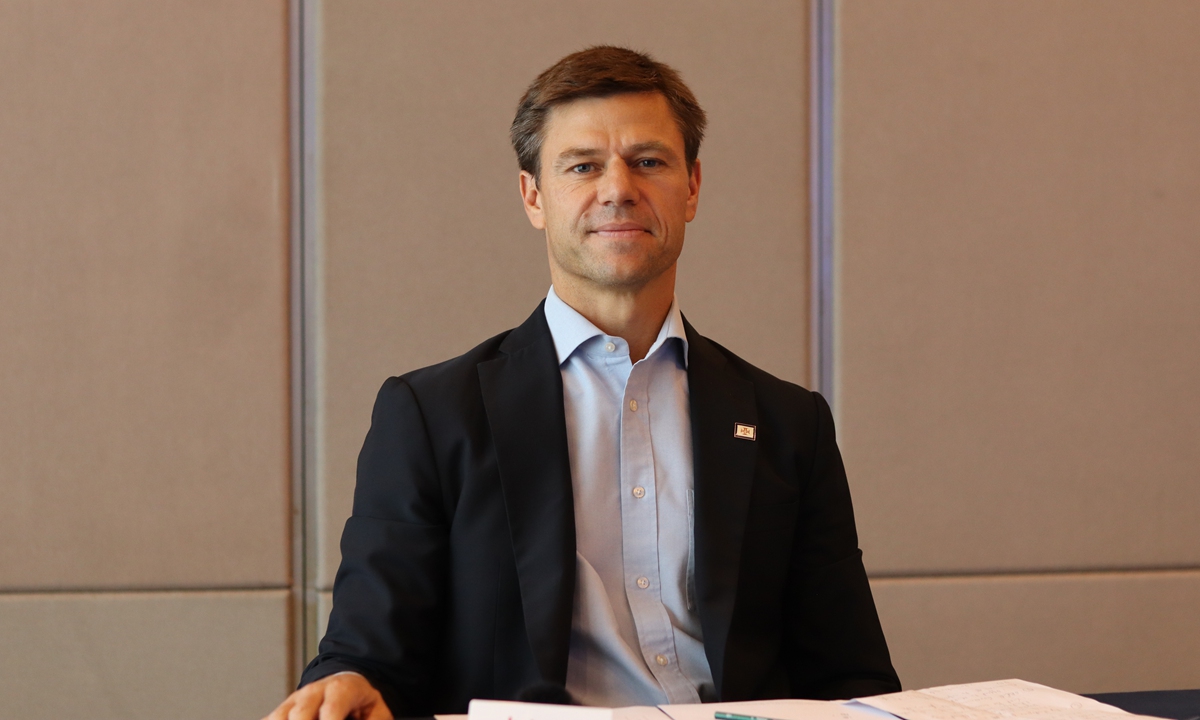
Bernardo Mendia,Secretary General of the Portugal-China Chamber of Commerce and Industry, council member of World Green Design Organization WGDO Photo: Courtesy of WGDO
For Portugal's companies, Mendia said the significance will be far-reaching. "Such visits open doors that are otherwise difficult to unlock. They create a framework of trust and mutual commitment that reassures businesses on both sides to engage more deeply," he told the Global Times. The chamber, he added, works daily to connect Portuguese firms with Chinese partners, but when those efforts are backed at the state level, "the impact is magnified."
Trade between the two countries has grown steadily in recent years. According to data from China's Foreign Ministry, China-Portugal bilateral trade reached $9.28 billion in 2024, up 6.6 percent year-on-year. China's exports to Portugal stood at $6.11 billion, up 5.5 percent, mainly consisting of electrical machinery and equipment, and mechanical appliances. Imports from Portugal totaled $3.17 billion, up 8.9 percent, mainly consisting of machinery, electrical equipment, cork products and other raw materials.
Portugal's exports to China, though still modest compared to those from larger EU economies, have shown resilience amid global uncertainties, Mendia noted. "With bilateral trade passing the $9 billion mark and new areas of cooperation opening up, business leaders are confident this visit could usher in a new chapter," he said.
Mendia emphasized that the real opportunity lies in sectors aligned with the future economy. He highlighted renewable energy, sustainable urbanization, and the ocean economy as priority areas. Portugal has ambitions to become a leading European exporter of green hydrogen, and Mendia said Chinese technology and investment could play a vital role.
"Partnering on solar, wind, and particularly green hydrogen, where Portugal aims to be a leading European exporter, can be a powerful combination," he noted.
When discussing the broader China-EU relationship amid rising global uncertainties, Mendia was forthright in his assessment. "Dialogue, not duties, must be the first, last, and primary tool of international trade policy. Unilateral measures often create a spiral of confrontation that benefits no one," he warned.
He called on the EU not to fight over the "old economy," but to instead join hands with China to build the supply chains and standards of the new sustainable economy.
For instance, he suggested that both sides could cooperate on standards for electric vehicles rather than clashing over tariffs. He also pointed to areas such as artificial intelligence and 5G, where joint rule-making could be more productive than protectionist measures.
The chamber leader linked these positions to broader global challenges.
China's continued opening-up, Mendia argued, is crucial in this process. "In a world where some are building walls, China's commitment to opening doors is a beacon of pragmatism and hope," he said. For Portuguese businesses, it means a stable partner that is willing to co-create solutions.
He pointed out that Portugal's design, engineering, and sustainable practices could merge with China's scale in manufacturing and research to produce technologies needed for the green transition.
Prime Minister Montenegro's visit resonated with the broader sentiment among Portuguese companies that have already benefited from the Chinese market, he said.
The priority now is to turn political momentum into tangible outcomes, Mendia said. For him, the path forward is clear: Portugal and China should go beyond trading goods to also exchanging ideas and innovations, making their partnership a model of sustainable cooperation within the wider EU-China framework.
RELATED ARTICLES