J-20’s aerodynamic design an original in world: developer
By and Fan Wei in Changchun Published: Sep 20, 2025 06:34 PM

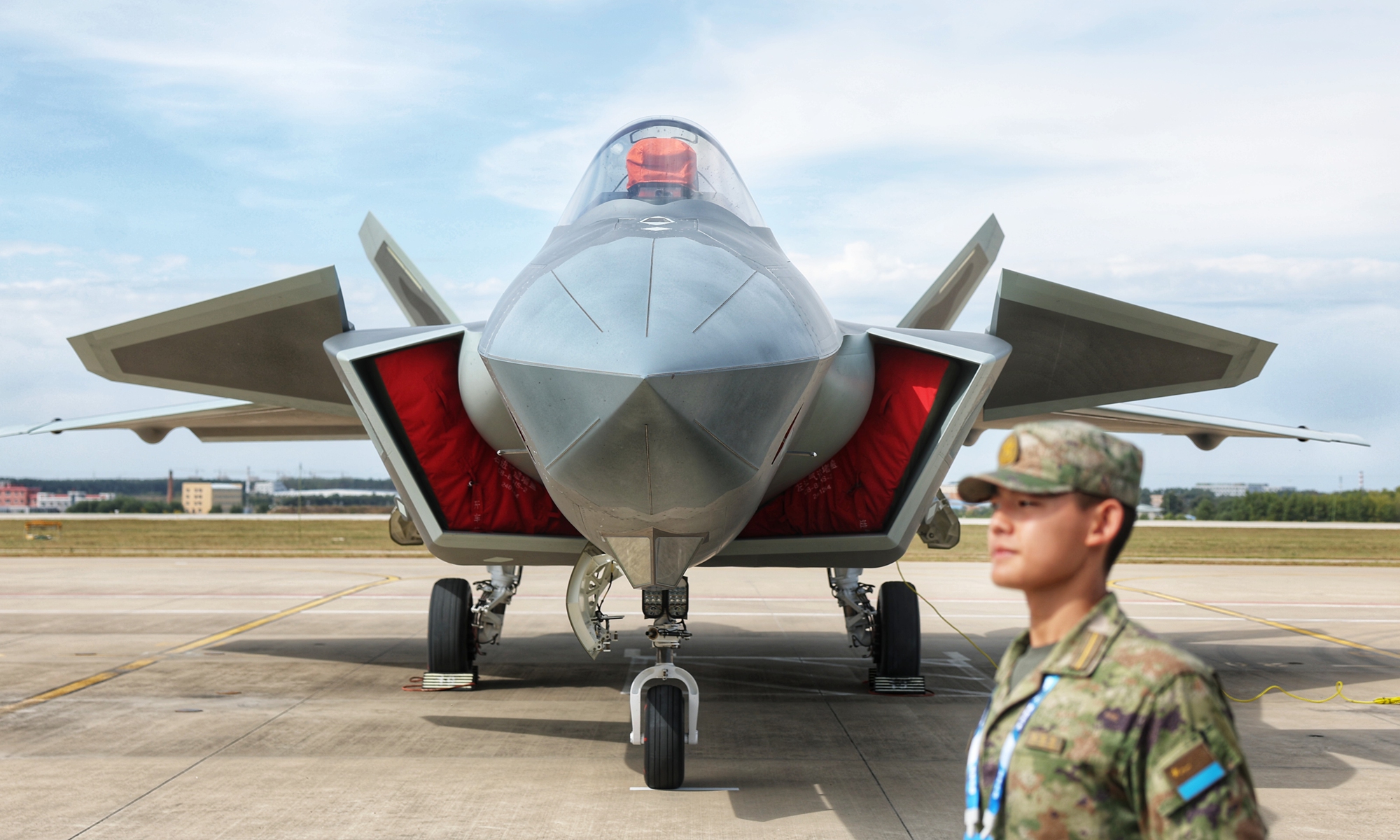
A J-20 stealth fighter jet is on static display at the 2025 Air Force Aviation Open-day activities and Changchun Air Show in Changchun, Northeast China's Jilin Province on September 20, 2025. Photo: Cui Meng/GT
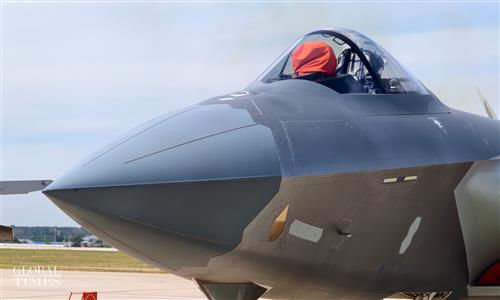
At the ongoing 2025 Changchun Air Show, the J-20, making its first static display, captivated the audience with its highly "overwhelming" aerodynamic appearance and exquisite craftsmanship, showcasing the beauty of China's aviation industry.
On Saturday, Gong Feng, the chief technical expert of the Aviation Industry Corporation of China and deputy chief designer of the Chengdu Aircraft Design and Research Institute, highlighted the unique aspects of the J-20's aerodynamic design in an interview with the Global Times among other media outlets. Gong said that the J-20's integrated aerodynamic layout, known as the "lifting body configuration with canards, strake wings and vertical tails is an original in the world.
The J-20 aircraft is China's first independently developed fifth-generation stealth fighter. After more than a decade of dedicated research and development, it has filled the gap in China's airborne stealth combat capabilities, breaking through a series of core key technologies such as high-stealth, high-performance platforms, and strong collaborative combat capabilities, Gong said.
"It leads technological development, innovates research and development systems and builds exceptional teams. It is a landmark generational leap in aviation equipment for China's new era and a powerful tool to safeguard the great rejuvenation of the Chinese nation," Gong said. He added that as China's first stealth fighter, the J-20 incorporates many generational advancements in technology. During its development, the team encountered numerous challenges, all of which were overcome thanks to their technical expertise.
Gong further explained that in terms of aerodynamic design, the J-20 effectively utilizes the beneficial aerodynamic effects generated by the mutual coupling of the "canard vortex, strake wing vortex, and main wing vortex." In terms of flight control, the aircraft employs relaxed longitudinal and directional instability technology to address the three-axis coupling effects caused by the vertical tail. This achieves a comprehensive design of "high stealth, high lift, low drag, and strong control."
"During the period leading up to its maiden flight, ensuring a safe first flight was the top priority. Faced with such a futuristic, generational leap in aircraft design - a lifting body with strake wings, canards, and canted vertical tails - how could we ensure the pilot had sufficient confidence to take off and soar? To address this, we conducted extensive flight quality simulation tests, iron bird in-the-loop tests, and aircraft-in-the-loop tests with the first flight team pilots. Through repeated testing, optimization, and meticulous refinement, we not only successfully achieved the maiden flight but also endowed the J-20 with exceptional flight qualities," Gong recalled.
RELATED ARTICLES