CAEXPO is strategic platform consolidating economic, political momentum of CAFTA 3.0 negotiations: Malaysian expert
By Published: Sep 21, 2025 08:01 PM


The logo of the China-ASEAN Expo (CAEXPO) is seen in Nanning, South China's Guangxi Zhuang Autonomous Region, on September 17, 2025. Photo: VCG
The 22nd China-ASEAN Expo concluding on Sunday, serves as a strategic platform to consolidate the political and economic momentum brought by the recently-concluded negotiations on the Version 3.0 China-ASEAN Free Trade Area (CAFTA 3.0), Ong Tee Keat, president of Belt and Road Initiative Caucus for Asia Pacific (BRICAP), told Global Times in an exclusive interview on Sunday.
The yearly landmark event manifest China-AEAN commitment in translating diplomatic statements into physical investment and trade flows, reaffirming enhanced market access for ASEAN entrepreneurs into China and vice versa, heralding digital-intelligence cooperation across the region. It is also seen as a prelude to advancing digital trade and green transition underscored in the upgraded CAFTA, according to Ong, also former deputy speaker of the lower house of the Malaysian Parliament.
CAEXPO, which opened on Wednesday in Nanning, South China's Guangxi Zhuang Autonomous Region, saw the signings of 155 investment deals between China and ASEAN, covering AI, new energy and aerospace, Xinhua News Agency reported.
Commenting on the robust trade between China ASEAN, which totaled in the first eight months 4.93 trillion yuan ($690 billion), up 9.7 percent year-on-year, Ong said the trend is, in itself, a clear signal of the strong demand and closer economic integration.
The China-ASEAN trade is an evolving model, moving from the conventional agricultural produce to a more diversified spectrum of sectors. With the rise of digital economy, trade-in-goods looks set to be elevated to a higher level, alongside paving way to enhancing service trade where its ample potential is to be fully developed, the Malaysian expert said. "This bodes well for an envisaged deeper value-chain integration between the bloc and China."

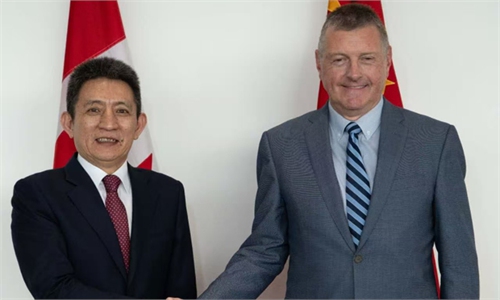
Ong Tee Keat. Photo: Courtesy of OTK
This year's expo arrives amid the upcoming upgrade of the CAFTA to version 3.0, the world's largest free trade zone among developing countries. Negotiations concluded in May, and a formal signing is expected by the end of the year, Xinhua News Agency reported.The CAFTA 3.0 upgrade witnessed a broader and updated rules-based framework that goes beyond tariff cuts to include chapters on the digital economy, green economy, and supply-chain connectivity, Ong said, adding that lower non-tariff barriers and clearer rules for digital trade and cross-border data flows spell the early positive signs in unlocking the potential e-commerce, cloud services and digital platforms across the region.
Moreover, stronger provisions on services and investment protection underscored in the CAFTA 3.0 offer a boon to attracting more FDI into ASEAN manufacturing, green tech and services, notably from among the Chinese entrepreneurs who are now embarking massively on their outbound pursuit of opportunities, noted the Malaysian expert.
Being the theme of the CAEXPO 2025, both digital and intelligent cooperation stand out as the prominent pillar underpinning the China-ASEAN economic cooperation.
While acknowledging AI as the gamechanger in boosting productivity and creating new tradeable services across a wide spectrum of sectors, the relatively young and tech-savvy demography in the region provide a large market for the Chinese exportable AI solutions tailored to meet the Southeast Asian needs, Ong said.
To this end, the existing bottlenecks impeding cross-border data governance and legal interoperability remain a pressing challenge facing the bloc and China, which are of diverse level of technological maturity. Absence of shared technical standards, and certification and talent pool are to be addressed concertedly. Provision of negotiated protocols on data flows, shared testing sandboxes, and joint up-skilling programs tops the list of priorities, said Ong.
Against the backdrop of unilateralism and protectionism in some corners of the world, Ong said intensifying economic cooperation between the two trading partners is needed.
To pre-empt any stakeholders in the China-ASEAN partnership from being preyed by any external moves of economic coercion, the rules-based framework of CAFTA 3.0 should be well equipped with sufficient dispute-settlement mechanism, Ong said.
China, with its growing technology prowess, has the edge of prioritizing technology cooperation with its trading partners in ASEAN, rather than focusing on the market share of its products in the Southeast Asian market.
This is instrumental in elevating the mutual dependence of the enduring partnership, which is now subject to constant wedge-driving and coercive moves of fragmentation by some extra-territorial powers, according to the expert.
RELATED ARTICLES