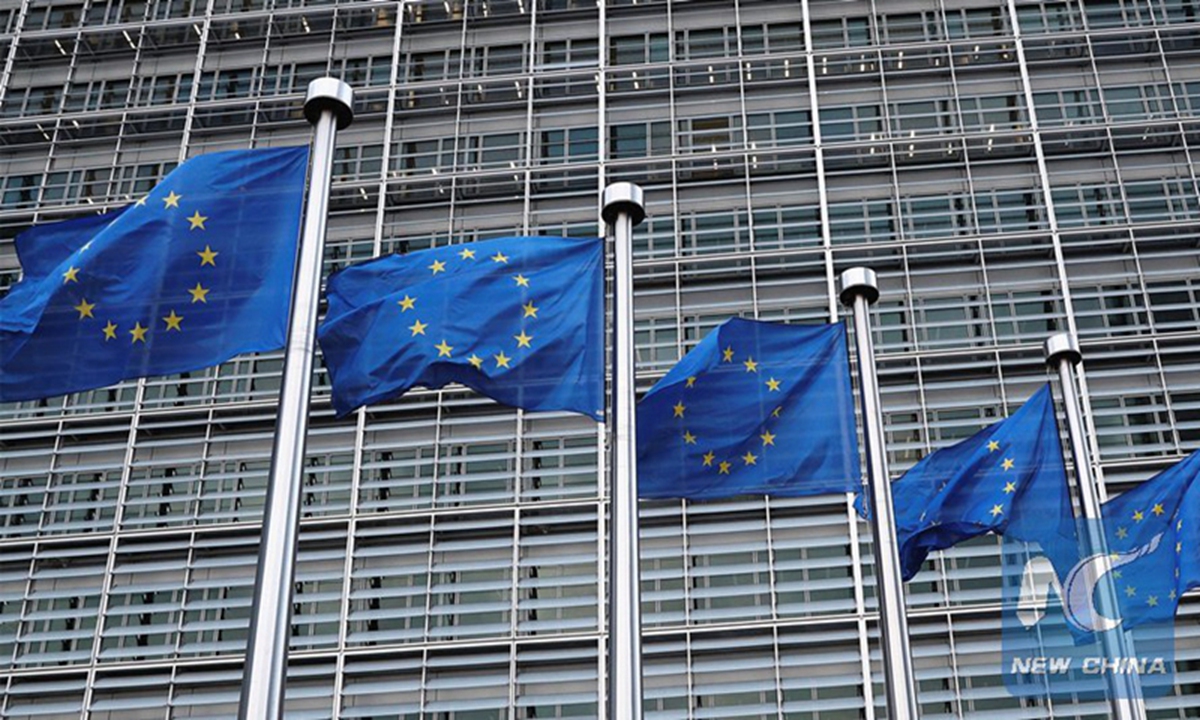
The European Union flags in front of EU headquarters in Brussels, Belgium. Photo: Xinhua
Some within the EU have been hyping the claim that US-China trade frictions have led to a rerouting of Chinese industrial products, with goods originally destined for the US market instead flowing into Europe. A Monday article in France's Le Monde, headlined "Europe powerless in the face of China's industrial export wave," even posed the question: "Should we prepare for a 'second China shock'?"First and foremost, hyping fearmongering claims, which could stoke even more trade tensions, is counterproductive especially at a time when global trade is already facing tremendous challenges. Although China's exports to the EU have maintained stable growth, this shows EU businesses and consumers' growing demand for Chinese products more than anything. After all, without real market demand, no country can force another party to buy its products.
Trade balances should not be viewed solely through the lens of goods trade. In the realm of services trade, the EU has maintained a long-term surplus with China, with the surplus reaching as high as $50.36 billion in 2024. Whether in high-end manufacturing design and engineering services or professional services such as education and finance, European companies still hold significant advantages. This reality underscores the complementary nature of China-EU trade.
China's ongoing economic transformation also presents a massive market opportunity for high-quality European goods and services. Working with the Chinese side and finding ways to expand win-win bilateral trade, including increasing the EU' exports to China, through dialogue and consultation is the right path forward. Making unfounded accusations to escalate trade tension is not in any party's interest.
The so-called "China shock" narrative overlooks the intricate realities of globalized production. China and the EU enjoy mutually beneficial cooperation within global industrial chains. Many European companies have long invested in production in China, taking advantage of the country's advanced manufacturing capabilities and market opportunities. When the US imposes unilateral trade barriers, both Chinese and European exporters are negatively affected. It is clearly unreasonable for some European politicians to turn around and blame China when facing trade pressure from the US.
Moreover, the full potential of China-EU trade has yet to be unleashed. One of the major constraints is the EU's alignment with the US-led policy of restricting high-tech exports to China. A prominent example is the Netherlands' block on exports of advanced photolithography machines due to US restrictions. This leaves China unable to purchase needed products, artificially suppressing a key area where the EU holds a competitive advantage while exacerbating trade imbalances. To untangle this knot, the EU needs to demonstrate greater strategic autonomy, prioritizing its own economic interests rather than simply following the ill-conceived containment policies of others.
China has always maintained an open and welcoming attitude toward EU products and businesses. Both at the enterprise level and among consumers, EU products enjoy high popularity in China. China remains committed to further opening its market and creating conditions conducive to increasing imports from the EU.
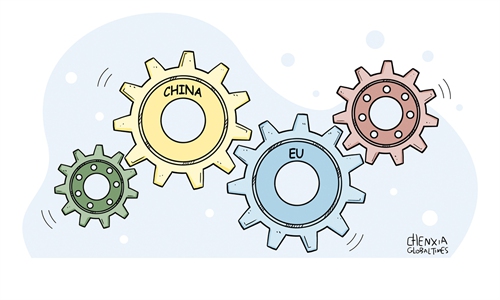
Enhanced coordination, dialogue, and consultations are key to resolving trade disputes. China-EU trade relations are built on the principles of mutual respect, equality, mutual benefit, and win-win cooperation. By strengthening communication, they can not only engage in in-depth cooperation to jointly foster a fair, just, and transparent trade environment, but also enhance collaboration in innovation, drive technological progress and industrial upgrading, and elevate the quality and efficiency of China-EU trade.
Playing up the so-called "China shock" claim does not serve the interests of either side and cannot address any issue in any meaningful manner. For China and the EU, embracing the complementary nature of their economies, removing artificial trade barriers, and advancing pragmatic cooperation are the right path to jointly navigate uncertainties in global trade caused by growing unilateralism and protectionism from certain major economies.
RELATED ARTICLES