ARTS / CULTURE & LEISURE
Cultural roots key to enduring appeal of ‘Nirvana in Fire’
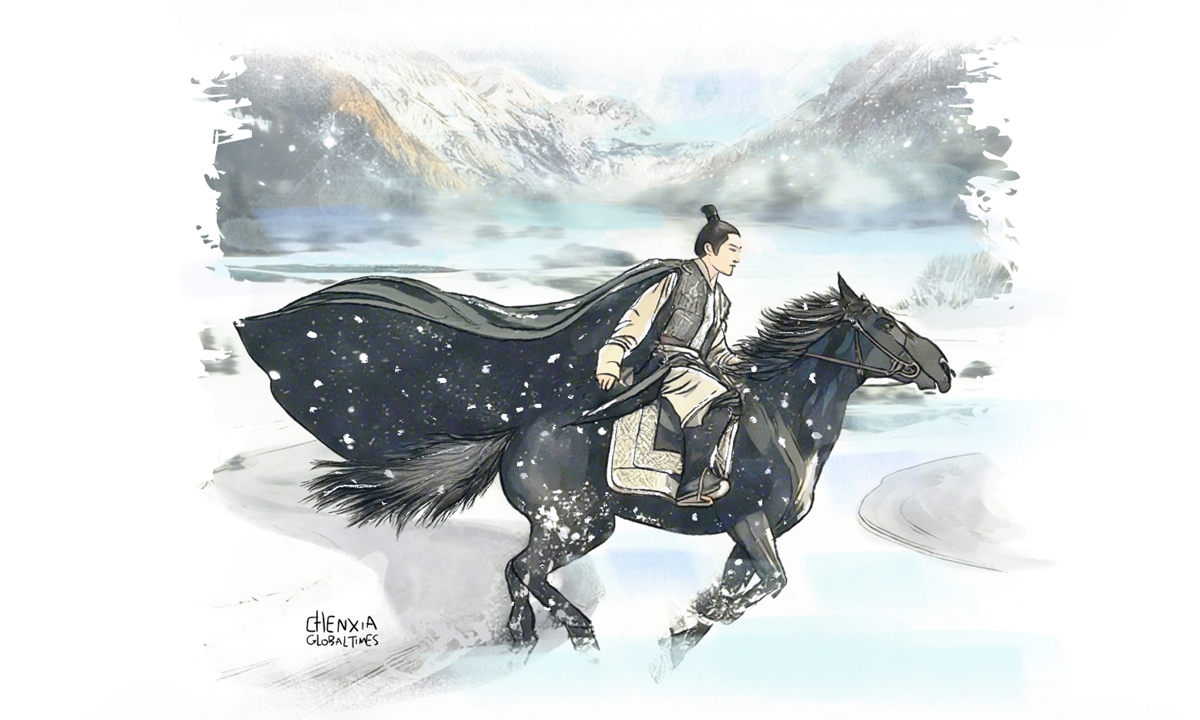
Illustration: Chen Xia/GT
Debuting in 2015 and once attracting a phenomenal 330 million online views, Chinese costume drama Nirvana in Fire recently began trending once again on platforms like Sina Weibo. This year marks the show's 10th anniversary. Its original cast, including Hu Ge and Liu Tao, have marked the occasion on Sina Weibo with video and written tributes, evoking a wave of collective nostalgia among netizens.Over years, there has been no shortage of costume dramas in the Chinese TV market. For instance, 37 such titles debuted in the first half of 2025 alone. In an industry that is constantly sifting through the sands, what is it about Nirvana in Fire that has kept it from fading into obscurity?
The answer to this question goes far beyond the TV show's story setting or star power. The reason why Nirvana in Fire has remained lodged in audiences' hearts is it offered them a type of viewing experience that they had never had before, be it the storytelling, production quality or cultural aesthetics. In other words, Nirvana in Fire is remembered by audiences as it was a milestone in Chinese costume drama history.
A key reason the show was unique is that it carved out a distinct style for costume dramas in the crowded television market around 10 to 15 years ago. At that time, TV chick flicks like The Sunshine (2015), featuring popular stars from the Chinese mainland and China's island of Taiwan, and hit Western TV IPs like the British Sherlock series (2010) were gaining appeal among Chinese viewers.
Amid this context, the development of Chinese costume dramas seemed to just being staying in the lines. Take series like Heroes in Sui and Tang Dynasties and The Detective Bao Zheng as examples, these dramas were largely based upon real history and had a more serious tone.
While excessive formality often acts as a roadblock to entertainment, Nirvana in Fire sidestepped this tradition. It did not anchor its setting in any real dynasty, but otherwise centered on its hero's relatable personal growth story.
On the one hand, the show features web novels' classic catch of "a genius's journey of reverence." On the other hand, it also maintains the rigorous logic of a serious historical drama while showing the positive values of the hero. For example, the hero Mei Changsu is known for his resilience and devotion to his country.
With an eye-catching web novel narrative as its "skin" and serious historical drama as its "skeleton," the show created a unique balance of style, allowing audiences to be drawn into period stories without feeling bored. This is also a major reason why it was liked by many viewers.
Apart from its story, the drama's success actually offers a vital lesson for the genre: Even within a fictional history, the presentation of Chinese cultural aesthetics must be well-explored.
Unlike highly saturated filters often used in earlier costume dramas, Nirvana in Fire adopted a more subtle palette, conveying understated yet elegant Chinese aesthetics. In a seemingly ordinary boating scene, the composition employs the "Golden Spiral" principle. "The visual dialogue between the large and small boats embodies the iconic quality of Chinese landscape paintings," set design expert Bai Juan told the Global Times. Mei's life journey also revealed how an individual progresses through "self-cultivation" to the "universal peace" inspired by Chinese philosophical thinking.
For a TV series, deeply exploring culture can reignite audiences' passion for tradition at a time when they are being bombarded with productions in different genres and featuring various cultural backgrounds.
At the same time, its narrative and character portrayals, which were rooted in Chinese tradition, actually endowed the series with influence beyond its native soil. This is also why Nirvana in Fire, after being introduced to North America, South Korea, and Southeast Asia, continues to be well-received by overseas audiences.
Viewed 10 years on, Nirvana in Fire is more than just a satisfying drama, but serves as a reference point for inspiring today's market about what is it like to be a qualified and well-received costume drama.
In the wake of the 2015 production's commitment to its cultural roots, more and more costume dramas in recent years have dedicated increased effort to their depiction of traditional culture. The 2022 production A Dream of Splendor, for example, immerses audiences into the intricate world of ancient Chinese tea culture.
The rise of the short video industry in the technological era is reshaping the traditional TV and film market. Contemporary costume dramas now face challenges that were unknown during the time of the 2015 production, such as audiences' growing habit of fragmented content consumption. Yet, regardless of shifts in trends, a series that respects its cultural roots will always remain competitive and holds the potential to become the next Nirvana in Fire.
The author is a reporter with the Global Times. life@globaltimes.com.cn
RELATED ARTICLES